Category: Top Story

  • European Shares Edge Higher on Hopes for Iran-US Talks: DAX, CAC, FTSE100

    European Shares Edge Higher on Hopes for Iran-US Talks: DAX, CAC, FTSE100

    European equity markets posted modest gains on Thursday, supported by optimism that upcoming discussions between Iran and the United States could help ease tensions in the Middle East.

    Reports suggest both sides are considering extending the current ceasefire by an additional two weeks to allow more time for negotiations.

    Investors also reacted to a fresh wave of corporate earnings releases and newly published economic data across the region.

    France’s CAC 40 rose 0.6%, while both the UK’s FTSE 100 and Germany’s DAX advanced by 0.7%.

    In Frankfurt, Zalando climbed 3.2%, while SAP added around 2.3% and Brenntag gained nearly 2%. Beiersdorf, MTU Aero Engines and Heidelberg Materials also moved higher, rising between 1% and 1.3%.

    On the downside, Qiagen, Merck, Deutsche Telekom, Mercedes-Benz, Daimler Truck Holding, BMW and Volkswagen declined between 0.5% and 1.6%.

    In Paris, Dassault Systèmes gained 2.2%. Capgemini, Teleperformance, Saint-Gobain, Airbus, Publicis Groupe and Michelin rose between 1.2% and 2%.

    Kering slipped 1.7%, while L’Oréal, ArcelorMittal, TotalEnergies and Engie also traded lower.

    In London, Entain surged 7.5% after reaffirming its revenue outlook. Halma, B&M European Value Retail, Vistry Group, Frasers Group, JD Sports Fashion, Pershing Square Holdings, Rightmove and Persimmon posted gains of between 2% and 3.5%.

    Tesco also jumped following strong sales and profit growth, alongside the announcement of a £500 million share buyback.

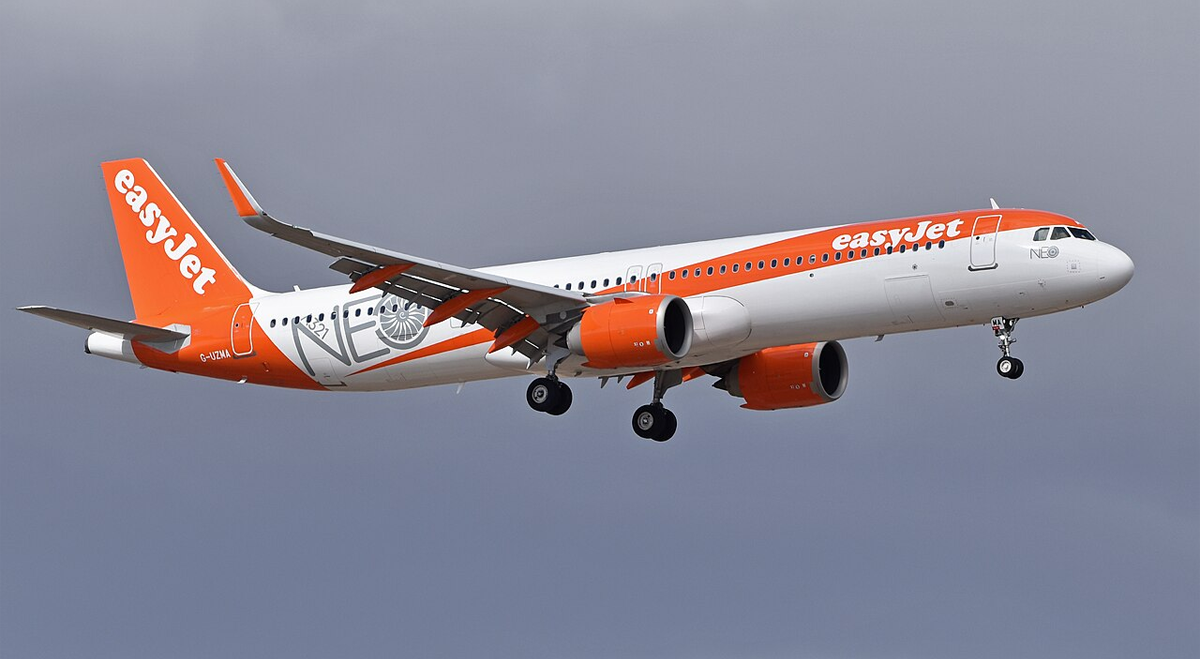
    EasyJet fell about 5% amid ongoing uncertainty linked to the Middle East situation. Airtel Africa, Convatec Group, Unite Group, Vodafone and Antofagasta declined between 1.6% and 2%.

    On the economic front, figures from the Office for National Statistics showed UK GDP expanded by 0.5% in February, exceeding the 0.1% growth recorded in January.

    Economists had expected growth to remain at 0.1%. On an annual basis, the economy grew by 1% in February.

    From a sector perspective, services—the largest part of the economy—rose 0.5%, while construction output increased by 1%.

    Industrial production grew 0.5%, following declines of 0.1% in January and 0.4% in December. Manufacturing output, however, slipped 0.1%, reversing January’s 0.2% increase.

    Year on year, industrial production fell 0.4%, while manufacturing output declined 0.5% in February.

    Meanwhile, final data from Eurostat showed eurozone inflation rose more than initially estimated in March, reaching its highest level since mid-2024.

    The harmonised consumer price index increased 2.6% year on year, revised up from an initial estimate of 2.5%, and compared with 1.9% growth in February.

  • European Markets Edge Higher on Hopes of Progress in Iran Peace Talks: DAX, CAC, FTSE100

    European Markets Edge Higher on Hopes of Progress in Iran Peace Talks: DAX, CAC, FTSE100

    European equities opened slightly higher on Thursday, following gains in global markets as investors remained optimistic about a potential resolution to the Iran conflict.

    By 07:05 GMT, the pan-European Stoxx 600 was up 0.2%, while France’s CAC 40 rose 0.1% and the UK’s FTSE 100 gained 0.2%. Germany’s DAX, however, slipped marginally by 0.1%.

    The Stoxx 600 is gradually recovering losses recorded since the escalation of the Iran conflict in late February. Even so, European markets have lagged behind Wall Street, with traders pointing to the region’s reliance on natural gas imports from Middle Eastern facilities affected by missile strikes. In contrast, the United States, as a net energy exporter, may be better shielded from the economic impact of the conflict.

    Diplomatic efforts to secure a lasting ceasefire between the United States and Iran are ongoing, with a temporary two-week truce set to expire later this month.

    According to the Wall Street Journal, Washington and Tehran have agreed in principle to resume negotiations after initial talks held last weekend in Pakistan failed to produce an immediate agreement. Officials familiar with the discussions indicated that no date or location has yet been confirmed.

    The newspaper also reported that Vice President JD Vance is expected to lead the US delegation in any upcoming talks with Iran.

    U.S. President Donald Trump has said that discussions between Israel and Lebanon are scheduled to take place later today. The Financial Times, citing Lebanese officials, reported that a ceasefire between the two sides, which have posed a risk to the broader US-Iran truce, could be reached “soon.”

    Despite these developments, tensions persist, particularly over the ongoing US naval blockade of Iranian ports. A senior Iranian military official has warned Washington against continuing the blockade, while US Central Command maintains that no Iranian-linked vessels have managed to bypass it.

    Oil prices edged higher, remaining below $100 per barrel but still significantly above pre-conflict levels, as markets assess the potential impact of a prolonged disruption in the Strait of Hormuz. The key shipping route off Iran’s southern coast has been largely inaccessible to tanker traffic for several weeks, tightening global energy supply and supporting crude prices.

    Meanwhile, Europe’s earnings season is gathering pace, offering insight into how companies are navigating the challenges posed by the Iran conflict.

  • FTSE 100 Edges Higher as Strong UK GDP Data Lifts Sentiment

    FTSE 100 Edges Higher as Strong UK GDP Data Lifts Sentiment

    UK equities opened slightly higher on Thursday after stronger-than-expected GDP data for February, while investors continued to monitor developments סביב potential US-Iran ceasefire talks. Broader European markets were mixed, and the pound held steady against the dollar.

    As of 07:05 GMT, the FTSE 100 rose 0.2%, while GBP/USD gained 0.07% to 1.3577. Germany’s DAX slipped 0.04%, and France’s CAC 40 added 0.1%.

    UK Round-Up

    Fresh data from the Office for National Statistics showed the UK economy expanded in February, beating analyst expectations. Growth came in above the 0.1% forecast by economists, following an upwardly revised 0.1% increase in January. The expansion was supported by broad-based gains, with services output rising 0.5% month on month, industrial production also up 0.5%, and construction output jumping 1.0% despite wet weather conditions.

    Tesco PLC (LSE:TSCO) said ongoing uncertainty linked to the Middle East conflict has led it to widen its profit guidance for the 2026/27 financial year. The company expects adjusted operating profit to range between £3.0 billion and £3.3 billion, compared with £3.152 billion reported for 2025/26, slightly ahead of its prior targets.

    Ashmore Group Plc (LSE:ASHM) reported a $1.8 billion reduction in assets under management during its fiscal third quarter, with total AUM falling to $50.7 billion as of March 31. The decline reflected an even split between net outflows and weaker investment performance, amid heightened geopolitical volatility.

    Rentokil Initial PLC (LSE:RTO) delivered first-quarter organic growth of 3.4%, exceeding analyst expectations of 3.0%. Total revenue reached $1,677 million, up 4.3% year on year, supported by steady growth across pest control and hygiene services, particularly in North America.

    Hays Plc (LSE:HAS) reported an 8% year-on-year decline in third-quarter like-for-like net fees, an improvement on the 10% drop recorded in the previous quarter. Performance was broadly in line with March trading trends, with the Rest of World segment contributing to the slight outperformance versus forecasts.

    Schroders PLC (LSE:SDR) recorded £1.1 billion in client outflows during the first quarter of 2026, as geopolitical tensions weighed on investor sentiment. Assets under management stood at £814.4 billion at the end of the period, down from £823.7 billion at the close of 2025.

  • EasyJet Shares Slide as Wider Loss Forecast Signals Pressure from Middle East Tensions

    EasyJet Shares Slide as Wider Loss Forecast Signals Pressure from Middle East Tensions

    EasyJet (LSE:EZJ) shares dropped more than 3% on Thursday after the airline warned of a larger-than-expected first-half loss, citing geopolitical tensions in the Middle East and volatile fuel costs as key headwinds heading into the peak summer season.

    In a trading update ahead of its half-year results, the company said it expects a headline loss before tax of between £540 million and £560 million for the six months to 31 March. This guidance is around 7% below analyst expectations at the midpoint, reflecting a £25 million increase in fuel costs during March and an additional £30 million in legal provisions.

    Chief executive Kenton Jarvis said demand remained “positive” following a strong Easter period but acknowledged that overall performance has weakened compared with last year, “impacted by the conflict in the Middle East and the competitive environment in some markets.”

    The airline noted that rising regional instability has led to a shorter booking window and “lower than normal forward visibility,” making demand trends harder to predict. While easyJet has hedged around 70% of its summer fuel requirements at $706 per metric tonne, the remaining exposure leaves it vulnerable to spot prices currently near $1,500.

    The company added that every $100 movement in fuel prices now translates into an estimated £40 million impact on second-half costs.

    Despite the negative share reaction, easyJet highlighted solid operational metrics, including a 90% load factor, up two percentage points year on year, and a 22% increase in customers within its holidays division. However, analysts at Morgan Stanley noted that pricing recovery is being limited by shorter booking cycles, with third-quarter revenue per available seat kilometre currently trending slightly lower and 63% of seats sold.

    “easyJet’s financial strength from our investment grade balance sheet and £4.7 billion of liquidity mean we are well placed to navigate current geopolitical challenges while remaining focused on our medium term target,” Jarvis added.

  • Tesco Boosts Profit and Cash Flow as Value Strategy Drives Market Share Gains

    Tesco Boosts Profit and Cash Flow as Value Strategy Drives Market Share Gains

    Tesco (LSE:TSCO) reported solid performance for the 53 weeks to 28 February 2026, with group sales excluding fuel rising 4.6% to £66.6 billion. Adjusted operating profit increased to £3.15 billion on a comparable 52-week basis, while statutory operating profit climbed 10.1%. Diluted earnings per share saw strong growth, and free cash flow improved to nearly £2 billion, enabling a higher dividend despite a rise in net debt following earlier banking disposals.

    Chief executive Ken Murphy said continued investment in price, quality, and service during a challenging cost-of-living environment and geopolitical uncertainty has helped Tesco achieve its highest UK market share in more than a decade. Progress under the company’s “Save to Invest” programme, alongside expanded value offerings and growth in rapid delivery, has supported performance. Tesco also highlighted its longer-term strategy focused on strengthening its food leadership, expanding everyday services, and deepening supplier partnerships, while continuing to invest in staff through wage increases and bonuses.

    The company’s outlook reflects generally stable financial performance, although there are some pressures on revenue growth and cash flow. Technical indicators point to positive momentum, and valuation appears reasonable. Management commentary remains upbeat, supported by improved profit guidance and a significant share buyback programme aimed at enhancing shareholder returns.

    More about Tesco plc

    Tesco plc is one of the largest grocery and general merchandise retailers in Europe, operating supermarkets, convenience stores, and online platforms across the UK, Ireland, and Central Europe. In addition to its core food retail business, the group operates wholesale distribution through Booker and offers a range of complementary services, including clothing, mobile, pharmacy, and financial products, serving a broad base of value-focused consumers.

  • Rentokil Initial Delivers Steady Q1 Growth as New CEO Sets Direction

    Rentokil Initial Delivers Steady Q1 Growth as New CEO Sets Direction

    Rentokil Initial (LSE:RTO) reported revenue of $1.68 billion for the first quarter of 2026, marking a 4.3% increase at constant currency, with organic growth of 3.4%. Performance was largely supported by its North American pest control division alongside solid contributions from international markets. Newly appointed CEO Mike Duffy pointed to strong workforce engagement and expressed confidence that the group remains on course to meet full-year expectations despite geopolitical headwinds.

    North America generated $995 million in revenue, delivering 3.9% organic growth. This was underpinned by effective pricing strategies, improved sales execution, and early seasonal demand within Business Services. Employee retention improved throughout the period, while customer retention levels held steady. Internationally, revenue rose 4.1% at constant currency, with 2.8% organic growth. Gains across Europe, Latin America, and the UK & Sub-Saharan Africa helped offset weaker conditions in the Pacific and MENAT regions. The company also remained active on acquisitions, completing nine smaller deals that together contributed around $19 million in annualised revenue prior to acquisition.

    The group’s outlook is supported by consistent revenue expansion, solid free cash flow generation, and improving leverage, alongside guidance focused on margin improvement through operational efficiencies. However, this is balanced by a relatively elevated valuation, reflected in a high price-to-earnings ratio, and mixed short-term technical signals, including a negative MACD despite a broader upward trend.

    More about Rentokil Initial

    Rentokil Initial is a global provider of pest control, hygiene, and wellbeing services, with a major presence in North America and a broad international footprint spanning Europe, Latin America, the UK & Sub-Saharan Africa, the Pacific, and MENAT regions. The company focuses on recurring service contracts across both commercial and residential markets, delivering pest management and hygiene solutions as part of its core offering.

  • Great Western Mining Advances Nevada Tungsten Project with Drilling Contractor Appointment

    Great Western Mining Advances Nevada Tungsten Project with Drilling Contractor Appointment

    Great Western Mining (LSE:GWMO) has appointed Major Drilling America to undertake a reverse circulation drilling programme at its wholly owned Defender-Pine Crow tungsten project in Mineral County, Nevada. The contract marks a key step in the company’s plan to establish a tungsten resource alongside its existing portfolio of copper, gold, and silver assets.

    The campaign will cover approximately 7,000 feet of drilling and is scheduled to begin in July, following preparatory groundworks in May. The programme is designed to support a maiden mineral resource estimate for Defender-Pine Crow, which the company is targeting for completion by late 2026. In addition, drilling will assess the extent and continuity of mineralisation across the Defender and Pine Crow zones, as well as the nearby M2 trend, potentially increasing the project’s overall scale and strategic value.

    Company management noted that the drilling forms part of a wider exploration effort that includes geological mapping, geophysical surveys, and additional channel sampling. These parallel initiatives aim to improve understanding of the broader mineralised system and strengthen the company’s positioning within the critical minerals space as the tungsten opportunity develops.

    Despite operational progress, the company’s financial profile remains a limiting factor, characterised by a lack of revenue, ongoing losses, and steady cash burn, albeit with relatively low debt levels. From a market standpoint, technical indicators are somewhat encouraging, with the share price holding above key averages and showing modest upward momentum. However, valuation remains difficult to justify due to negative earnings and the absence of dividend yield data.

    More about Great Western Mining

    Great Western Mining Corporation is an exploration and development company focused on strategic mineral assets across several fully owned claim groups in Mineral County, Nevada, a mining-friendly region in the United States. While maintaining exposure to copper, gold, and silver through projects such as Huntoon and tailings reprocessing initiatives, the company is increasingly prioritising tungsten as a critical mineral within its growth strategy.

  • Union Jack Oil Flags Minor Timing Slip for Oklahoma Crossroads Well

    Union Jack Oil Flags Minor Timing Slip for Oklahoma Crossroads Well

    Union Jack Oil (LSE:UJO) has announced a slight postponement to the spud date for the Crossroads well in southern Oklahoma. The delay follows maintenance requirements identified by operator Reach Oil and Gas Company Inc., with drilling now expected to begin before the end of April 2026, suggesting only limited disruption to the overall schedule.

    Union Jack retains a 43% stake in the project and has already covered its share of drilling expenditures using available cash. This confirms the well is fully funded, and the revised timeline is not expected to place pressure on the company’s short-term finances or alter its broader plan to strengthen its onshore presence in the United States.

    From a financial perspective, the group continues to benefit from a debt-free balance sheet and consistent profitability since 2022. However, performance has been weighed down by a sharp decline in profitability during 2024, alongside uneven and negative free cash flow trends. Market indicators point to near-term momentum, though conditions appear overbought, and the longer-term trend remains less robust. Valuation metrics are also challenging to assess, given the absence of a meaningful P/E ratio and dividend yield.

    More about Union Jack Oil

    Union Jack Oil is an AIM-listed oil and gas company engaged in onshore production, development, exploration, and investment across the UK and the United States. Its strategy centers on conventional hydrocarbon projects, with stakes in a range of drilling and producing assets, aiming to build a portfolio of reliable, cash-generating operations within established energy regions.

  • European Stocks Trade Mixed as Earnings Diverge and Iran-U.S. Talks Loom: DAX, CAC, FTSE100

    European Stocks Trade Mixed as Earnings Diverge and Iran-U.S. Talks Loom: DAX, CAC, FTSE100

    European equities showed little clear direction on Wednesday, as investors assessed a mixed batch of corporate earnings while also preparing for a potential new round of face-to-face negotiations between the United States and Iran, which could begin as early as this weekend.

    Reports suggest Washington has outlined two fresh conditions ahead of any renewed dialogue. According to Israel Hayom, the U.S. is seeking a full and unrestricted reopening of the Strait of Hormuz and continues to emphasize a reciprocal approach in negotiations.

    On the macroeconomic front, updated data from France’s statistics agency INSEE showed that harmonized consumer price inflation for March came in slightly higher than initially estimated.

    EU-harmonized inflation reached 2.0% for the month, above the preliminary reading of 1.9% and up from 1.1% in February.

    Domestic consumer price inflation in France was confirmed at 1.7%, rising from 0.9% the previous month and marking the fastest pace of increase since August 2024.

    Meanwhile, Eurostat reported that industrial production across the eurozone rose 0.4% in February compared with January.

    In equity markets, France’s CAC 40 was down 0.6%, while the UK’s FTSE 100 hovered around flat levels and Germany’s DAX edged up 0.1%.

    Hermes International (EU:RMS) dropped 10% after reporting slower first-quarter sales growth.

    Stellantis (BIT:STLAM) climbed 3.4% after announcing a 12% increase in global vehicle shipments for the first quarter.

    ASML (EU:ASML) gained 1.7% after lifting its 2026 sales outlook, supported by first-quarter results that exceeded expectations.

    Aegon (EU:AGN) declined nearly 2% following an agreement to sell its UK operations to Standard Life in a deal valued at £2 billion.

    Rank Group (LSE:RNK) surged 11% in London after raising its full-year underlying operating profit guidance, supported by a 5% year-on-year increase in fiscal third-quarter net gaming revenue.

    Antofagasta (LSE:ANTO) rose 3.2%. Despite reporting a decline in first-quarter copper output, the company said it expects production to increase progressively over the rest of the year.

  • European Stocks Flat as Trump Hints at Renewed Iran Talks: DAX, CAC, FTSE100

    European Stocks Flat as Trump Hints at Renewed Iran Talks: DAX, CAC, FTSE100

    European equities traded in a narrow range on Wednesday, as investors weighed fresh signals from Washington suggesting a renewed push toward ending the conflict with Iran.

    By 07:09 GMT, the pan-European STOXX 600 was marginally higher by 0.1%, while Germany’s DAX and the UK’s FTSE 100 each gained around 0.2%.

    France’s CAC 40 underperformed, falling 0.6%, dragged lower in part by a sharp decline in Hermès (EU:RMS), which reported slower quarterly sales growth amid weaker demand linked to the Iran conflict.

    Market sentiment found some support from ASML (EU:ASML), Europe’s most valuable listed firm. The company raised its full-year sales outlook, benefiting from strong demand tied to the artificial intelligence boom. Major chipmakers, including TSMC and Intel, continue to invest heavily in ASML’s technology to expand their AI capabilities.

    On the geopolitical front, U.S. President Donald Trump indicated that talks with Iran could resume within the next two days, following initial negotiations held in Pakistan over the weekend. Vice President JD Vance, who led the U.S. delegation in Islamabad, also struck an optimistic tone regarding progress.

    Despite this, the U.S. has maintained a blockade on Iranian ports. Officials said maritime trade to and from the country has effectively been halted after the latest round of talks failed to deliver an immediate ceasefire agreement, although expectations for a quick resolution had already been low.

    The restrictions have raised concerns about oil supply disruptions through the Persian Gulf, where flows have already slowed significantly. However, reports suggest that more than 20 commercial vessels have recently passed through the Strait of Hormuz, hinting at some easing in transit conditions.

    Oil prices remained below the $100 mark but stayed elevated compared with pre-conflict levels. Brent crude rose 0.3% to $95.10 a barrel, while U.S. West Texas Intermediate slipped 0.2% to $91.12.