Category: Top Story

  • Morgan Stanley Says AI Memory Demand Keeps the Investment Case Intact

    Morgan Stanley Says AI Memory Demand Keeps the Investment Case Intact

    The recent weakness in U.S. memory stocks may represent an attractive entry point for investors, according to Morgan Stanley, which believes demand from artificial intelligence data centers continues to strengthen despite mixed trends across the broader semiconductor industry.

    The firm argues that tightening supply conditions remain firmly in place and that the market may be underestimating the importance of memory in supporting next-generation AI infrastructure.

    Data Centers Remain the Main Growth Driver

    Analyst Joseph Moore said the current memory cycle stands apart from previous industry cycles because “data center strength is the only cause” behind the recent momentum, suggesting that mixed indicators elsewhere “may be a false flag.”

    While Morgan Stanley continues to favour Nvidia and Broadcom from a risk-reward perspective, Moore said memory stocks are quickly closing the gap as industry fundamentals improve.

    Memory Supply Is Becoming Increasingly Constrained

    The bank acknowledged recent investor concerns surrounding slower growth momentum, higher capital spending and lower product specifications, but argued these developments were largely anticipated.

    Instead, Morgan Stanley believes memory has become “increasingly THE bottleneck” for AI deployments and agentic CPU platforms, making supply constraints more significant than in previous cycles.

    Pricing Trends Continue to Support the Sector

    Morgan Stanley estimates that data center memory prices have risen by more than 25% during the third quarter.

    Although that marks a moderation from the rapid increases seen in the previous quarter, the firm said this was “obvious” and expects long-term supply contracts and de-speccing to create a more prolonged, less volatile cycle that could ultimately benefit semiconductor stocks.

    Industry Contacts Point to Ongoing Tight Supply

    Following discussions with data center buyers, Morgan Stanley reported that shortages “show no signs of abating.”

    The investment bank said quarterly price increases of at least 25% are running ahead of both its own expectations and independent industry forecasts.

    It also maintained that risks of even tighter memory supply in 2027 and 2028 “are still as strong as ever,” reinforcing its constructive outlook for the sector.

  • Why Tanker Insurance May Be the Most Important Number in the Oil Market Right Now

    Why Tanker Insurance May Be the Most Important Number in the Oil Market Right Now

    Brent crude has climbed almost 4% to $94.23 per barrel after U.S. military operations against Iran entered an eleventh straight night and diplomatic tensions over the Strait of Hormuz remained unresolved. While the move in oil prices has dominated market commentary, another indicator suggests the underlying risks facing global energy markets are considerably greater.

    Marine Insurers Are Pricing in Higher Risk

    The strongest signal is coming from the marine insurance market rather than the futures market.

    War-risk insurance for vessels transiting the Strait of Hormuz has risen from roughly 0.25% of a ship’s value before the conflict to around 5%, according to the Lloyd’s Market Association. That represents an increase of nearly 1,900%.

    For owners of a $100 million tanker, insurance costs have jumped from approximately $250,000 to several million dollars for a single passage through the strategic waterway.

    Insurance Reflects Physical Risk, Not Market Sentiment

    Unlike oil futures, which frequently respond to breaking news and changing investor expectations, insurance premiums are based on the estimated probability of real financial losses.

    Marine underwriters price policies according to the likelihood that a vessel could be damaged or destroyed. As a result, a dramatic increase in premiums provides insight into how professionals responsible for managing shipping risk view the security environment.

    Rising Costs Could Disrupt Global Supply Chains

    The Strait of Hormuz remains one of the world’s most important energy corridors, carrying roughly 20% of global seaborne oil and gas exports.

    If insurance costs continue climbing, operators may begin avoiding the route regardless of attractive freight rates. That would reduce shipping capacity, tighten physical supply and potentially place additional upward pressure on both energy prices and inflation.

    Financial Markets Are Reflecting Broader Inflation Concerns

    Recent market performance also points toward inflation becoming a larger concern.

    During the latest comparable escalation, the S&P 500 fell 0.79%, the Nasdaq declined 1.55%, and U.S. 10-year Treasury yields moved higher instead of lower. That combination suggests investors were responding to inflation risks rather than simply rotating into traditional safe-haven assets.

    Gold Has Failed to Offer Its Traditional Protection

    Gold has not followed its typical geopolitical playbook.

    Despite heightened tensions, the precious metal has dropped more than 20% since the conflict began in February. Expectations for a more hawkish Federal Reserve, driven by the possibility of sustained energy inflation, have outweighed gold’s safe-haven appeal.

    Multiple Markets Are Delivering the Same Warning

    Looking across asset classes paints a clearer picture. Oil prices have risen, war-risk insurance premiums have surged by almost 1,900%, equity markets have weakened alongside higher Treasury yields, and gold has failed to perform as a traditional defensive asset.

    Together, these signals suggest that the industries with the greatest exposure to physical energy transportation risks are assigning far greater importance to current developments than investors focusing solely on crude prices.

  • Wall Street futures edge higher as Intel results and easing oil prices improve sentiment: Dow Jones, S&P, Nasdaq

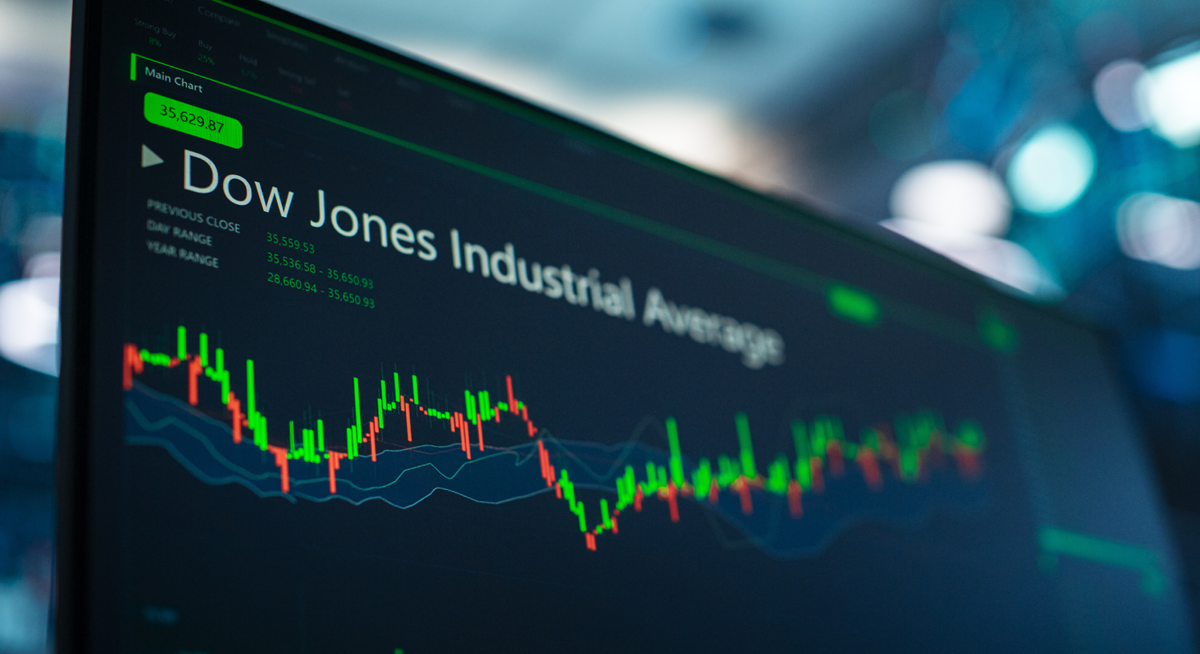
    Wall Street futures edge higher as Intel results and easing oil prices improve sentiment: Dow Jones, S&P, Nasdaq

    U.S. equity futures pointed to a stronger start on Friday, with investors looking to rebound from the previous session’s losses after upbeat earnings from Intel and a sharp retreat in crude oil prices helped restore confidence.

    The market recovery follows a difficult Thursday in which technology stocks came under heavy pressure amid rising concerns over artificial intelligence investment spending and soaring energy prices.

    Intel delivers a boost for semiconductor stocks

    Intel (NASDAQ:INTC) rose roughly 3% in premarket trading after posting second-quarter earnings that surpassed analysts’ expectations, supported by its fastest revenue growth in fifteen years.

    The chipmaker also issued encouraging guidance for the third quarter, helping improve sentiment across the semiconductor sector after a broad technology sell-off.

    Oil retreat supports broader market mood

    Crude oil prices reversed sharply on Friday, with U.S. futures falling more than 3% after surging over 6% during the previous session.

    The earlier rally had been triggered by attacks on oil tankers in the Red Sea, which intensified fears of potential supply disruptions.

    Despite lower energy prices, geopolitical risks remained elevated as military exchanges between the United States and Iran continued to escalate.

    The U.S. carried out a thirteenth consecutive night of strikes on Iranian targets, while Iran responded with missile attacks directed at neighbouring countries hosting American military installations.

    Investors continue to watch trade developments

    Market participants also remained focused on fresh trade measures announced by the Trump administration.

    The White House introduced tariffs ranging from 10% to 12.5% on imports from 60 economies accused of failing to prevent goods produced with forced labour from entering global supply chains.

    The new measures affect major trading partners including the European Union, the United Kingdom, China, India, Japan and Canada, replacing the temporary 10% tariff that expired on Friday.

    Thursday’s losses were led by technology stocks

    All three major U.S. indices closed lower on Thursday.

    The Nasdaq dropped 2.2% to 25,137.69, the S&P 500 declined 1.2% to 7,408.30 and the Dow Jones Industrial Average lost 1.0% to finish at 51,711.65.

    Tesla (NASDAQ:TSLA) plunged 14.5% after reporting disappointing quarterly earnings alongside sharply higher capital expenditure.

    Alphabet (NASDAQ:GOOGL) also fell 7.1%. Although the Google parent exceeded earnings forecasts, investors reacted negatively to its increased capital spending plans.

    Inflation concerns remain despite oil pullback

    The previous day’s surge in crude prices had revived worries that higher energy costs could complicate the inflation outlook and delay further interest rate cuts.

    Danni Hewson, Head of Financial Analysis at AJ Bell, said: “With nerves about the potential inflationary impact of the escalating conflict in the Middle East colliding with worries about soaring tech capex it’s been tough to find the optimism.”

    “It’s worth remembering that at the start of the month the price was hovering around $70 a barrel and markets had dared to hope that central bankers might be able to seamlessly shift from a pause to further cuts,” she added.

    Labour market remains resilient

    Economic data released on Thursday showed initial unemployment claims fell to 187,000 during the week ended July 18, well below expectations of 212,000.

    The reading marked the lowest level for first-time jobless claims since September 1969, highlighting continued strength in the U.S. labour market.

    Airlines and retailers lagged the market

    Airline shares posted some of the steepest declines, with the NYSE Arca Airline Index falling 3.3%.

    American Airlines (NASDAQ:AAL) slid 8.4% after reducing its full-year earnings outlook despite reporting quarterly results above expectations.

    Retail, software, telecommunications and gold-related stocks also weakened, while biotechnology, pharmaceutical and healthcare shares outperformed.

  • European markets recover as investors return after oil-driven sell-off: DAX, CAC, FTSE100

    European markets recover as investors return after oil-driven sell-off: DAX, CAC, FTSE100

    European equity markets moved higher on Friday, recovering from their sharpest daily decline in more than two weeks as easing oil prices encouraged investors back into risk assets despite ongoing concerns over artificial intelligence spending.

    Sentiment improved after Brent crude retreated almost 4 percent, having briefly climbed above $100 per barrel on Thursday following renewed Houthi attacks on oil tankers in the Red Sea.

    UK retail sales surprise to the upside

    Sterling strengthened against both the U.S. dollar and the euro after new figures showed that UK retail sales unexpectedly expanded in June.

    Retail sales increased by 1.0 percent during the month, following May’s revised 1.2 percent gain, supported by strong demand for outdoor products during warmer weather. Economists had expected a monthly decline of 0.3 percent.

    Compared with the same month last year, retail sales were up 4.2 percent, accelerating from the 3.5 percent annual growth recorded in May.

    Major European indices post gains

    Germany’s DAX advanced 0.8 percent, while France’s CAC 40 and the UK’s FTSE 100 each gained 0.4 percent during morning trading.

    Corporate earnings drive individual movers

    British polymer specialist Victrex (LSE:VCT) rose almost 2 percent after announcing changes to its management team.

    HSBC Holdings (LSE:HSBA) added 1.3 percent after agreeing to sell its Singapore life and health insurance business to Allianz.

    Shares in DiscoverIE Group (LSE:DSCV) jumped 13 percent after the electronics manufacturer reported organic order growth of 31 percent and a 6 percent year-on-year increase in first-quarter sales.

    Engineering company Renishaw (LSE:RSW) climbed 6.6 percent after indicating that annual profit is expected to exceed previous market expectations.

    German software leader SAP (TG:SAP) gained 6 percent after delivering stronger quarterly revenue.

    ATOSS Software (TG:AOF) advanced 4.3 percent following second-quarter revenue and profit growth.

    Volkswagen (TG:VOW3) slipped 1 percent after posting weaker-than-expected second-quarter earnings and lowering its forecasts for annual sales and vehicle deliveries.

    Swedish security and access specialist Assa Abloy (TG:ALZC) edged 1 percent higher after completing the acquisition of U.S.-based Classic Brass Inc.

    Security services provider Securitas (TG:S7MB) tumbled 11 percent after reporting second-quarter core profit below market expectations.

    French pharmaceutical company Sanofi (EU:SAN) declined 2.2 percent after ending the clinical development of amlitelimab for moderate-to-severe atopic dermatitis following mixed Phase 3 trial results.

  • Britain’s Critical Minerals Strategy Brings Tungsten into Sharper Focus

    Britain’s Critical Minerals Strategy Brings Tungsten into Sharper Focus

    As the UK and its allies look to strengthen the resilience of critical mineral supply chains, tungsten is increasingly emerging as one of the most strategically important metals for defence, advanced manufacturing and industrial security.

    Recent policy developments in the United States, including measures to reinforce domestic defence supply chains and reduce reliance on vulnerable overseas sources of critical materials, reflect a broader trend across Western nations. The UK has similarly identified critical minerals as essential to its economic security, defence capabilities and transition to advanced technologies.

    For investors, these developments reinforce the growing importance of securing reliable supplies of strategic metals from politically stable jurisdictions.

    Why Tungsten Matters

    Tungsten is regarded as one of the world’s most important industrial metals. Its exceptional hardness, extremely high melting point and density make it indispensable across a wide range of applications, including:

    • Defence systems and armour-piercing munitions
    • Aerospace components
    • High-temperature industrial equipment
    • Precision cutting tools
    • Energy, electronics and advanced manufacturing

    Despite its importance, global tungsten production remains heavily concentrated. China dominates both mining and processing, leaving Western economies seeking alternative sources to improve supply chain resilience and reduce geopolitical risk.

    The UK Government’s Critical Minerals Strategy has highlighted the need for more secure and diversified supply chains, working closely with trusted international partners to ensure access to materials that underpin economic growth and national security.

    A Strategic Opportunity in the United States

    Against this backdrop, companies developing tungsten projects in stable mining jurisdictions are attracting increasing attention.

    One such company is Guardian Metal Resources PLC (LSE:GMET) (AMEX:GMTL) (USOTC:GMTLF) which is focused on developing domestic tungsten resources in Nevada.

    Its flagship Pilot Mountain Project is recognised as one of the largest undeveloped tungsten deposits in the United States and could become an important future source of supply for North America.

    The project hosts a substantial mineral resource at the Desert Scheelite deposit, comprising an indicated pit-constrained resource of 8.694 million tonnes grading 0.206% WO₃ and an inferred resource of 1.784 million tonnes grading 0.169% WO₃, together with valuable copper, silver and zinc by-products.

    Strong Government Support

    Guardian Metal’s development strategy aligns closely with the United States’ drive to rebuild domestic critical mineral supply chains.

    The company has secured a US$6.2 million award under the U.S. Defense Production Act Title III programme to advance the Pilot Mountain Pre-Feasibility Study, demonstrating the strategic importance placed on developing secure domestic tungsten production.

    As governments seek to reduce dependence on concentrated foreign supply chains, projects such as Pilot Mountain could become increasingly significant.

    Attractive Project Economics

    Beyond its strategic importance, Pilot Mountain has delivered encouraging economic results.

    The recently completed Pre-Feasibility Study reported:

    • After-tax Net Present Value (NPV): US$660.3 million
    • Internal Rate of Return (IRR): 59.6% (base case)

    Under stronger tungsten pricing assumptions, the project’s economics improve further, illustrating the leverage the project offers to rising demand and strengthening tungsten prices.

    Guardian Metal also owns the Tempiute Project, another historic tungsten-producing asset in Nevada, providing additional long-term development potential.

    A Growing Investment Theme

    Across the UK, Europe and North America, governments are placing increasing emphasis on securing reliable supplies of critical minerals. The discussion has moved beyond simply identifying resources to ensuring they originate from trusted jurisdictions capable of supporting long-term industrial and defence requirements.

    Tungsten sits firmly within this theme.

    As demand for resilient supply chains continues to grow, projects capable of delivering secure, Western-produced tungsten are likely to become increasingly valuable.

    With its advanced Nevada assets, government backing and focus on one of the world’s most strategically important metals, Guardian Metal Resources is well positioned to benefit from this structural shift in critical minerals policy.

    For UK investors seeking exposure to the growing strategic metals sector, Guardian Metal represents a company operating at the intersection of resource security, defence resilience and long-term industrial demand.

    This article is for informational purposes only and should not be regarded as investment advice. Investors should conduct their own research and consider seeking independent financial advice before making any investment decisions.


  • U.S. futures edge higher as investors monitor Middle East conflict and fresh tariff measures: Dow Jones, S&P, Nasdaq, Wall Street

    U.S. futures edge higher as investors monitor Middle East conflict and fresh tariff measures: Dow Jones, S&P, Nasdaq, Wall Street

    U.S. equity futures traded in positive territory on Friday as markets weighed escalating geopolitical risks against encouraging corporate earnings, while investors also assessed new U.S. trade tariffs and looked ahead to key economic data.

    Markets rebound despite ongoing geopolitical uncertainty

    As of 03:34 ET (07:34 GMT), Dow Jones futures had risen 0.4%, S&P 500 futures added 0.2%, and Nasdaq 100 futures advanced 0.1%.

    The gains followed Thursday’s market decline, which was triggered by renewed concerns over the conflict involving the United States, Iran and Iran-backed Houthi forces. Reports of attacks on Saudi oil tankers in the Red Sea, together with continued military exchanges between Washington and Tehran, briefly pushed Brent crude above $100 per barrel.

    The surge in oil prices renewed fears that inflationary pressures could persist, reducing the likelihood of near-term interest rate cuts and lifting U.S. Treasury yields.

    “The continued rise in energy prices is starting to put pressure on financial markets more broadly, beyond just the bond market. While central banks continue to take a measured approach to the renewed surge in energy prices, there is still plenty of scope for the turbulence in markets to ratchet higher if the U.S.-Iran conflict continues to escalate,” said Jonas Goltermann, Chief Markets Economist at Capital Economics.

    Fighting continues as ceasefire proposal is rejected

    The U.S. military announced that it had carried out a 13th consecutive night of strikes targeting Iranian military facilities, including drone storage locations and coastal surveillance infrastructure.

    According to reports from The New York Times, Iran rejected another ceasefire proposal delivered through Iraqi officials on behalf of President Donald Trump, with Iranian representatives maintaining that “America’s outlook” remained unacceptable.

    Meanwhile, Yemen’s Houthi movement claimed responsibility for disrupting shipping through the Bab el-Mandeb Strait after attacking Saudi oil tankers. Saudi Arabia confirmed that one vessel had been struck.

    Although Brent crude later retreated to around $98.90 per barrel, prices remain well above levels seen following the temporary ceasefire reached in June.

    New U.S. tariffs add another layer of uncertainty

    Trade policy also drew attention after the White House introduced import tariffs of between 10% and 12.5% on products from 60 countries.

    The administration said the measures are designed to address insufficient enforcement of restrictions on goods produced with forced labour. Canada and the European Union are among the countries affected, with officials arguing that existing regulations have not been adequately enforced.

    Media reports indicate that further tariff measures targeting manufacturing imports could be announced in the coming weeks.

    Intel delivers upbeat quarterly performance

    Intel (NASDAQ:INTC) gained in after-hours trading after reporting second-quarter results that exceeded Wall Street expectations.

    Revenue climbed 25% year-on-year, while guidance for the current quarter of $15.8 billion to $16.8 billion also came in above analyst forecasts.

    Chief Executive Lip-Bu Tan said artificial intelligence is “driving unprecedented demand for compute” and believes the company is positioned for “sustainable growth.”

    Intel continues to benefit from expanding AI investment and its strategic role as one of the few large-scale semiconductor manufacturers operating in the United States.

    PMI data in focus

    Investors are also awaiting S&P Global’s preliminary July PMI figures for the U.S.

    June’s composite PMI stood at 52.2, reflecting continued expansion in economic activity, supported by robust services demand and a fourth consecutive month of manufacturing growth as businesses strengthened inventories to manage supply risks.

  • European markets hold steady as soaring oil prices and new U.S. tariffs fuel interest rate concerns: DAX, CAC, FTSE100

    European markets hold steady as soaring oil prices and new U.S. tariffs fuel interest rate concerns: DAX, CAC, FTSE100

    European equities traded little changed on Friday as a sharp rise in oil prices and fresh U.S. tariff measures offset support from corporate earnings, reinforcing expectations that inflationary pressures could keep interest rates elevated for longer.

    The pan-European STOXX 600 remained broadly flat in early trading, with investors balancing geopolitical risks and trade tensions against the latest economic and corporate developments.

    Oil rally and geopolitical tensions weigh on sentiment

    Crude oil prices jumped more than 7%, pushing Brent above $100 per barrel for the first time in several months after U.S. President Donald Trump warned of a major military response against Iran and Yemen’s Houthi movement following continued attacks on commercial shipping in the Red Sea and Persian Gulf.

    The surge in energy prices renewed concerns about imported inflation across Europe, where many economies remain heavily dependent on energy imports.

    New U.S. tariffs increase pressure on global trade

    Market sentiment was also affected after the United States introduced new import tariffs ranging from 10% to 12.5% on goods from 60 trading partners, including the European Union.

    The White House said the measures target countries that do not adequately enforce restrictions on forced labour imports, replacing a previous 10% global tariff. The move adds further pressure on European exporters already facing weaker international demand and higher transportation costs.

    The combination of higher energy prices and renewed trade tensions pushed Eurozone government borrowing costs to their highest levels in 15 years across both short- and long-term maturities.

    Investors reassess central bank expectations

    Bond markets reflected growing expectations that both the European Central Bank and the U.S. Federal Reserve could keep monetary policy tighter for longer, with the possibility of additional interest rate increases before year-end to contain inflation.

    Attention later in the session will turn to preliminary Eurozone Purchasing Managers’ Index (PMI) data, which is expected to indicate that business activity remains subdued as companies continue to face high financing costs and rising input prices.

    Energy stocks outperform while technology remains under pressure

    Strong gains in major energy companies such as Shell and BP helped provide support for European equity markets, although broader investor sentiment remained cautious following weak signals from the global technology sector.

    Germany’s DAX rose 0.5%, Italy’s FTSE MIB gained 0.2%, while France’s CAC 40 and London’s FTSE 100 each slipped 0.1%.

    Overnight, Intel’s (NASDAQ:INTC) latest quarterly earnings failed to improve sentiment across Asian technology markets, while Tesla’s (NASDAQ:TSLA) latest cash burn figures increased concerns that heavy investment in artificial intelligence infrastructure is weighing on corporate cash generation.

    With government bond yields remaining near multi-decade highs and oil prices continuing to climb, investors have increasingly favoured defensive sectors with stable cash flows while awaiting greater clarity on central bank policy.

    Corporate movers

    Among notable stocks, Ubisoft (EU:UBI) declined 4% after releasing its first-quarter sales figures, while Volkswagen AG (TG:VOW3) lost 3% following the publication of its latest quarterly results and outlook.

  • FTSE 100 advances as upbeat UK retail sales outweigh geopolitical concerns

    FTSE 100 advances as upbeat UK retail sales outweigh geopolitical concerns

    UK equities moved higher on Friday after stronger-than-expected retail sales figures boosted investor confidence, helping offset ongoing concerns surrounding the escalating conflict between the United States and Iran.

    The FTSE 100 gained 0.32% by 03:27 ET (07:27 GMT). Elsewhere in Europe, Germany’s DAX rose 0.88%, while France’s CAC 40 added 0.23%. Sterling also strengthened, with GBP/USD climbing 0.20% to 1.3341.

    Middle East tensions and tariffs remain in focus

    Geopolitical risks continued to dominate headlines after U.S. Central Command confirmed it had carried out a 13th consecutive night of military strikes against Iranian targets, including command facilities, drone storage locations and coastal surveillance sites.

    Iranian state broadcaster IRIB reported explosions across several provinces and said two people were injured near Bandar Abbas. Iranian Foreign Minister Abbas Araghchi accused “compromised individuals” in Washington of pursuing “mindless aggression” that would increase the cost of any future agreement.

    Political divisions also emerged in Washington. The U.S. House of Representatives voted 214-208 to limit President Donald Trump’s authority to continue military action without congressional approval, although a similar proposal failed in the Senate by a vote of 47-49.

    Meanwhile, Axios reported that Trump is considering a larger military operation than February’s “Operation Epic Fury,” quoting the president as saying, “I am considering a massive attack. Bigger than ever before.” Secretary of State Marco Rubio added that Iran would continue to pay “a very heavy price.”

    Trade policy also remained in the spotlight after a new round of U.S. tariffs on imports from 60 trading partners came into force. The duties, ranging from 10% to 12.5%, affect countries including China, India and members of the European Union. U.S. Trade Representative Jamieson Greer said the measures are aimed at nations that do not prohibit imports linked to forced labour.

    UK retail sales surprise to the upside

    Domestic economic data provided support for UK markets after the Office for National Statistics reported that retail sales volumes increased by 1.0% in June, comfortably beating expectations for a 0.3% decline.

    The stronger reading was attributed to increased spending on seasonal clothing, air conditioning products and purchases linked to the World Cup. On an annual basis, retail sales rose 4.2%, significantly ahead of forecasts for 2.3%.

    Recent data also showed UK inflation easing during June as fuel and food prices moderated, while labour market indicators suggested employment conditions were stabilising.

    Oil retreats while gold remains steady

    Energy markets weakened despite the geopolitical backdrop.

    Brent crude fell 1.92% to $98.76 per barrel, while U.S. West Texas Intermediate crude declined 1.83% to $90.47. Gold prices were little changed, with futures edging up 0.04% to $4,051.87 per ounce and spot gold slipping 0.01% to $4,049.27.

    UK corporate news

    Reckitt Benckiser (LSE:RKT) agreed to sell its Russian hygiene business to Arnest Management LLC, expecting to record an estimated post-tax loss of approximately £175 million as it completes its exit from the market.

    Hyperoptic announced that its fibre broadband network has now reached two million homes and business premises, with the company shifting its focus from network expansion towards growing its subscriber base following strong revenue growth.

    discoverIE (LSE:DSCV) reported a robust start to its financial year, with organic orders increasing 31% and sales rising 6% during the first quarter. The company said adjusted full-year earnings are now expected to exceed the board’s previous expectations.

  • Market Open: HSBC Sells Singapore Insurance Business, Burford Capital Cameroon Arbitration Award

    Market Open: HSBC Sells Singapore Insurance Business, Burford Capital Cameroon Arbitration Award

    UK markets opened mixed as HSBC agreed its Singapore insurance sale and Burford reported a major arbitration award while Brent crude continued to rise.

    Market Overview

    The FTSE 100 opened marginally lower, slipping 0.001 per cent to 10,638.86, while the Euronext 100 eased 0.03 per cent to 1,910.51. Germany’s DAX advanced 0.55 per cent. Overnight, the Nasdaq closed lower at 25,137.69 and the S&P 500 finished at 7,408.30 after renewed geopolitical tensions and tariff concerns weighed on sentiment. In Europe, investors balanced stronger UK retail sales against ongoing US-Iran tensions, rising oil prices and concerns that higher energy costs could complicate the interest rate outlook.

    Commodity markets remained focused on supply risks, with Brent crude continuing to strengthen as Red Sea shipping disruptions and Kazakhstan production cuts supported prices. Copper edged higher, while gold was little changed. Natural gas also moved higher. Bitcoin rose against sterling, while the pound weakened slightly against the US dollar and Swiss franc but strengthened against the euro, yen and Australian dollar.


    Market Numbers

    FTSE 100: Down (-0.001%), 10,638.86
    Euronext 100: Down (-0.03%), 1,910.51
    DAX: Up (+0.55%), 24,900.03
    NASDAQ: Down, 25,137.69
    S&P 500: Down, 7,408.30


    In the Headlines

    Insurance sale – HSBC (LSE:HSBA)

    HSBC has agreed to sell its Singapore insurance business to Allianz for US$2.1 billion. The disposal supports the bank’s strategy of simplifying operations and focusing capital on its core banking businesses while strengthening Allianz’s presence in Asia.

    Arbitration award – Burford Capital (LSE:BUR)

    Burford Capital said an arbitration tribunal has awarded approximately US$600 million in a Cameroon mining dispute. The potential recovery could represent a significant financial outcome for the litigation finance group, although enforcement and collection remain ongoing.


    Currencies (vs GBP)

    USD: Down (-0.02%), $1.3312
    CHF: Down (-0.06%), Fr.1.0876
    EUR: Up (+0.16%), €1.1701
    JPY: Up (+0.02%), ¥218.104
    AUD: Up (+0.01%), $1.9107
    Bitcoin (BTC/GBP): Up, £49,064.15


    Commodities

    Copper: Up
    Gold: Down
    Brent Crude: Up
    Natural Gas: Up

  • Volex completes transition to London Stock Exchange Main Market

    Volex completes transition to London Stock Exchange Main Market

    Volex plc (LSE:VLX) has officially transferred its listing from AIM to the Main Market of the London Stock Exchange, with its ordinary shares now admitted to the Financial Conduct Authority’s Official List. The move leaves the company’s ticker symbol and ISIN unchanged, ensuring continuity for shareholders, while its issued share capital now comprises 184,377,640 ordinary shares, each carrying voting rights.

    Main Market listing marks next stage of corporate growth

    The company said the transfer reflects the significant progress it has made in recent years and aligns its market listing with the scale of its operations and long-term ambitions.

    Management believes joining the Main Market will increase Volex’s visibility among institutional investors while broadening its appeal to a larger pool of UK and international shareholders. The move is also expected to strengthen the company’s position in the capital markets as it continues to execute its growth strategy.

    Enhanced market profile supports future opportunities

    By moving to the Main Market, Volex aims to reinforce its corporate profile and improve access to a wider investor base, which could support future strategic initiatives and capital allocation plans.

    The transition follows a period of sustained business expansion and is intended to better reflect the company’s development into a larger international manufacturing group.

    Financial outlook remains broadly positive

    Volex continues to benefit from improving revenue growth, stronger profitability and a healthier balance sheet, although cash flow conversion remains an area for management to improve.

    From a technical perspective, the shares remain in a broader downtrend relative to key moving averages, although oversold momentum indicators suggest some of the recent weakness may have eased. Valuation appears broadly reasonable, while recent trading updates have highlighted positive operational momentum and encouraging guidance, despite ongoing working capital and customer concentration risks.

    About Volex plc

    Volex plc is a UK-based manufacturer of power and data connectivity solutions for mission-critical applications. The company supplies international original equipment manufacturers (OEMs) and electronics manufacturing services (EMS) providers across sectors including electric vehicles and electrification, consumer electrical products, medical technology, industrial automation and off-highway equipment. Volex operates 23 manufacturing facilities serving customers worldwide.