Category: Top Story

  • IQE H1 Revenue Rises 43% as Company Plans Main Market Move

    IQE H1 Revenue Rises 43% as Company Plans Main Market Move

    IQE (LSE:IQE) reported revenue of £64.6 million for the first half of 2026, an increase of 43%, as sales across its photonics and wireless operations grew during the period.

    Adjusted EBITDA was £6.0 million, compared with a negative result in the prior period. The compound semiconductor materials supplier also moved from an adjusted net debt position to adjusted net cash of £30.2 million following its strategic review and fundraising.

    IQE said it maintained disciplined capital expenditure during the period while improving manufacturing utilisation and production yields.

    The company reported increased demand for Indium Phosphide and other compound semiconductor materials used in areas including AI data centres, defence and advanced sensing.

    IQE also entered into a number of new long-term supply agreements during the period, which the company said have increased visibility over future orders.

    Management expects full-year 2026 revenue growth of more than 30%, maintaining its growth outlook following the first-half performance.

    Separately, IQE plans to move its shares to the Main Market of the London Stock Exchange by 2027. The company said the proposed move is intended to broaden its investor base and increase liquidity.

    More about IQE plc

    IQE plc is a Cardiff-based supplier of compound semiconductor wafers and advanced materials used across photonics, wireless and power applications.

    Its technologies include Indium Phosphide, Gallium Nitride and Gallium Arsenide, with applications across AI and data centres, consumer electronics, aerospace and defence, communications infrastructure, automotive and industrial markets.

    The company supplies wafers and epitaxy solutions used in optical communications, sensing, radio-frequency and power devices.

  • Standard Life H1 Operating Profit Rises 25% as Group Pursues £2 Billion Aegon UK Deal

    Standard Life H1 Operating Profit Rises 25% as Group Pursues £2 Billion Aegon UK Deal

    Standard Life plc (LSE:SDLF) reported a 25% increase in IFRS adjusted operating profit to £563 million for the first half of 2026, alongside higher cash generation and assets under administration.

    Operating cash generation increased 6% to £745 million, while total cash generation rose 15% to £900 million. Assets under administration increased 5% to £333 billion.

    The company also reported improved margins in its pensions business and cumulative run-rate cost savings of £210 million. Standard Life said these results leave the group on track to meet its 2026 financial targets.

    The group nevertheless recorded an IFRS loss after tax during the period and reported a reduction in its Solvency II surplus.

    Standard Life is also pursuing a proposed £2 billion acquisition of Aegon UK. The company said the transaction would make it the largest participant in the UK pensions and savings market on a pro forma basis.

    Separately, Standard Life has established a new partnership to expand its UK pension risk transfer operations, with up to £2 billion of initial capital available. The arrangement is intended to increase its capacity to participate in larger pension scheme de-risking transactions.

    The company expects the Aegon UK transaction to increase its fee-based earnings, while the pension risk transfer partnership is designed to expand its Retirement Solutions capacity.

    Standard Life expects excess cash generation to increase after 2026, with capital available for potential growth opportunities and shareholder returns.

    More about Standard Life plc

    Standard Life plc (LSE:SDLF) is a UK retirement savings and income provider with £333 billion of assets under administration.

    The group operates fee-based Pensions and Savings businesses alongside its capital-utilising Retirement Solutions operation. Its activities include workplace and retail pensions, savings and annuity products, as well as pension risk transfer transactions involving defined benefit schemes.

    Standard Life’s strategy includes cost reductions, balance sheet management and investment in its pensions and retirement businesses.

  • KEFI Suspends Tulu Kapi Development After Fatal Security Incident

    KEFI Suspends Tulu Kapi Development After Fatal Security Incident

    KEFI Gold and Copper (LSE:KEFI) has suspended development activities at its Tulu Kapi Gold Project in Ethiopia following a security incident on 4 September 2026 that resulted in multiple fatalities.

    According to the company, those killed included security personnel, members of the local community and one KEFI employee.

    Prior to the incident, development work at Tulu Kapi had been progressing across several areas, including construction of a new access road, power connection works and equipment procurement. The company was also carrying out phased community resettlement and compensation activities aligned with IFC Performance Standards.

    The project had been scheduled to achieve first gold production in mid-2028.

    Following the incident, KEFI suspended all project development activities and said it is engaging with community representatives as well as Ethiopian and regional authorities regarding the conditions required for work to restart safely.

    The company said development activities will not resume until adequate security measures are in place.

    KEFI is also deferring further project financing drawdowns during the suspension. The company said it has sufficient capital reserves and standby facilities to cover its anticipated requirements while activities remain halted.

    The impact of the suspension on the Tulu Kapi development schedule has not yet been determined.

    More about KEFI Gold and Copper plc

    KEFI Gold and Copper plc is an exploration and development company focused on gold and copper projects in the Arabian-Nubian Shield, with assets in Ethiopia and Saudi Arabia.

    Its principal Ethiopian asset is the Tulu Kapi Gold Project, where development activities have included mine infrastructure, power connections, equipment procurement and community resettlement.

  • Concurrent Technologies H1 Revenue Rises 10% as Order Intake More Than Doubles

    Concurrent Technologies H1 Revenue Rises 10% as Order Intake More Than Doubles

    Concurrent Technologies (LSE:CNC) reported revenue of £23.2 million for the six months ended 30 June 2026, up 10% year-on-year, while profit before tax increased 19% to £3.2 million.

    The company said growth was recorded across both its Products and Systems operations during the first half.

    Order intake more than doubled to £46.9 million. This included a contract worth approximately £17 million with a European customer, which Concurrent Technologies described as the largest contract in its history.

    Year-to-date orders have subsequently exceeded £68 million, increasing the company’s order backlog and providing additional visibility over future revenue.

    Concurrent Technologies is expanding manufacturing capacity at its Colchester operations. The company also reported improving margins within its Systems business as previously secured design wins progress into production.

    The group said it is managing supply chain risks by securing key components, including DRAM, as it works to meet its order commitments.

    Concurrent Technologies has also expanded its Systems capabilities following the acquisition of Phillips Aerospace.

    Based on its year-to-date order intake and current pipeline, the board now expects full-year 2026 revenue and profit to be ahead of current market expectations. The company noted that macroeconomic and industry-related challenges remain.

    More about Concurrent Technologies

    Concurrent Technologies Plc designs and manufactures embedded computer cards and systems for long-life, high-performance applications.

    Its Intel-based products are used in telecommunications, defence, security, telemetry, scientific and aerospace markets, including applications requiring operation in harsh environments. The company designs its products to comply with industry specifications and embedded operating systems.

  • Gulf Marine Services H1 Loss Reaches $14.8 Million After Gulf Conflict Disruptions

    Gulf Marine Services H1 Loss Reaches $14.8 Million After Gulf Conflict Disruptions

    Gulf Marine Services (LSE:GMS) reported a net loss of $14.8 million for the six months ended 30 June 2026, compared with a profit of $3.9 million a year earlier, after conflict in the Gulf disrupted vessel operations during the period.

    The company said four vessels were temporarily evacuated as a result of the conflict, contributing to fleet utilisation of 75%. Adjusted revenue declined 3% year-on-year to $84.1 million, while adjusted EBITDA fell 14% to $43.8 million.

    GMS recorded impairment charges of $22.7 million relating to property and equipment, while gross profit declined to $2 million. Adjusted net profit was approximately half the level reported in the corresponding period of 2025.

    The company’s shareholder distribution policy remains on hold.

    Average day rates increased 7% during the period. GMS also acquired a new mid-class vessel, increasing its operated fleet to 15 vessels.

    Net leverage increased to 1.75x, remaining below the company’s target of 2.0x.

    GMS is pursuing additional business in Latin America and has entered into a vessel management agreement in Africa. The company reported a secured backlog of $659 million by mid-August.

    The group maintained its full-year 2026 adjusted EBITDA guidance of between $105 million and $115 million. The guidance is conditional on there being no renewed escalation of military conflict in the Gulf.

    More about Gulf Marine Services

    Gulf Marine Services PLC is a London-listed provider of self-propelled, self-elevating support vessels for the offshore energy industry.

    Founded in Abu Dhabi in 1977, the group operates a fleet of 15 vessels and has offices in the United Arab Emirates, Saudi Arabia, Qatar and the United Kingdom. It is also expanding its activities into Latin America and Africa.

    The company’s vessels support offshore oil, gas and energy projects, with revenue generated through fleet utilisation, day rates and charter contracts. GMS also provides third-party vessel management services.

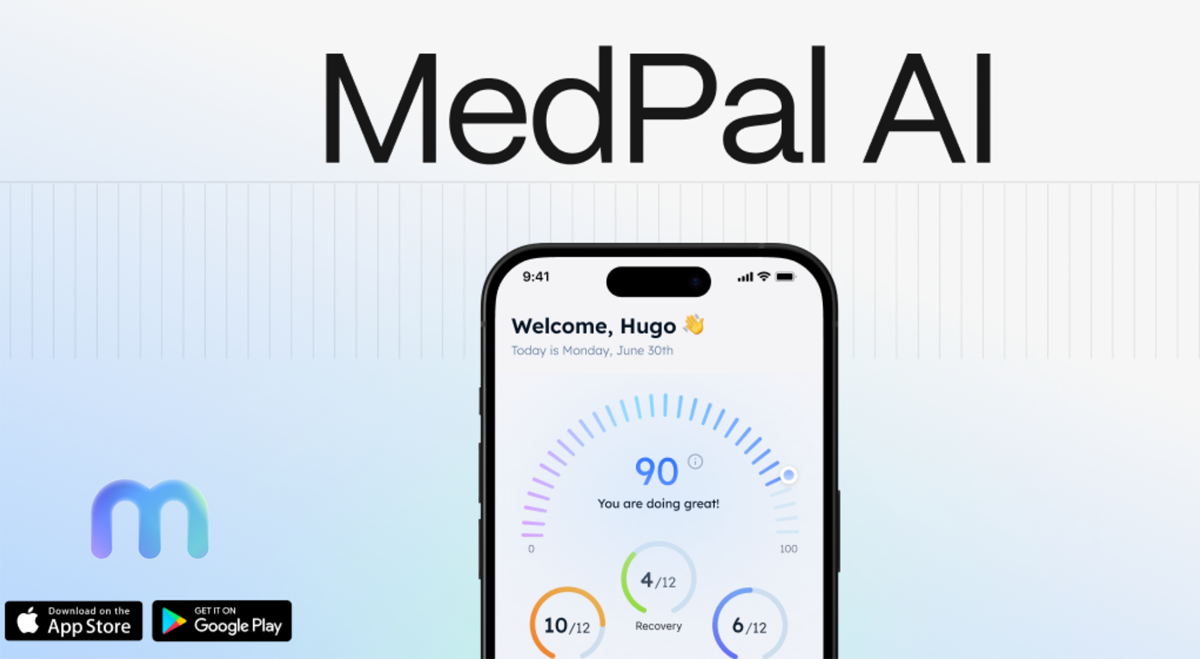
  • Organic patient growth, recurring revenues and a connected digital healthcare platform are creating a powerful new phase of growth for MedPal AI

    Organic patient growth, recurring revenues and a connected digital healthcare platform are creating a powerful new phase of growth for MedPal AI

    For digital healthcare companies, demonstrating sustainable growth is often more important than simply generating an initial surge in revenue. For MedPal AI plc (LSE:MPAL), August provided a significant indication of what could be possible as its growing healthcare platform begins to scale.

    Following the launch of marketing for its New Health private healthcare proposition in July, MedPal AI saw its annualised revenue run rate rise dramatically from approximately £8.6 million to around £28 million in August.

    Importantly, the growth was achieved through organic trading, rather than acquisition-led expansion, highlighting the traction the company’s proposition has achieved with patients.

    At the heart of the acceleration was New Health, which attracted more than 16,000 purchasing customers within weeks, significantly exceeding the company’s initial expectations.

    According to CEO Jason Drummond, the catalyst was relatively straightforward: New Health’s proposition of fair pricing, ongoing clinical support and technology designed to reduce the cost of healthcare delivery appears to have strongly resonated with consumers.

    The scale and speed of that response could prove particularly significant because the customers being acquired are not simply one-off transactions. MedPal AI’s strategy is increasingly centred on building recurring relationships with patients across multiple healthcare services.

    A rapid transition to recurring revenues

    The August numbers represent an important milestone in a remarkable period of development for MedPal AI.

    The company has moved from effectively zero revenue in October 2025 to approximately £28 million of annualised revenue in just ten months.

    While management is rightly cautious about extrapolating a single month’s performance into a forecast, the underlying structure of the business provides an important reason for optimism.

    Multiple parts of the platform generate recurring revenue, including monthly private healthcare treatment plans, NHS prescriptions and software subscriptions.

    That creates a fundamentally different growth dynamic from a business dependent on continually finding new customers simply to replace lost revenue.

    As Drummond explained, each month begins with the previous month’s customer base, providing a growing foundation from which the company can build.

    And importantly, MedPal AI says its existing infrastructure has the capacity to support volumes many times higher than those currently being processed.

    New Health opens the door to a much larger opportunity

    The rapid adoption of New Health also gives MedPal AI exposure to a rapidly expanding private healthcare market.

    Demand for GLP-1 weight-management treatments continues to develop, while the recent availability of oral GLP-1 treatment in the UK creates another potential avenue for patient growth.

    MedPal AI’s positioning is built around providing consumers with accessible pricing while maintaining clinical support and technology-enabled healthcare delivery.

    That combination could become increasingly attractive as consumers look for alternatives that deliver both value and quality.

    For MedPal AI, however, the opportunity extends beyond simply acquiring private healthcare patients.

    Every New Health customer represents a potential long-term relationship with the wider MedPal platform.

    One patient, multiple revenue opportunities

    This is arguably one of the most compelling elements of the company’s strategy.

    MedPal AI is developing operations across private healthcare, NHS prescription dispensing, care home medication and digital healthcare software, with the different businesses increasingly designed to work together.

    The NHS prescription market alone represents a substantial opportunity, with the NHS spending close to £1 billion a month on prescription medicines, according to management.

    MedPal’s dispensing infrastructure, including its large-scale robotic dispensing operation, provides the company with the capacity to participate in this market as volumes grow.

    Meanwhile, its EMRX care home software provides another route into the medication-management market, while Juno is positioned as a technology layer capable of supporting patient engagement across the wider ecosystem.

    The result is a potentially powerful model: acquire a customer once, then serve that customer through multiple parts of the healthcare platform.

    For investors, that creates the possibility of increasing customer lifetime value without requiring the company to repeatedly incur the full cost of acquiring the same patient.

    Infrastructure already in place

    Another important factor behind MedPal AI’s growth strategy is that the company has already invested in the infrastructure required to support significantly greater volumes.

    That means the next stage of growth does not necessarily require a proportional increase in physical infrastructure.

    As additional patients and prescriptions move through the platform, incremental revenue can potentially flow through an established operational base, providing an opportunity for margin expansion as scale increases.

    The economics of the group’s software operations are also noteworthy. Management highlighted EMRX’s 82% gross margin, demonstrating the potential value of combining high-margin software revenues with the group’s healthcare and dispensing operations.

    This combination of infrastructure and recurring software revenue could become increasingly important as MedPal AI scales.

    Three major markets, one connected platform

    MedPal AI is effectively operating across three substantial healthcare markets: NHS prescription dispensing, care home medication management and private healthcare.

    What makes the strategy particularly interesting is the connectivity between them.

    A New Health patient who initially joins the platform for private treatment could potentially become an NHS prescription customer.

    A care home using EMRX could become a customer of the group’s pharmacy supply operation.

    And Juno can sit across the ecosystem, helping maintain patient engagement and creating another technology-enabled relationship with the end user.

    This creates the potential for a flywheel effect, where growth in one part of the business generates opportunities for another.

    Rather than operating as a collection of disconnected healthcare businesses, MedPal AI is attempting to build an integrated digital healthcare operating system.

    From proof of concept to the next stage of growth

    The most striking aspect of MedPal AI’s recent progress may ultimately be the speed at which the business has reached its current position.

    Going from zero in October 2025 to an annualised revenue run rate of approximately £28 million by August 2026 represents a dramatic transformation in less than a year.

    The August acceleration provides further evidence that the company’s strategy can translate investment in technology, infrastructure and patient acquisition into rapidly increasing revenues.

    There will inevitably be questions around how the exceptional August growth develops over subsequent months, and management itself has stressed that one month’s performance should not be treated as a forecast.

    However, the underlying ingredients are increasingly in place: a rapidly growing customer base, recurring revenue streams, significant addressable markets, established infrastructure and the potential to generate multiple revenue streams from individual customers.

    For investors watching the evolution of the digital healthcare sector, MedPal AI is therefore becoming an increasingly interesting company to follow.

    The transformation is already substantial.

    But with New Health still in its early stages, the wider platform continuing to develop and significant spare capacity across the group’s infrastructure, Jason Drummond’s assessment that “we’re at the starting line, definitely not the finish” could prove to be one of the most important takeaways from the latest update.


  • Brent forecasts rise as Citi targets $86 and ANZ sees $95 in short term

    Brent forecasts rise as Citi targets $86 and ANZ sees $95 in short term

    Citi and ANZ have revised their Brent crude oil forecasts higher as the banks assess continuing disruptions to oil supplies from the Middle East.

    Citi now forecasts Brent at $86 per barrel for the third quarter of 2026. The bank said the current conditions, including the U.S. blockade of Iran and reduced flows through the Strait of Hormuz, are unsustainable.

    The bank expects renewed dealmaking or other developments to result in the Strait reopening during the fourth quarter.

    According to Citi, restoring flows through the Strait of Hormuz would leave the global oil market with an estimated surplus of 3 million to 4 million barrels per day. Its previous estimate was approximately 2 million barrels per day.

    ANZ has meanwhile increased its short-term Brent forecast to $95 per barrel as it assesses the effects of declining inventories.

    The bank said the market is moving into a delicate adaptation phase and expects further demand destruction will be necessary for inventories to rebuild.

    ANZ estimates that between 2.3 billion and 2.4 billion barrels of Persian Gulf supply will be removed from the market during 2026 as a result of the conflict.

    According to the bank’s estimates, cumulative losses will exceed 2 billion barrels by the end of October.

    The forecasts from Citi and ANZ incorporate different assumptions about the duration and scale of Middle East supply disruptions, including future developments affecting the Strait of Hormuz.

  • Apple foldable iPhone could add about $14 billion to December-quarter revenue, Morgan Stanley says

    Apple foldable iPhone could add about $14 billion to December-quarter revenue, Morgan Stanley says

    Apple’s (NASDAQ:AAPL) first foldable iPhone could generate approximately $14 billion in December-quarter revenue, according to Morgan Stanley, which expects the new device to represent the company’s largest iPhone form-factor change since the iPhone X.

    “Apple’s first foldable iPhone is the biggest iPhone form-factor change since iPhone X,” analyst Erik Woodring wrote ahead of the company’s scheduled Sept. 9 event.

    Morgan Stanley forecasts production of 7 million to 8 million units during the second half of 2026 and as many as 20 million units across the device’s initial product cycle. The bank expects demand initially to exceed available supply.

    Pricing will also be a focus for the launch. Morgan Stanley expects the largest like-for-like iPhone price increases in years, with Woodring citing higher NAND and DRAM costs as factors expected to push Pro-model prices more than $200 higher year over year.

    For the iPhone 18 Pro, Woodring said the main expected upgrade is a move to TSMC’s 2nm manufacturing process, which is expected to increase the device’s on-device AI performance.

    Morgan Stanley said Apple appears “more focused on securing enough components than finding enough buyers,” while noting that memory availability could restrict near-term production.

    “The event will prove to be anything but ordinary,” wrote Woodring. “This is because for the first time in 15 years, Tim Cook will not headline the event; instead, new CEO John Ternus will lead the company into its first major iPhone form factor change in nearly 10 years, unveiling the much-anticipated iPhone Fold (Ultra?), alongside what are likely to be the broadest, and most significant, like-for-like iPhone price hikes in company history.”

    The bank expects the base iPhone 18 and iPhone Air 2 to arrive later, with neither model anticipated until the spring.

  • U.S. Futures Turn Lower as August Jobs Growth Tops Forecasts: Dow Jones, S&P, Nasdaq, Wall Street

    U.S. Futures Turn Lower as August Jobs Growth Tops Forecasts: Dow Jones, S&P, Nasdaq, Wall Street

    U.S. equity futures moved lower on Friday after the latest employment report showed stronger-than-expected job creation in August, shifting investor attention back towards the outlook for Federal Reserve interest rates.

    The Labor Department reported that nonfarm payrolls increased by 162,000 in August. July’s figure was revised to a gain of 21,000 jobs from the previously reported decline of 23,000.

    Economists had forecast an increase of 55,000 jobs for August.

    The unemployment rate was unchanged at 4.1%, compared with expectations for an increase to 4.2%.

    Treasury yields moved higher following the release as investors considered what the employment figures could mean for the Federal Reserve’s September policy decision.

    “Constantly changing interest rate expectations have kept investors on their toes this week,” said Dan Coatsworth, head of markets at AJ Bell.

    Treasury Yields Rise as Markets Reassess Fed Outlook

    Expectations for a September interest rate increase had fallen earlier in the week following comments from Federal Reserve Governor Christopher Waller.

    CME Group’s FedWatch Tool showed a 52.4% probability of a quarter-point increase, compared with 63.2% on Wednesday.

    In an interview with Reuters, Waller indicated that he was leaning towards keeping rates unchanged at the upcoming meeting. He said he would be “inclined to support” holding rates steady if forthcoming economic figures continued to show “some signs of disinflation.”

    Waller’s comments had contributed to a decline in Treasury yields before Friday’s employment report.

    Dow, Nasdaq and S&P 500 Post Thursday Gains

    Wall Street had advanced during the previous session as investors responded to lower Treasury yields and changing expectations for monetary policy.

    The Dow Jones Industrial Average climbed 624.16 points, or 1.2%, to 53,686.11. The Nasdaq Composite rose 366.23 points, or 1.4%, to 26,584.06, while the S&P 500 gained 81.11 points, or 1.1%, to 7,747.71.

    Several equity sectors also recorded gains. The NYSE Arca Gold Bugs Index advanced 3.8%, the NYSE Arca Broker/Dealer Index gained 3.5% and the Dow Jones U.S. Software Index increased 3.2%.

    Computer hardware and banking shares also moved higher, while oil services stocks declined.

    Snowflake Jumps 16.6% Following Earnings

    Snowflake (NYSE:SNOW) gained 16.6% during Thursday’s session after reporting fiscal second-quarter results that exceeded expectations and issuing higher guidance.

    Friday’s payroll figures subsequently shifted the market focus back towards the labour market and its potential implications for monetary policy.

    Investors will assess the employment report alongside forthcoming economic data as they consider the possible outcome of the Federal Reserve’s September meeting.

  • European Stocks Mixed Ahead of U.S. Nonfarm Payrolls Report: DAX, CAC, FTSE100

    European Stocks Mixed Ahead of U.S. Nonfarm Payrolls Report: DAX, CAC, FTSE100

    European equity markets traded mixed on Friday as investors awaited the August U.S. nonfarm payrolls report for further indications about the Federal Reserve’s monetary policy outlook.

    Expectations for a U.S. interest rate increase eased after Federal Reserve Governor Christopher Waller indicated that he favours keeping rates unchanged at the central bank’s upcoming policy meeting.

    The French CAC 40 and the U.K.’s FTSE 100 were both down 0.1%, while Germany’s DAX gained 0.2%.

    German Factory Orders Rise 2.5% in July

    European investors also assessed German factory orders, which increased by more than expected in July, supported by demand for ships, railway rolling stock and aircraft.

    Factory orders rose 2.5% month on month, according to Destatis, compared with expectations for an increase of 0.3%. The June increase was revised to 3.7%.

    On an annual basis, German factory orders increased 13.1% in July, accelerating from growth of 7.2% in the previous month.

    Volkswagen Shares Rise Following Future Plan 2030 Update

    Volkswagen (TG:VOW3) shares advanced after the German automaker announced plans to cut an additional 50,000 jobs as part of its Future Plan 2030 transformation programme.

    The company also said it plans to invest a three-figure billion sum over the coming years as part of the programme.

    Alstom Gains Following VIA Rail Canada Agreement

    Alstom (EU:ALO) shares rose 1.6% after the French rail equipment manufacturer signed an agreement with VIA Rail Canada.

    Under the agreement, Alstom will design, engineer, manufacture and support a new Long-Distance, Regional and Remote fleet for passenger services across Canada.

    Investors remained focused on the forthcoming U.S. employment figures, which could influence expectations for the Federal Reserve’s next policy decision.