Category: Top Story

  • B&M Reports Higher Sales but Lower Profits as Turnaround Strategy Gains Momentum (BME)

    B&M Reports Higher Sales but Lower Profits as Turnaround Strategy Gains Momentum (BME)

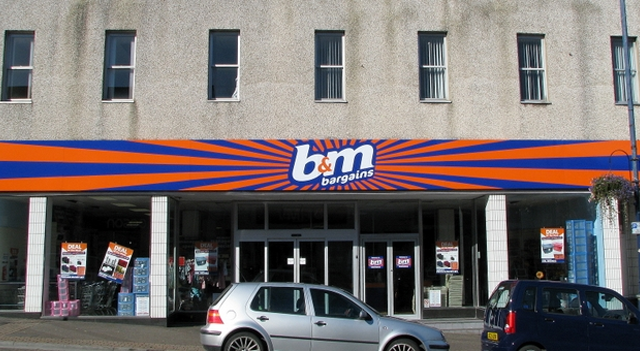
    B&M European Value Retail (LSE:BME) delivered revenue growth in the year to FY26, although profitability came under pressure as margin challenges and higher operating costs weighed on earnings.

    Group revenue increased 3.6% to £5.78 billion during the period, supported by continued expansion across its store network and solid performances in key markets. However, adjusted EBITDA declined by 25.9%, while adjusted profit before tax fell 37.7%, reflecting a more challenging trading environment, particularly within the UK business.

    The retailer’s core UK operations generated sales growth of 2.9%, although like-for-like sales remained unchanged. In France, the business achieved double-digit revenue growth and continued to gain market share within the discount retail segment. Meanwhile, sales at Heron Foods were slightly lower than the previous year.

    Turnaround Programme Focuses on Value and Simplicity

    Management is continuing to implement its “Back to B&M Basics” strategy, which is designed to improve operational efficiency and restore stronger sales and margin performance.

    Key initiatives include sharpening the company’s value proposition through more competitive pricing, reducing the number of stock-keeping units (SKUs) and accelerating the clearance of discontinued inventory. The retailer believes these actions will help improve like-for-like sales trends while creating a more streamlined and customer-focused product offering.

    The company has indicated that FY27 will remain an investment year as it continues to execute the turnaround programme and lays the groundwork for longer-term improvements in profitability.

    Strong Cash Flow Supports Balance Sheet

    Despite lower earnings, B&M continued to generate strong cash flow during the year, enabling the company to reduce net debt and maintain leverage within its target range.

    The group also recently completed a redomicile to Jersey, a move intended to simplify corporate administration and provide greater flexibility when returning capital to shareholders.

    In addition, management announced that future market guidance will focus on adjusted profit before tax rather than EBITDA, bringing reporting practices more closely into line with those of other major UK retail companies.

    Attractive Valuation Balanced by Market Caution

    From an investment perspective, B&M presents a mixed picture. The company continues to benefit from a relatively low earnings multiple and an attractive dividend yield, factors that may appeal to value-oriented investors.

    However, technical indicators currently point to weaker market momentum, suggesting some near-term caution. While the underlying business remains financially stable, investors are likely to monitor progress on margin recovery, leverage management and cash flow generation as the turnaround plan develops.

    More About B&M European Value Retail SA

    B&M European Value Retail is a leading discount retailer operating across the UK and France. The group runs nearly 800 B&M stores in the UK, more than 340 Heron Foods and B&M Express locations, and 147 stores in France. Listed on the London Stock Exchange and a constituent of the FTSE 250, the company specialises in value-priced general merchandise and fast-moving consumer goods, serving cost-conscious consumers across its core markets.


  • Market Open: BAT Forecast Upgrade, Chemring Profit Decline

    Market Open: BAT Forecast Upgrade, Chemring Profit Decline

    FTSE 100 rises as US-Iran talks support sentiment. BAT upgrades forecasts, Chemring profits fall, while gold gains and oil softens.

    Market Overview

    Markets were mixed overnight, with the FTSE 100 advancing 0.37 per cent to 10,365.42, while the CAC 40 and DAX slipped 0.45 per cent and 0.40 per cent respectively. In the United States, the Nasdaq gained 0.24 per cent, while the S&P 500 edged 0.05 per cent lower. Investor sentiment was supported by ongoing US-Iran discussions, although uncertainty around the outcome of negotiations continued to temper enthusiasm across European markets.

    Commodity markets remained a key focus, with gold and copper moving higher while Brent crude eased despite recent gains linked to geopolitical concerns. Natural gas also advanced. Sterling strengthened against the US dollar, euro and yen, while Bitcoin retreated sharply against the pound. The combination of improving risk sentiment and continued geopolitical developments remained the dominant macro driver.


    Market Numbers

    FTSE 100: Up (0.37%), 10,365.42

    CAC40: Down (-0.45%), 8,146.590

    DAX: Down (-0.40%), 25,003.04

    NASDAQ: Up (0.24%), 30,478.8

    S&P 500: Down (-0.05%), 7,592.5


    In the Headlines

    Forecast Upgrade – British American Tobacco (LSE:BATS)

    British American Tobacco raised its forecast for growth in its new-category business, citing strong demand for vaping products and nicotine pouches. The update highlights the group’s continued shift away from traditional tobacco products and supports confidence in future earnings growth.

    Expansion Costs Weigh – Chemring Group (LSE:CHG)

    Chemring reported an 8 per cent decline in first-half profit despite higher sales, as significant investment in capacity expansion increased costs. The defence technology group’s results underline the near-term impact of growth spending while demand across its markets remains robust.


    Currencies (vs GBP)

    USD: Up (0.13%), $1.3472

    CHF: Down (-0.06%), Fr.1.05788

    EUR: Up (0.01%), €1.1564

    JPY: Up (0.16%), ¥215.174

    AUD: Down (-0.03%), $1.876430

    Bitcoin (BTC/GBP): Down (-2.23%), £51,804.7


    Commodities

    Copper: Up (0.85%), 6.65962

    Gold: Up (1.10%), 4,534.13

    Brent Crude: Down (-1.42%), 93.624

    Natural Gas: Up (0.47%), 3.202

  • European Markets Advance as STMicro Rally Boosts Tech Sector Amid Iran Negotiation Uncertainty: DAX, CAC, FTSE100

    European Markets Advance as STMicro Rally Boosts Tech Sector Amid Iran Negotiation Uncertainty: DAX, CAC, FTSE100

    European equities opened higher on Tuesday, supported by strong gains in technology stocks, while oil prices eased as investors continued to assess the prospects for a diplomatic resolution to tensions in the Middle East.

    Technology shares led the advance, with semiconductor manufacturer STMicroelectronics (BIT:STMMI) climbing to its highest level in more than 25 years after raising revenue targets for its rapidly expanding data centre business. The move provided further evidence of the strong investor appetite for companies benefiting from the growth of artificial intelligence infrastructure.

    By 07:14 GMT, the pan-European Stoxx 600 index had gained 0.7%. Germany’s DAX rose 1.0%, France’s CAC 40 advanced 0.9%, and the UK’s FTSE 100 added 0.3%.

    STMicro Drives Technology Sector Higher

    Investor sentiment in the technology sector was strengthened by STMicroelectronics’ improved outlook for its data centre operations, which are benefiting from growing demand linked to artificial intelligence applications.

    The company’s upgraded targets reinforced expectations that investment in AI infrastructure will remain a key growth driver for semiconductor manufacturers and related technology businesses.

    The strong performance of STMicro shares helped lift broader European technology indices and contributed significantly to the region’s market gains.

    Oil Prices Ease as Markets Monitor Diplomatic Developments

    Oil prices moved lower as traders weighed mixed signals regarding ongoing diplomatic efforts involving Iran and the United States.

    Brent crude, the global benchmark, fell 0.9% to $94.13 per barrel, reversing part of the gains recorded on Monday after reports indicated that Iran had halted indirect communications with Washington.

    Market sentiment received some support after Lebanon announced a partial ceasefire between Israel and the Iran-backed Hezbollah movement. However, concerns remained after Israel’s military reported intercepting two projectiles launched from Lebanon on Tuesday, according to Reuters.

    Trump Signals Optimism on Potential Iran Agreement

    U.S. President Donald Trump told ABC News that he believes a peace agreement with Iran could be reached within the coming week.

    According to Trump, there “was a little glitch” in the negotiations, a comment widely interpreted as a reference to Iran’s objections to Israeli military actions in Lebanon, which reportedly prompted Tehran to suspend its participation in talks.

    It remained unclear whether negotiations between the United States and Iran had formally resumed.

    Earlier, Trump told CNBC that he was unconcerned by reports that Iran had stopped responding to diplomatic contacts. Later, however, he adopted a more positive tone, stating that discussions with Tehran were “progressing rapidly.”

    Investors continue to monitor developments closely, with any breakthrough or setback likely to influence both energy markets and broader investor sentiment.

  • Luxury Brands Turn to America’s AI-Fueled Wealth Boom

    Luxury Brands Turn to America’s AI-Fueled Wealth Boom

    European luxury companies are increasingly targeting the United States as they seek to attract a growing class of affluent consumers whose fortunes have benefited from the ongoing technology and artificial intelligence boom. A wave of boutique openings, flagship stores and high-profile fashion events is helping brands offset softer demand and weaker consumer confidence in other parts of the world.

    After enduring two years of declining sales, the luxury industry had begun to show signs of recovery before the outbreak of the Iran conflict at the end of February. The war has disrupted international travel and weighed on luxury spending across several regions, extending its impact beyond the Middle East.

    At the same time, China, which has been the industry’s primary engine of growth for more than two decades, continues to face economic challenges linked to deflationary pressures and the lingering effects of its property market downturn. As a result, wealthy American consumers have become increasingly important to the sector.

    U.S. Luxury Consumers Remain Resilient

    “The U.S. high-end consumer has been much more resilient than we are seeing elsewhere, especially in Europe,” said Marcus Morris-Eyton, portfolio manager at AllianceBernstein in London, adding that the continued AI rally and healthy wage growth have boosted this cohort of spenders.

    Luxury groups including LVMH (EU:MC), Moncler (BIT:MONC) and Gucci (EU:KER) have moved quickly to capitalize on this trend.

    Last month, both Dior and Gucci showcased their cruise collections in the United States, while Italian fashion house Zegna is scheduled to unveil its Summer 2027 collection in Los Angeles on Friday.

    Store Expansion Accelerates Across America

    North America became the leading market for new luxury store openings in 2025 for the first time since Savills began tracking the sector in 2016.

    According to the real estate firm’s latest global luxury retail report, North America accounted for approximately 27% of all luxury store openings worldwide last year, compared with 26% in Europe and 19% in China. Overall, the number of new luxury stores globally fell to its lowest level since 2020.

    Untapped Potential Beyond Major Cities

    Research from Savills suggests the United States remains relatively underpenetrated by luxury retailers when compared with the size of its ultra-wealthy population.

    “Many brands still view the U.S. as unpenetrated relative to the scale of its wealth base,” said Todd Siegel, Chicago-based president of U.S. retail at real estate firm Savills.

    Luxury companies are increasingly looking beyond traditional markets such as New York and Los Angeles, targeting secondary cities and states that have attracted affluent residents seeking lower taxes and lifestyle changes.

    Moncler, for example, has indicated that most of its planned store openings this year will be in the United States. The company launched a location in Aspen earlier this year and plans to open its largest global flagship store on New York’s Fifth Avenue later in 2026, alongside new stores in California’s Valley Fair and Dallas.

    Meanwhile, Hermès (EU:RMS) expanded into Nashville, Tennessee, and Scottsdale, Arizona, last year and plans additional openings near Chicago and in Brooklyn during the coming months.

    A Two-Speed Luxury Market

    Consultancy Bain described the current luxury landscape as a “two speed world,” with the United States and parts of Asia continuing to grow while Europe and the Middle East face pressure from weaker tourism and the consequences of the ongoing Iran conflict.

    Although most luxury companies do not break out U.S.-specific results, first-quarter earnings reports suggest the Americas significantly outperformed other regions.

    Richemont (BIT:1CFR), owner of Cartier, reported an 18% increase in sales across the Americas between January and March, marking its ninth consecutive quarter of double-digit growth in the region.

    American Luxury Demand Benefits Domestic Brands

    The strength of affluent U.S. consumers has also supported American luxury and premium brands.

    Ralph Lauren (NYSE:RL) and Tapestry (NYSE:TPR), the owner of Coach, have both delivered stronger sales growth than many competitors.

    “Our core customers are loyal and resilient,” Ralph Lauren Chief Product & Merchandising Officer Halide Alagoz told Reuters. “What we see so far is that their behaviours are not changing. On the contrary, consumers during these turbulent times want to come to brands that they can trust.”

    Tapestry Chief Executive Joanne Crevoiserat also highlighted growth opportunities in the region.

    “We’re building emotional connections and bringing new, younger consumers into the market in North America and beyond,” she said.

    China Remains Critical for a Full Recovery

    Despite the strength of U.S. spending, analysts caution that the luxury sector cannot rely solely on American consumers for a sustained recovery.

    Morgan Stanley analyst Edouard Aubin noted that upcoming U.S. stock market listings could stimulate demand for luxury watches and jewellery, but emphasized that American buyers account for only around one-fifth of global luxury spending.

    “It’s nice, it’s helpful, but you need China to get better as well for the sector to really recover,” he said.

  • FTSE 100 Advances as Investors Monitor U.S.-Iran Negotiations

    FTSE 100 Advances as Investors Monitor U.S.-Iran Negotiations

    UK equities moved modestly higher on Tuesday, while major European markets posted stronger gains as investors assessed diplomatic developments involving the United States and Iran alongside ongoing geopolitical tensions in the Middle East.

    The FTSE 100 added 0.26%, while Germany’s DAX rose 0.95% and France’s CAC 40 gained 0.84%. Sterling also strengthened against the U.S. dollar, rising 0.15% to 1.3474 as of 03:14 ET (07:14 GMT).

    Diplomatic Progress Supports Market Confidence

    Investor sentiment remained broadly positive after U.S. President Donald Trump indicated that discussions with Iran were progressing at a “rapid pace.”

    The comments came despite reports suggesting that Tehran was still reviewing the final draft of a proposed memorandum of understanding and had not yet issued an official response.

    According to Iran’s semi-official Mehr News agency, Iranian officials said any future agreement must deliver “real benefit” to Tehran, reflecting concerns over the durability of commitments made by Washington under previous arrangements.

    Trump also stated that he expected a wider agreement with Iran to be reached within the next week.

    Middle East Security Concerns Remain in Focus

    Developments in Lebanon continued to attract investor attention. Trump said that Israel and Hezbollah had agreed to halt attacks following discussions involving Israeli Prime Minister Benjamin Netanyahu and representatives associated with the Iran-backed organization.

    However, optimism surrounding the reported ceasefire was tempered by reports of renewed fighting overnight between Israeli forces and Hezbollah militants in southern Lebanon.

    Regional tensions remained elevated after outgoing Mossad chief David Barnea called for continued efforts to remove Iran’s current leadership, while Iranian officials reiterated that the country would respond to any future threats and rejected external pressure.

    Energy Markets Watch Key Shipping Routes

    Energy traders remained focused on potential disruptions to critical maritime transport routes in the region.

    Officials linked to Iran warned that risks could extend beyond the Strait of Hormuz to include the Bab el-Mandeb Strait, a strategically important corridor for global trade and energy shipments.

    Concerns over shipping security increased following reports of an attack on a commercial vessel near Iraq’s Umm Qasr port. Meanwhile, U.S. officials said commercial traffic through the Strait of Hormuz was continuing with military guidance and oversight.

    UK Market Focus: Chemring Reports Record Order Book

    Among UK-listed companies, Chemring (LSE:CHG) reported interim results showing an 8% decline in underlying operating profit for the first half despite delivering higher revenue.

    The defence and aerospace group said earnings were affected by substantial investment in manufacturing capacity expansion and weaker margins within its Sensors & Information division. Despite these pressures, Chemring’s order book reached a record £1.40 billion, providing strong visibility for future revenue and reflecting continued demand across global defence markets.

  • Chemring Reports Higher Revenue and Record Order Book as Defence Spending Drives Demand (CHG)

    Chemring Reports Higher Revenue and Record Order Book as Defence Spending Drives Demand (CHG)

    Chemring (LSE:CHG) delivered interim results broadly in line with market expectations for the six months ended 30 April 2026, supported by strong demand across its defence and security businesses. The company ended the period with a record order book valued at £1.4 billion, providing significant visibility over future revenues and underpinning its medium-term growth outlook.

    Revenue increased 6.5% year over year to £237.3 million, while the group maintained an operating margin of 10.3%. Although underlying operating profit and earnings per share declined during the period, the board approved a 4% increase in the interim dividend. Net debt rose to £144.5 million as the company continued to invest heavily in capacity expansion and strategic growth initiatives.

    Capacity Expansion Programme Gains Momentum

    Chemring is continuing to expand production capabilities across its Energetics division, with major projects progressing at facilities in Chicago, Scotland and Norway.

    Management believes these investments will help the company meet growing customer demand, particularly as defence budgets increase across a number of key markets. The expansion programme is designed to strengthen Chemring’s ability to support long-term contracts while enhancing operational flexibility.

    Roke Secures Early Success in Counter-Drone Market

    The company also highlighted progress within its Roke business, which has secured initial domestic and international sales of its newly developed counter-drone technology.

    As unmanned aerial systems become increasingly prevalent in modern conflict environments, management sees growing opportunities for advanced detection and defence solutions. Early customer adoption is viewed as a positive step in expanding Roke’s presence within this emerging market segment.

    Strong Defence Demand Supports Outlook

    Chemring said demand remains particularly robust within its Countermeasures & Energetics division, supported by heightened geopolitical tensions and sustained increases in defence spending globally.

    Given current trading conditions and the strength of its order book, the company left full-year guidance unchanged. Management believes its combination of capacity expansion, technology development and long-term customer relationships positions the business for continued growth and value creation over the coming years.

    Positive Fundamentals Offset Valuation and Technical Concerns

    The company’s outlook is supported by solid operational performance, favourable industry trends and positive commentary surrounding the prospects of its Energetics business.

    However, investors continue to weigh valuation considerations, including a relatively high price-to-earnings multiple, alongside weaker technical indicators. While the record order backlog provides confidence in future revenue streams, cash flow pressures associated with ongoing investment programmes remain an area of focus.

    More About Chemring

    Chemring Group is an international defence, aerospace and security company specialising in countermeasures, energetics, sensors and information systems.

    The company operates manufacturing facilities across four countries and employs approximately 2,700 people worldwide. Chemring serves customers in more than 50 countries, providing technologies designed to protect personnel, military platforms, critical missions and sensitive data from evolving security threats.

  • British American Tobacco Reaffirms 2026 Outlook as New Category Expansion Gains Pace (BATS)

    British American Tobacco Reaffirms 2026 Outlook as New Category Expansion Gains Pace (BATS)

    British American Tobacco (LSE:BATS) said it remains on course to deliver its full-year 2026 guidance, supported by strong performance across its U.S. business and continued growth in its New Category portfolio.

    The company expects revenue from New Categories to increase by a mid-teens percentage rate this year, driven by rising demand for modern oral nicotine products and vapour offerings. Management highlighted continued momentum for the Velo and Vuse brands globally, while also pointing to plans for an innovation-led recovery in its glo heated tobacco business during the second half of the year.

    Performance in the Americas and Europe remained resilient, helping offset a slower recovery in Asia-Pacific and Middle Eastern markets, where trading conditions continue to stabilise.

    Growth Strategy Remains Intact Despite Market Headwinds

    British American Tobacco reaffirmed its medium-term financial framework, although management indicated that 2026 results are likely to fall toward the lower end of its targeted ranges for revenue growth, profit expansion and earnings per share.

    The company also warned that global cigarette volumes are expected to decline slightly faster than previously anticipated and noted that foreign exchange movements could create additional pressure on reported results.

    Despite these challenges, management remains confident in the business outlook, supported by continued progress in reduced-risk products and a diversified geographic footprint.

    Cash Generation and Shareholder Returns Remain Priorities

    The group expects operating cash flow conversion to exceed 95% during the year and confirmed plans to complete a £1.3 billion share repurchase programme alongside its progressive dividend policy.

    British American Tobacco also reiterated its objective of reducing leverage to between 2.0 and 2.5 times EBITDA by the end of 2026. The company believes these measures will support ongoing shareholder returns while maintaining financial flexibility in a competitive and evolving nicotine market.

    Balanced Outlook Supported by Income Appeal

    The company’s investment profile continues to benefit from solid profitability, although this is partially offset by leverage levels and a notable decline in cash flow recorded during 2025.

    Valuation remains supported by a relatively moderate price-to-earnings multiple and an attractive dividend yield, while technical indicators present a broadly neutral picture. Management’s guidance and capital return commitments provide additional support, though investors continue to monitor competitive pressures in vapour products, illicit trade activity and softer performance in certain regions.

    More About British American Tobacco

    British American Tobacco is one of the world’s largest tobacco and nicotine companies, generating the majority of its revenue from traditional combustible cigarette products while expanding its presence in reduced-risk categories.

    Its New Category portfolio includes Velo nicotine pouches, Vuse vapour products and glo heated tobacco devices. The company maintains a significant presence in the United States, Europe and a range of emerging markets as it seeks to accelerate the transition toward alternative nicotine products.

  • Wizz Air Posts Strong May Passenger Growth as Network Expansion Continues (WIZZ)

    Wizz Air Posts Strong May Passenger Growth as Network Expansion Continues (WIZZ)

    Wizz Air (LSE:WIZZ) delivered robust traffic growth in May 2026, transporting 7.13 million passengers, a 26% increase compared with the same month last year. The airline expanded capacity by 25.4% to 7.77 million seats, while its load factor improved to 91.7%, reflecting strong demand across its network.

    The carrier also reported continued progress on operational efficiency, with carbon dioxide emissions per passenger-kilometre declining 3.2% year over year to 49.4 grams.

    Tel Aviv Services Restart and Italian Operations Expand

    During the month, Wizz Air resumed flights to Tel Aviv following previous suspensions related to tensions in the Middle East. The restart reconnects Israel with a wide range of destinations across Europe and restores an important segment of the airline’s network.

    The company also strengthened its footprint in Italy by assigning additional aircraft to bases in Milan Malpensa, Naples and Catania. Alongside its network expansion, Wizz Air broadened its corporate travel reach through a new partnership with travel technology provider Atlas.

    The airline further supported major sporting events by operating 77 special flights for fans attending the UEFA Champions League final in Budapest, with aircraft operating at near-full capacity.

    Financial Recovery Supports Outlook Despite Industry Challenges

    Wizz Air’s investment outlook is supported by improving profitability trends and a recovery in free cash flow, alongside a valuation that remains relatively attractive based on earnings multiples.

    However, several challenges continue to weigh on sentiment. Technical indicators remain weak, with the share price trading below key moving averages and momentum measures remaining negative. Investors are also monitoring execution risks highlighted by management, including breakeven profitability targets, pressure on unit revenues and temporary cost increases associated with the airline’s transition and growth initiatives.

    More About Wizz Air Holdings

    Wizz Air Holdings is a European ultra-low-cost airline group operating short- and medium-haul routes across Europe and the Middle East.

    The company primarily serves Central and Eastern European markets while continuing to expand its network and fleet. Wizz Air has been increasing its presence in strategic markets such as Italy and focuses on attracting leisure travellers and those visiting friends and relatives through its low-fare model.

  • British Land Appoints Joanne McNamara as Chief Executive Officer (BLND)

    British Land Appoints Joanne McNamara as Chief Executive Officer (BLND)

    British Land (LSE:BLND) has selected Joanne McNamara as its next Chief Executive Officer, bringing in the current Executive Vice President for Europe at Oxford Properties to lead the business. McNamara is expected to take up the role no later than the end of November 2026.

    McNamara arrives with more than 20 years of experience in the real estate sector and has played a key role in expanding Oxford Properties’ European platform. British Land’s board believes her track record and industry expertise make her well suited to execute the company’s growth plans across its core UK commercial real estate markets.

    Leadership Transition Backed by Long-Term Incentives

    As part of her appointment, McNamara will receive an annual base salary of £800,000. Her compensation package also includes awards designed to replace bonuses and long-term incentives forfeited upon leaving her current employer, alongside additional restricted and performance-based share awards.

    The structure of the package is intended to align management interests with those of shareholders while supporting long-term value creation. British Land said the appointment reflects its focus on combining strong leadership with expertise in private capital markets as it seeks to strengthen its position in key segments including London campuses and retail parks.

    Outlook Supported by Valuation and Financial Strength

    British Land’s investment case continues to be supported by what it views as an attractive valuation, characterised by a relatively low price-to-earnings ratio and a strong dividend yield. The company also points to a solid balance sheet and improving cash flow trends.

    Market momentum and technical indicators remain favourable, although earnings volatility associated with property revaluations remains a consideration. Additional challenges include higher financing costs and the execution risks linked to development and project delivery activities.

    More About British Land Company plc

    British Land Company plc is one of the UK’s leading commercial property owners and developers, with a strategic focus on sectors benefiting from strong operational fundamentals, particularly London campuses and retail parks.

    As of 31 March 2026, the company owned or managed a property portfolio valued at £15.8 billion. Its strategy centres on creating, developing and managing high-quality, sustainable destinations while generating long-term value through active asset management and development expertise.

  • AI Momentum Points to Higher Start for U.S. Markets: Dow Jones, S&P, Nasdaq, Wall Street Futures

    AI Momentum Points to Higher Start for U.S. Markets: Dow Jones, S&P, Nasdaq, Wall Street Futures

    U.S. stock futures traded in positive territory early Monday, indicating Wall Street could open with gains as investors continue to embrace the artificial intelligence theme following Nvidia’s (NASDAQ:NVDA) latest product launch.

    The upbeat mood follows a record-setting finish to last week, when the major U.S. indices closed at all-time highs despite ongoing geopolitical uncertainty.

    Nvidia and Microsoft Showcase Next-Generation AI Computing

    Technology stocks attracted fresh attention after Nvidia (NASDAQ:NVDA) introduced RTX Spark, a new AI-focused processor platform developed alongside Microsoft (NASDAQ:MSFT).

    According to Nvidia, the new technology is designed to redefine the Windows PC experience by enabling advanced personal AI assistants to handle tasks directly on users’ devices.

    “The PC is being reinvented,” said NVIDIA founder and CEO Jensen Huang. “For forty years, you launched apps. Click. Type. With RTX Spark and Microsoft Windows, you ask — and the PC does the work.”

    Investors welcomed the announcement, sending Nvidia shares 2.4% higher in premarket trading. Microsoft also advanced 3.8%.

    Hardware manufacturers Dell (NYSE:DELL) and HP (NYSE:HPE) moved sharply higher as traders assessed the potential for a new upgrade cycle driven by AI-capable computers.

    Geopolitical Risks Continue to Influence Markets

    Despite enthusiasm surrounding artificial intelligence, investors remained focused on developments in the Middle East.

    Crude oil prices climbed after U.S. Central Command announced that American forces carried out “self-defense strikes” against Iranian drone-control and radar facilities over the weekend.

    Iran’s Islamic Revolutionary Guard Corps later stated that it had targeted an air base allegedly connected to a U.S. operation against a telecommunications site on Sirik Island in southern Iran.

    The exchange of military actions contributed to renewed concerns over regional stability and energy supplies.

    Trump Maintains Optimistic Tone on Negotiations

    President Donald Trump attempted to calm concerns over the situation, signaling confidence that diplomatic efforts could still produce results.

    Posting on Truth Social early Monday, Trump stated that “Iran really wants to make a deal” and urged observers to remain patient as discussions continue.

    “Just sit back and relax, it will all work out well in the end – It always does!” Trump said.

    Market participants continue to watch negotiations closely for indications that tensions could ease in the coming weeks.

    Major U.S. Indices End Week at Record Levels

    Wall Street finished Friday’s session with modest gains despite intermittent volatility throughout the day.

    The Dow Jones Industrial Average rose 363.49 points, or 0.7%, to close at 51,032.46.

    The Nasdaq Composite added 55.15 points, or 0.2%, ending at 26,972.62, while the S&P 500 gained 16.43 points, or 0.2%, to finish at 7,580.06.

    All three benchmarks established new record closing highs.

    For the holiday-shortened week, the Nasdaq advanced 2.4%, the S&P 500 climbed 1.4%, and the Dow gained 0.9%.

    Investors Await Details on Possible U.S.-Iran Agreement

    Traders remain encouraged by reports suggesting progress toward a broader agreement between the United States and Iran, although many are waiting for official confirmation before making larger bets.

    Recent media reports indicated that negotiators may have agreed on the framework of a 60-day ceasefire extension.

    Such an arrangement could eventually lead to the reopening of the Strait of Hormuz and support renewed discussions regarding Iran’s nuclear activities, though President Trump has yet to formally approve the proposal.

    In a separate Truth Social post, Trump said he would meet with advisors in the situation room to make a “final determination” regarding the agreement.

    He also noted that several secondary issues had already been addressed but stressed that Iran must commit to never obtaining a nuclear weapon and must reopen the Strait of Hormuz immediately without imposing transit fees.

    Dell’s Earnings Rally Reinforces Tech Sector Leadership

    Technology shares received another boost from Dell Technologies (NYSE:DELL), whose stock soared more than 33.7% on Friday.

    The move followed stronger-than-expected fiscal first-quarter results and an increase in the company’s full-year outlook.

    Dell’s rally helped propel the NYSE Arca Computer Hardware Index 8.6% higher, lifting the benchmark to a record closing level.

    NetApp and Software Companies Join the Advance

    NetApp (NASDAQ:NTAP) was also among the session’s top performers, surging 22.4% after posting quarterly earnings that exceeded expectations and issuing upbeat guidance.

    Software stocks participated in the broader technology rally, with the Dow Jones U.S. Software Index climbing 6.2% to its strongest close in four months.

    Elsewhere, gold-related shares and brokerage firms recorded notable gains, while telecom, retail and natural gas stocks lagged the broader market.