Category: Top Story

  • European markets move higher as easing geopolitical tensions lift sentiment: DAX, CAC, FTSE100

    European markets move higher as easing geopolitical tensions lift sentiment: DAX, CAC, FTSE100

    European equities traded in positive territory on Friday, supported by improving investor sentiment after reports suggested the United States and Iran had reached a preliminary agreement to prolong their ceasefire. Meanwhile, the U.S. dollar was on track for a modest weekly decline, while oil prices fell to their lowest levels in a month.

    According to reports, the proposed arrangement would extend the ceasefire by 60 days, subject to final approval from U.S. President Donald Trump.

    Under the framework being discussed, Iran would be prevented from charging fees on vessels passing through the Strait of Hormuz, while the United States would gradually ease restrictions affecting Iranian ports and maritime trade.

    Major European indices post gains

    The prospect of reduced geopolitical risk helped support equity markets across the region.

    France’s CAC 40 advanced 0.6%, outperforming its European peers. The U.K.’s FTSE 100 gained 0.2%, while Germany’s DAX added 0.1% as investors responded positively to signs of progress in diplomatic negotiations.

    The decline in oil prices also contributed to the more constructive market tone, easing concerns about energy-related inflation pressures.

    Pernod Ricard remains under pressure in India

    Shares of Pernod Ricard (EU:RI) were little changed during the session after the company suffered a setback in one of its key international markets.

    An Indian court rejected a request from the French spirits producer seeking authorization to resume sales of its products in New Delhi, limiting the company’s access to a strategically important consumer market.

    Renault gains after emissions targets receive approval

    Automaker Renault (EU:RNO) was among the stronger performers after receiving validation for its updated emissions reduction roadmap.

    The Science Based Targets Initiative approved the company’s revised short- and long-term climate objectives, replacing targets originally established in 2019.

    The endorsement was viewed positively by investors as Renault continues to align its operations with increasingly demanding environmental standards and sustainability goals.

    CTS Eventim jumps on strong quarterly growth

    German ticketing and live entertainment group CTS Eventim (TG:EVD) posted one of the strongest gains of the day after reporting robust first-quarter results.

    The company announced that revenue increased by 23% year-on-year during the quarter, reflecting continued strength in demand for live events and ticketing services.

    The performance reinforced confidence in the company’s growth outlook and highlighted the resilience of the entertainment sector despite broader economic uncertainty.
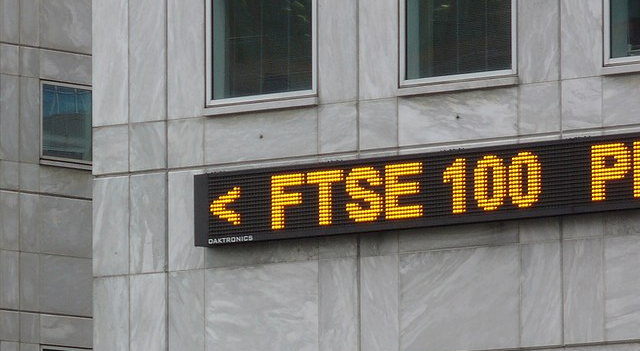

  • FTSE 100 edges higher as investors monitor uncertainty over potential Iran agreement

    FTSE 100 edges higher as investors monitor uncertainty over potential Iran agreement

    European stock markets traded modestly higher on Friday as investors assessed reports of progress in negotiations between the United States and Iran, while remaining cautious over the lack of a final agreement and the potential for renewed geopolitical tensions over the weekend.

    By 07:13 GMT, the FTSE 100 was up 0.09%, with Germany’s DAX gaining 0.16% and France’s CAC 40 advancing 0.45%. Sterling weakened 0.09% against the US dollar to trade at $1.3434.

    Market sentiment was influenced by reports that US and Iranian negotiators had drafted a proposal for a 60-day ceasefire extension that would reopen the Strait of Hormuz and pave the way for formal discussions regarding Iran’s nuclear programme. However, uncertainty remained after reports suggested US President Donald Trump had yet to approve the proposal and was considering the terms before making a final decision.

    Speaking on Thursday, Vice President JD Vance indicated that discussions were continuing, with negotiators still working through several outstanding issues. “Going back and forth on a couple of language points,” he said, adding that it was “still to be discussed” whether Trump would sign the agreement. “We’re not there yet, but we’re very close.”

    Despite signs of diplomatic progress, tensions in the region remained elevated. US Central Command said Iran launched a ballistic missile towards Kuwait on Wednesday night in what it described as an “egregious ceasefire violation.” Kuwaiti defence systems successfully intercepted the missile.

    The incident followed US military action near Bandar Abbas, where American forces reportedly targeted an Iranian ground control facility and intercepted several attack drones that were said to pose a threat to commercial shipping passing through the Strait of Hormuz. Regional governments including Kuwait, Saudi Arabia, Qatar and Egypt, along with the Organisation of Islamic Cooperation, subsequently condemned the missile launch towards Kuwaiti territory.

    Political divisions within Iran also added to market uncertainty. Iranian officials questioned the reported framework, with one lawmaker claiming the draft differed substantially from proposals prepared under the supervision of Supreme Leader Ayatollah Ali Khamenei. Other officials reiterated that Iran would not export its enriched uranium stockpile and continued to advocate long-term control of the Strait of Hormuz as a strategic objective.

    Further uncertainty emerged after Iran’s Tasnim News Agency reported that no memorandum of understanding had been finalised, contradicting suggestions that an agreement was close to completion.

    Meanwhile, the United States continued to increase economic pressure on Tehran. Treasury Secretary Scott Bessent announced new sanctions targeting Iran’s Persian Gulf Strait Authority as part of what he described as an “Economic Fury” campaign, warning companies and governments against paying transit fees linked to the Strait of Hormuz. Bessent also said Iranian oil exports had fallen sharply and indicated that military options remained available should negotiations fail.

    Diplomatic efforts are continuing, with US officials scheduled to meet representatives from Pakistan and Oman, both of which have played important roles in mediation efforts. Reports suggest the proposed framework could include phased sanctions relief and limited access to frozen Iranian assets, although several key issues remain unresolved.

    Investors are expected to remain focused on developments over the coming days, with any progress or setbacks in negotiations likely to influence market sentiment, energy prices and broader risk appetite.

  • Market Open: Asda Ocado Partnership, Drax Hirwaun Plant

    Market Open: Asda Ocado Partnership, Drax Hirwaun Plant

    FTSE 100 rises as investors assess Iran ceasefire developments. Asda partners with Ocado while Drax expands generation capacity.

    Market Overview

    Global markets were mixed overnight as investors weighed uncertainty surrounding Iran ceasefire negotiations and broader geopolitical developments. The FTSE 100 rose 0.30 per cent to 10,436.22, while the CAC 40 fell 0.23 per cent and the DAX declined 0.34 per cent. In the US, the Nasdaq edged 0.01 per cent higher and the S&P 500 was broadly flat, reflecting a cautious tone as markets assessed reports of efforts to extend the US-Iran ceasefire and the implications for risk assets.

    Commodity markets reflected a balanced risk backdrop. Gold gained as traders monitored inflation pressures and geopolitical developments, while Brent crude eased as concerns over energy supply disruption moderated. Natural gas moved higher and copper softened slightly. Sterling weakened against major currencies including the US dollar, euro, Swiss franc and yen, while Bitcoin advanced against the pound, indicating continued interest in alternative assets.


    Market Numbers

    FTSE 100: Up (0.30%), 10,436.22
    CAC40: Down (-0.23%), 8,188.870
    DAX: Down (-0.34%), 25,092.25
    NASDAQ: Up (0.01%), 30,225.4
    S&P 500: Down (-0.01%), 7,570.3


    In the Headlines

    Online Expansion – Ocado Group (LSE:OCDO)
    Asda has selected Ocado to help develop its online grocery business through the deployment of Ocado’s technology and automation platform. The agreement strengthens Ocado’s position in UK grocery fulfilment while supporting Asda’s efforts to improve its digital offering and operational efficiency.

    New Power Capacity – Drax Group (LSE:DRX)
    Drax has taken commercial control of its first 299MW open-cycle gas turbine plant at Hirwaun in South Wales. The facility increases the group’s flexible generation capacity and supports grid resilience as the UK continues its energy transition.


    Currencies (vs GBP)

    USD: Down (-0.15%), $1.3423
    CHF: Down (-0.14%), Fr.1.05254
    EUR: Down (-0.07%), €1.1525~
    JPY: Down (-0.13%), ¥213.811
    AUD: Down (-0.03%), $1.874940
    Bitcoin (BTC/GBP): Up (0.30%), £54,870.2


    Commodities

    Copper: Down (-0.08%), 6.44795
    Gold: Up (0.40%), 4,513.90
    Brent Crude: Down (-0.78%), 91.700
    Natural Gas: Up (0.55%), 3.313

  • Ocado secures Asda technology partnership as focus shifts toward cash generation (OCDO)

    Ocado secures Asda technology partnership as focus shifts toward cash generation (OCDO)

    Ocado Group (LSE:OCDO) has signed a new ecommerce partnership with Asda that will see the retailer adopt Ocado’s technology platform to modernise its online grocery operations across the UK from 2027.

    Under the agreement, Asda will deploy the Ocado Smart Platform throughout its digital grocery network, incorporating ecommerce storefronts, in-store fulfilment capabilities and last-mile delivery planning systems. The technology is designed to support a range of fulfilment options, including scheduled deliveries, rapid-delivery services, click-and-collect orders and purchases made through third-party delivery aggregators.

    The partnership represents a significant addition to Ocado’s client base in the UK grocery market and further demonstrates the adaptability of its technology platform. For Asda, the arrangement is intended to strengthen digital operations, improve efficiency and enhance the customer experience across multiple shopping channels.

    While Ocado does not expect the agreement to have a material financial impact during the 2026 financial year, management believes the deal reinforces the long-term growth potential of its technology business as adoption of the platform continues to expand. The company also reiterated its expectation of achieving positive cash flow during the second half of the current year and delivering full-year cash-flow positivity in 2027, reflecting confidence in the scalability of its business model and improving financial performance.

    Despite these developments, Ocado’s outlook remains influenced by variability in operating profitability and weaker technical indicators, with the shares continuing to trade below key moving averages and momentum measures remaining subdued. However, improving cash generation trends and an undemanding valuation provide some support, while management has outlined a clear pathway toward sustainable cash generation. Investors continue to weigh these positives against the company’s debt levels and the execution risks associated with scaling its technology and retail partnerships.

    More about Ocado Group

    Ocado Group is a UK-based technology company specialising in ecommerce, automation and logistics solutions for the grocery sector. Its proprietary Ocado Smart Platform provides retailers with an integrated suite of tools covering online storefronts, fulfilment operations, warehouse automation and last-mile delivery management.

    The company partners with supermarkets around the world to support the growth of online grocery shopping, helping retailers improve efficiency, enhance customer service and manage increasingly complex omnichannel operations. Through its technology-led approach, Ocado has established itself as a leading provider of digital infrastructure for the global grocery industry.

  • Blencowe Resources boosts Orom-Cross valuation as downstream graphite plans enhance project economics (BRES)

    Blencowe Resources boosts Orom-Cross valuation as downstream graphite plans enhance project economics (BRES)

    Blencowe Resources (LSE:BRES) has upgraded the commercial assumptions supporting its Definitive Feasibility Study for the Orom-Cross graphite project in Uganda, resulting in a significant increase in the project’s estimated value. The updated model has raised the project’s net present value (NPV10) by 15% to US$1.254 billion, while maintaining the previously forecast two-phase development capital expenditure of US$170 million.

    The revised projections reflect a combination of factors, including a larger reserve base, additional offtake agreements, improved pricing assumptions for purified graphite products and a more favourable product mix. As a result, projected net free cash flow over the initial 15-year mine life has more than doubled to US$4.466 billion, representing a 120% increase from earlier estimates.

    Management believes the updated economics reinforce Orom-Cross’s potential to become a major supplier of graphite outside China, particularly as demand grows for secure and diversified supply chains supporting battery manufacturing and energy transition technologies. The project’s strategy increasingly focuses on downstream processing and value-added products, including uncoated spheronised purified graphite and expandable graphite, which command higher margins than traditional concentrate sales.

    To support development, Blencowe is pursuing a phased funding approach. The company is targeting approximately US$45 million of predominantly project-level equity financing for Phase 1, followed by around US$125 million of mainly debt financing for Phase 2. At the same time, management continues to progress tender submissions, engage with European battery-sector initiatives and pursue infrastructure improvements that could strengthen the project’s commercial attractiveness and strategic importance.

    Despite the enhanced project economics, the company’s outlook remains influenced by its current financial position. Blencowe continues to operate without revenue and remains loss-making, with negative operating and free cash flow that deteriorated during 2025. Technical indicators also remain relatively weak, with the share price trading below key short-term moving averages and momentum measures remaining subdued. Traditional valuation metrics offer limited support given the absence of earnings.

    More about Blencowe Resources Plc

    Blencowe Resources Plc is a natural resources development company focused on advancing the Orom-Cross graphite project in Uganda. The project contains significant natural flake graphite resources and is being developed to supply both graphite concentrate and higher-value processed graphite products.

    The company is positioning Orom-Cross as a strategically important source of non-Chinese graphite for Western markets, targeting demand from battery manufacturers, electric vehicle supply chains, energy storage applications and a range of industrial end markets seeking secure and diversified raw material supplies.

  • Drax assumes control of first 299MW gas-fired peaking plant in Wales (DRX)

    Drax assumes control of first 299MW gas-fired peaking plant in Wales (DRX)

    Drax (LSE:DRX) has taken commercial control of the Hirwaun Power Station in South Wales following the completion of commissioning works, marking the company’s first operational 299MW open cycle gas turbine (OCGT) facility. The asset was acquired from developer Metlen Energy & Metals and represents the first of three planned OCGT plants across England and Wales that are expected to deliver a combined capacity of approximately 900MW.

    The Hirwaun facility forms part of Drax’s strategy to expand its flexible generation portfolio and will generate income through a combination of peak electricity production, grid balancing and support services, and long-term Capacity Market contracts. These index-linked agreements extend to 2039 and are valued at more than £260 million across the portfolio.

    Drax will oversee the operation and dispatch of the plants from its central control functions, while Siemens Energy has been appointed to manage day-to-day site operations. The facilities have been designed to respond rapidly to fluctuations in electricity demand and will also be capable of operating as synchronous compensators, helping to maintain grid stability as renewable generation continues to increase across the UK energy system.

    The company’s outlook is supported by solid cash generation, manageable debt levels and favourable valuation metrics, including an attractive earnings multiple and dividend yield. Technical indicators remain constructive, with the shares trading above key moving averages, although momentum indicators are broadly neutral. Management has also reiterated its longer-term free cash flow and shareholder return targets, though these positives are balanced by impairment charges and near-term earnings pressures associated with the UK’s new Contracts for Difference framework.

    More about Drax Group plc

    Drax Group plc is a UK-based energy company focused on power generation, flexible energy infrastructure and grid support services. Alongside investments in open cycle gas turbine facilities, the company is developing battery energy storage projects to help support the transition to a lower-carbon electricity system while enhancing energy security and grid resilience across the UK.

  • European markets retreat as renewed U.S.-Iran strikes push oil prices higher: DAX, CAC, FTSE100

    European markets retreat as renewed U.S.-Iran strikes push oil prices higher: DAX, CAC, FTSE100

    European equities traded lower on Thursday after fresh military strikes involving the United States and Iran fueled concerns over rising energy costs and renewed inflationary pressure across global markets.

    The U.K.’s FTSE 100 Index declined 1%, while France’s CAC 40 and Germany’s DAX Index each fell around 0.6%.

    Investor sentiment weakened after the U.S. carried out additional self-defense strikes in southern Iran, while Tehran reportedly launched attacks targeting a U.S. air base. The escalation pushed Brent crude prices nearly 3% higher to around $97 per barrel.

    Airline stocks came under pressure as higher oil prices raised concerns about increasing fuel costs and weaker profitability for the sector.

    Among individual movers, shares of Johnson Matthey (LSE:JMAT) declined after the British specialty chemicals company announced an agreement to acquire U.S.-based emissions catalyst producer CORMETECH in a cash deal valued at $360 million on an enterprise-value basis.

    Energy company SSE (LSE:SSE) also traded lower after reporting a 5% decline in adjusted earnings per share for the financial year ended March 31, 2026.

    BT (LSE:BT.A) shares dropped following reports that the British government would oppose any effort by Sunil Bharti Mittal to increase his ownership stake in the telecommunications group beyond 25%.

    Meanwhile, semiconductor-related stocks outperformed after Soitec (EU:SOI) reported annual sales that exceeded market expectations.

    The positive read-through lifted shares of sector peers STMicroelectronics (BIT:STMMI) and Infineon (TG:IFX), both of which posted gains during the session.

  • European Markets Retreat as Gulf Conflict Intensifies: DAX, CAC, FTSE100

    European Markets Retreat as Gulf Conflict Intensifies: DAX, CAC, FTSE100

    European equities opened lower on Thursday as renewed military tensions in the Gulf raised concerns over the stability of the fragile ceasefire between the United States and Iran, while also clouding prospects for a broader diplomatic agreement between the two countries.

    At 07:02 GMT, the pan-European Stoxx 600 index had declined 0.4%. Germany’s DAX fell 0.5%, France’s CAC 40 slipped 0.4%, and the FTSE 100 in London dropped 0.7%.

    Fresh Military Strikes Renew Investor Concerns

    Investor sentiment weakened after reports that the U.S. military launched additional strikes inside Iran on Wednesday, following Iranian drone attacks targeting commercial vessels in the Strait of Hormuz.

    According to the Wall Street Journal, citing officials familiar with the matter, U.S. forces destroyed a drone and targeted a drone-control facility near the southern Iranian port city of Bandar Abbas.

    Iran’s Islamic Revolutionary Guard Corps later stated that it had retaliated by striking a U.S. military base and warned that any future attacks would trigger further responses.

    Diplomatic Efforts Continue Without Breakthrough

    Despite the latest escalation, diplomatic discussions aimed at ending the conflict continued, although negotiators failed to secure an immediate breakthrough in talks surrounding the nearly three-month-long crisis.

    Elsewhere in the region, Kuwait’s military reported intercepting incoming missiles and drones, ending what had previously been a relatively calm period lasting several weeks without direct attacks.

    Oil Prices Climb on Supply Concerns

    Energy markets reacted to the growing instability, with Brent crude futures rising 2.6% to $96.72 per barrel.

    Although oil prices remained below the symbolic $100-per-barrel level, they continue to trade significantly above levels seen before the conflict began.

  • FTSE 100 Falls as Renewed U.S.-Iran Attacks Undermine Ceasefire Optimism

    FTSE 100 Falls as Renewed U.S.-Iran Attacks Undermine Ceasefire Optimism

    British equities moved lower on Thursday, tracking declines across European markets after a renewed exchange of military strikes between the United States and Iran weakened hopes for a diplomatic breakthrough in the Middle East. Investor sentiment was also pressured by warnings from the European Central Bank that energy-driven inflation risks may remain elevated for longer than markets currently expect.

    By 07:26 GMT, the FTSE 100 had dropped 0.92%, while Germany’s DAX declined 0.34% and France’s CAC 40 slipped 0.41%. Sterling also weakened slightly, falling 0.18% against the U.S. dollar to $1.3402.

    Fresh Military Escalation Raises Regional Tensions

    Market anxiety intensified after the U.S. military confirmed it had carried out new defensive strikes near Bandar Abbas on Wednesday. According to U.S. officials, the operation targeted a ground control station believed to be preparing drone launches against commercial and military vessels operating in the Strait of Hormuz.

    Iran’s Revolutionary Guards responded early Thursday, claiming they had struck the U.S. air base used to launch the attack. Kuwait later reported that its air defence systems had intercepted missiles and drones, marking one of the most direct exchanges between the two sides in recent days.

    Diplomatic Progress Overshadowed by Conflict

    The latest military escalation overshadowed earlier signs that diplomatic efforts might be gaining traction.

    Speaking during a Cabinet meeting, U.S. President Donald Trump said Iran was “negotiating on fumes,” while adding, “maybe we have to go back and finish it, maybe we don’t.”

    Secretary of State Marco Rubio also indicated there had been “progress and interest” toward a possible agreement, stressing that diplomacy remained Washington’s preferred course of action.

    Meanwhile, the White House dismissed Iranian state television reports claiming that a draft “Islamabad Framework” agreement existed under which Tehran would oversee shipping transit through the Strait of Hormuz, describing the report as “a complete fabrication.”

    Tehran Maintains Hard-Line Position

    Further uncertainty emerged from comments made by senior Iranian officials.

    Iran’s Supreme National Security Council stated that the country’s enriched uranium stockpile remained outside the scope of negotiations, while a senior Iranian lawmaker warned that even a U.S. agreement “would not mean the end of the war.”

    Deputy foreign minister Ali Bagheri Kani also reiterated demands that all frozen Iranian assets be returned “fully and unconditionally,” a condition that President Trump has already rejected.

    ECB Warns Energy Inflation Could Persist

    Adding to investor concerns, ECB chief economist Philip Lane warned on Thursday that the energy shock linked to Middle East tensions could continue affecting inflation even if the conflict is resolved relatively quickly.

    Speaking at a conference hosted by the Bank of Japan and its affiliated think tank in Tokyo, Lane cautioned about potential “second-round effects” as countries seek to rebuild energy reserves and diversify supply chains.

    Financial markets are currently pricing in two additional ECB interest rate hikes, while expectations for a third increase remain roughly balanced.

  • Market Open: SSE Infrastructure Spending, Johnson Matthey Cash Flow

    Market Open: SSE Infrastructure Spending, Johnson Matthey Cash Flow

    FTSE 100 falls as Gulf tensions lift Brent crude, while SSE boosts infrastructure investment and Johnson Matthey beats cash flow estimates.

    Market Overview

    European markets traded lower amid renewed geopolitical tensions in the Gulf region after reports of fresh US-Iran strike exchanges weakened hopes of a ceasefire. The FTSE 100 fell 0.80 per cent to 10,406.44, while the DAX slipped 0.03 per cent and the S&P 500 lost 0.31 per cent. The Nasdaq also moved lower as investors monitored escalating tensions alongside concerns over energy supply disruption and broader global growth risks.

    Commodity markets reflected the heightened uncertainty, with Brent crude climbing above $94 per barrel on fears surrounding the Strait of Hormuz and supply flows. Gold remained supported by demand for defensive assets, while Bitcoin weakened against sterling as broader risk appetite softened. Sterling traded weaker against most major currencies, with investors also assessing the outlook for inflation and central bank policy amid rising energy prices.


    Market Numbers

    FTSE 100: Down (-0.80%), 10,406.44
    CAC40: Up (0.43%), 8,207.890
    DAX: Down (-0.03%), 25,177.80
    NASDAQ: Down (-0.36%), 29,880.0
    S&P 500: Down (-0.31%), 7,515.0


    In the Headlines

    Infrastructure Expansion – SSE (LSE:SSE)
    SSE accelerated infrastructure spending plans to support long-term growth tied to the energy transition, with investment focused on electricity networks and renewable energy projects. The move highlights continued demand for grid upgrades and clean energy infrastructure across the UK.

    Cash Flow Growth – Johnson Matthey (LSE:JMAT)
    Johnson Matthey reported that FY26 free cash flow more than doubled and exceeded analyst expectations, supported by operational improvements and stronger business performance. The update may strengthen investor confidence in the company’s restructuring and capital allocation strategy.


    Currencies (vs GBP)

    USD: Down (-0.13%), $1.3402
    CHF: Down (-0.10%), Fr.1.05594
    EUR: Down (-0.04%), €1.1538
    JPY: Down (-0.20%), ¥213.782
    AUD: Up (0.16%), $1.881840
    Bitcoin (BTC/GBP): Down (-1.49%), £54,578.6


    Commodities

    Copper: Down (0.35%), 6.34338
    Gold: Down (1.42%), 4,392.96
    Brent Crude: Up (2.35%), 94.61
    Natural Gas: Down (-0.26%), 3.072