Category: Top Story

  • Hiscox Reports Record 2025 Performance and Expands Shareholder Returns

    Hiscox Reports Record 2025 Performance and Expands Shareholder Returns

    Hiscox (LSE:HSX) announced a third straight year of record financial performance in 2025, with insurance contract written premiums increasing 5.9% to $4.98 billion and profit before tax climbing to $732.7 million. The insurer achieved its strongest combined ratio in ten years at 87.8%, alongside record underwriting and investment income. Robust capital generation enabled a 20% rise in the final dividend and the launch of a new $300 million share repurchase programme, lifting total announced capital returns over the past three years to more than $1.1 billion.

    Retail operations delivered solid momentum, with premiums rising 6.3% at constant currency as Hiscox broadened its reach into adjacent specialist markets. The company expanded into Italy through a bolt-on broker acquisition and accelerated product rollouts, particularly targeting emerging professional sectors and technology-related risks. Management highlighted that its ongoing multi-year transformation programme contributed a $29 million profit uplift in 2025 and remains on course to generate $200 million in annual benefits from 2028, supporting faster retail expansion and strengthening Hiscox’s position as a focused specialty insurer.

    The company’s stock assessment reflects attractive valuation metrics and supportive corporate developments, notably the newly announced share buyback. While operating performance remains steady, cash flow pressures persist. Technical signals currently indicate a bearish trend, though valuation levels may imply potential upside if fundamentals continue to improve.

    More about Hiscox

    Hiscox Ltd is a Bermuda-based global specialty insurer listed on the London Stock Exchange. The group specialises in complex and niche risks, combining catastrophe-exposed underwriting with more stable local specialty insurance activities across its retail, London Market and reinsurance divisions. Hiscox serves both commercial and personal clients across the United States, the United Kingdom, Europe and other international markets.

  • European stocks trade sideways amid trade uncertainty and AI disruption worries: DAX, CAC, FTSE100

    European stocks trade sideways amid trade uncertainty and AI disruption worries: DAX, CAC, FTSE100

    European equities showed muted movement on Tuesday as renewed trade tensions and ongoing concerns about artificial intelligence-driven disruption kept investor sentiment cautious.

    With markets also monitoring geopolitical risks related to Iran, tariff developments and the broader economic outlook, investors are now looking ahead to U.S. President Donald Trump’s State of the Union address to Congress for further direction.

    Germany’s DAX Index slipped 0.1%, while the U.K.’s FTSE 100 Index edged up 0.1% and France’s CAC 40 Index gained 0.2%.

    Banking stocks came under pressure, with Commerzbank (TG:CBK), Deutsche Bank (TG:DBK) and BNP Paribas (EU:BNP) declining between 1% and 2% amid concerns about the potential long-term impact of AI on employment, consumer trends, economic growth, corporate earnings and equity markets.

    Automakers, meanwhile, posted broad gains. Shares of BMW (TG:BMW), Mercedes Benz (TG:MBG), Volkswagen (TG:VOW3) and Renault (EU:RNO) each rose more than 1%, even after new data showed European car sales declined year-on-year in January for the first time since June.

    Spanish telecommunications group Telefonica (BIT:1TEF) advanced nearly 2% after reporting accelerating core profit growth in the fourth quarter.

    France-based vouchers and employee benefits provider Edenred (EU:EDEN) jumped around 7% after delivering core profit results for 2025 that exceeded expectations.

    Shares of Belgian chemicals company Solvay (EU:SOLB) climbed 3.4% after the group reported fourth-quarter adjusted earnings ahead of analyst forecasts.

  • FTSE 100 opens lower as AI concerns weigh on sentiment; Standard Chartered in focus

    FTSE 100 opens lower as AI concerns weigh on sentiment; Standard Chartered in focus

    UK equities edged lower at Tuesday’s open, with investor sentiment remaining cautious amid ongoing concerns about artificial intelligence–driven disruption and broader geopolitical uncertainty. Market participants are expected to keep a close watch on developments linked to the AI theme, which analysts say continues to influence global risk appetite.

    Sterling slipped below the $1.34 level as trading began, while attention also turned to monetary policy developments. Four Bank of England rate-setters are scheduled to appear before parliament later in the day, with investors looking for clues on the likelihood of a potential interest rate cut in March as policymakers remain divided on the outlook.

    As of 08:11 GMT, the FTSE 100 index was down 0.2%, while GBP/USD fell 0.1% to 1.3475. European markets also weakened, with Germany’s DAX and France’s CAC 40 both declining by around 0.3%.

    UK market movers

    Standard Chartered PLC (LSE:STAN) reported fourth-quarter results that missed analyst expectations, as higher costs and flat revenue growth weighed on performance. The Asia-focused bank posted underlying pre-tax profit of $1.24 billion for the three months to 31 December, below Bloomberg consensus estimates of $1.38 billion, although still 18% higher than the $1.05 billion recorded a year earlier. Operating income remained broadly unchanged at $4.85 billion, with growth in wealth solutions and global banking offset by weaker episodic trading income within markets.

    Croda International PLC (LSE:CRDA) reported improved adjusted earnings for 2025, supported by strong performance in its Consumer Care and Life Sciences divisions. Group sales rose to £1.70 billion, representing a 6.6% increase at constant currency, driven mainly by a 9.6% rise in volumes. Adjusted operating profit climbed 7.9% to £295.3 million, lifting margins to 17.4%, while adjusted profit before tax increased 8.4% to £276.2 million. Adjusted basic earnings per share rose slightly to 146.2 pence from 142.6 pence a year earlier.

    Unite Group PLC (LSE:UTG) reported a 2% decline in net asset value for 2025 and issued more cautious earnings guidance for the year ahead, reflecting weaker occupancy trends and moderating rental growth despite continued demand from higher-tariff universities. The student accommodation provider recorded net asset value of 955 pence per share, below Jefferies’ forecast of 988 pence. Adjusted earnings per share increased 2% year-on-year to 47.5 pence, marginally below expectations, while the company declared a dividend of 37.7 pence per share, slightly under consensus forecasts.

  • Standard Chartered shares fall after Q4 profit misses expectations amid higher costs

    Standard Chartered shares fall after Q4 profit misses expectations amid higher costs

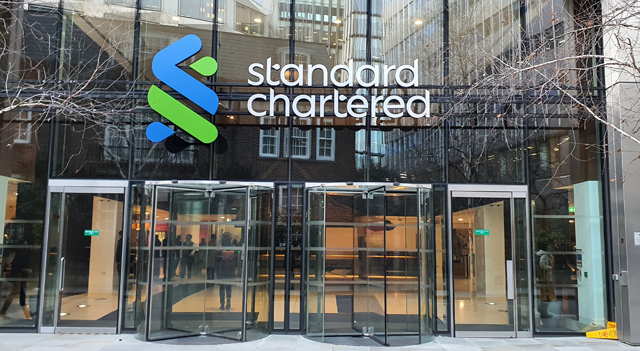
    Standard Chartered (LSE:STAN) reported fourth-quarter results that fell short of market expectations as increased costs and weaker market-related income offset continued strength in wealth management and deposit growth, sending the bank’s shares lower.

    The Asia-focused lender posted underlying pre-tax profit of $1.24 billion for the three months to 31 December, below the $1.38 billion consensus estimate compiled by Bloomberg. Despite the miss, profit still rose 18% year-on-year from $1.05 billion. Operating income remained broadly stable at $4.85 billion compared with $4.83 billion in the same period a year earlier.

    Analysts at Jefferies attributed much of the shortfall to weaker episodic income within the Financial Markets division, estimating that deal timing and market-related inventory effects reduced income by roughly $150 million versus expectations. This softer performance partly offset solid growth in wealth solutions and global banking activities.

    Net interest income declined 1% year-on-year to approximately $2.95 billion, reflecting margin pressure from lower interest rates. The bank reported a net interest margin of 209 basis points, up 15 basis points quarter-on-quarter but 11 basis points lower than a year earlier. Jefferies noted that net interest income nevertheless exceeded its forecasts, supported by higher HIBOR rates, improved CASA pass-through and favourable treasury income timing. Deposits increased 12% year-on-year, exceeding consensus expectations by $14.7 billion.

    Operating expenses rose 5% to $3.43 billion, driven by ongoing investment spending, transformation initiatives and higher performance-related compensation. The figure also included $121 million linked to regulatory changes. Excluding this item, Jefferies estimated costs rose 4% year-on-year and 12% quarter-on-quarter, with the cost-to-income ratio reaching 71%, up 13 percentage points from the previous quarter.

    Credit impairment charges increased to $145 million from $130 million a year earlier, mainly reflecting retail provisions. Analysts estimated the quarter’s cost of risk at roughly 20 basis points, while noting reduced retail impairments following portfolio optimisation measures.

    Chief executive Bill Winters said the group continued to benefit from structural growth trends across its Asia, Africa and Middle East markets and had begun 2026 on a solid footing. Wealth performance remained steady, with investment product income rising 22% year-on-year and new money inflows of $10 billion, broadly unchanged from the prior year.

    The bank ended the quarter with a common equity tier 1 ratio of 14.1%, in line with expectations and 10 basis points lower sequentially. Tangible net asset value per share increased 12% year-on-year to 1,730 cents. Standard Chartered also announced a $1.5 billion share buyback programme, exceeding consensus expectations of $1.39 billion.

    For the full year, underlying pre-tax profit rose 18% to $7.9 billion from $6.8 billion, while return on tangible equity improved to 14.7% from 11.7%. The board proposed a final dividend of 49 cents per share, bringing the total annual payout to 61 cents — a 65% increase year-on-year.

    Looking ahead, the bank has shifted its reporting and guidance to a reported basis. For 2026, it expects net interest income to remain broadly flat at constant currency, with reported revenue toward the lower end of a 5–7% growth range. Reported costs are forecast to be broadly unchanged year-on-year, while management targets a reported return on tangible equity above 12%, equivalent to roughly 13.5% on an underlying basis according to Jefferies. The bank added that trading in the first quarter has started strongly across corporate and investment banking as well as wealth management, with analysts viewing the 2026 outlook as modestly ahead of consensus expectations.

  • Avacta reports promising preclinical results for pre|CISION cancer therapy candidate

    Avacta reports promising preclinical results for pre|CISION cancer therapy candidate

    Avacta Group’s (LSE:AVCT) therapeutics division has released new preclinical data indicating that its pre|CISION platform candidate FAP-Exd (AVA6103) may deliver cancer treatments with greater selectivity and effectiveness than Enhertu, a leading antibody-drug conjugate (ADC). The company used an AI-generated synthetic comparator model based on publicly available AstraZeneca data to evaluate drug delivery performance in FAP-high animal models, comparing two closely related exatecan-family payloads.

    According to the analysis, AVA6103 demonstrated faster tumour penetration and achieved peak drug concentrations in tumour tissue more than ten times higher than those observed with Enhertu’s T-Dxd payload. The study also reported a tumour selectivity index nearly three times greater, supporting deeper and more sustained responses in preclinical testing. Avacta plans to initiate a Phase 1 clinical trial for AVA6103 in the first quarter of 2026 and intends to present the findings at upcoming scientific conferences, which could strengthen its positioning within the competitive oncology drug delivery market and attract further investor and partner interest.

    Despite scientific progress, the company’s outlook remains constrained by weak financial fundamentals, including ongoing losses and limited commercial partnerships. Technical indicators also point to bearish momentum, while valuation remains difficult to support given negative earnings and the absence of dividend income.

    More about Avacta Group plc

    Avacta Therapeutics, a division of Avacta Group plc, is a clinical-stage biopharmaceutical business focused on improving the delivery of highly potent cancer therapies. Its proprietary pre|CISION platform uses a fibroblast activation protein (FAP)-targeted peptide system designed to release cytotoxic drugs selectively within solid tumours, aiming to enhance treatment efficacy while reducing toxicity to healthy tissue.

  • Blencowe Resources advances Orom-Cross expansion as Iyan assays pave way for JORC update

    Blencowe Resources advances Orom-Cross expansion as Iyan assays pave way for JORC update

    Blencowe Resources (LSE:BRES) has released the final assay results from 87 shallow drill holes at the Iyan deposit within its Orom-Cross graphite project, confirming extensive near-surface graphite mineralisation with strong lateral continuity. Several intercepts exceeded 30 metres in thickness, and the results are expected to support a maiden JORC resource estimate for Iyan in the first quarter of 2026, which management believes will significantly expand the overall Orom-Cross resource inventory.

    The company intends to position Iyan as a bulk blending deposit, combining substantial tonnage with higher-grade zones to improve mine design and enable efficient, low-strip-ratio extraction. According to management, the latest drilling outcomes strengthen the case for a large-scale, long-life development while supporting ongoing financing and offtake negotiations. Additional assay results from the nearby Beehive deposit are still pending and could provide further resource growth, reinforcing Orom-Cross as a multi-deposit graphite development hub.

    Despite operational progress, the company’s outlook remains constrained by weak financial fundamentals, including the absence of revenue, recurring losses and increased cash burn during 2025. Technical indicators offer some support, with the share price maintaining an established uptrend above key moving averages and positive momentum signals. Valuation remains difficult to assess given negative earnings and the lack of dividend data.

    More about Blencowe Resources Plc

    Blencowe Resources Plc is a London-listed natural resources company focused on developing the Orom-Cross graphite project in Uganda. The project comprises several deposits — including Camp Lode, Northern Syncline, Iyan and Beehive — with the objective of delivering consistent, large-scale graphite supply through long-life, low-cost production operations.

  • Altona Rare Earths seeks broader investor access through OTCQB listing application

    Altona Rare Earths seeks broader investor access through OTCQB listing application

    Altona Rare Earths (LSE:REE), a London-listed explorer focused on critical raw materials in Africa, has applied for its ordinary shares to begin trading on the U.S. OTCQB Venture Market while maintaining its primary listing on the London Stock Exchange. The move is intended to expand access for North American investors, increase market visibility and, over time, improve share liquidity as the company advances development of its flagship projects.

    Altona is building a diversified portfolio centred on the Monte Muambe project in Mozambique, a multi-commodity asset hosting rare earth elements, fluorspar and gallium, alongside the Sesana Copper-Silver Project in Botswana. Monte Muambe already holds a maiden JORC resource and a long-term mining licence, with the company aiming to accelerate development of high-grade fluorspar production and explore potential gallium recovery as a by-product. These materials are considered strategically important for clean energy technologies, defence applications and advanced industrial supply chains.

    The planned OTCQB quotation follows confirmation of support from the U.S. Trade and Development Agency for the Monte Muambe project, highlighting its relevance to U.S. critical mineral supply objectives. Management views the U.S. market listing as part of a broader strategy to deepen engagement with North American investors and partners as the project progresses through its next development stages.

    Despite strategic momentum, the company’s outlook remains constrained by early-stage financial characteristics, including the absence of revenue, continuing losses, ongoing cash burn and rising leverage. Technical indicators provide some counterbalance, with the share price trading above key long-term moving averages and momentum signals remaining positive. Valuation metrics offer limited guidance due to negative earnings and the absence of dividend data.

    More about Altona Rare Earths

    Altona Rare Earths is a London Main Market-listed exploration and development company focused on critical minerals across Africa. Its portfolio includes rare earths, fluorspar, gallium and copper-silver assets, led by the Monte Muambe project in Mozambique, where the company has defined a JORC resource and secured a 25-year mining licence, alongside the Sesana Copper-Silver Project in Botswana near established mining operations.

    The company targets projects with both near-term production potential and longer-term growth opportunities, positioning itself to supply materials essential to clean energy, high-technology, defence and industrial markets as global demand for critical minerals continues to expand.

  • Sylvania Platinum posts surging earnings as production and PGM prices climb

    Sylvania Platinum posts surging earnings as production and PGM prices climb

    Sylvania Platinum (LSE:SLP) delivered a robust performance for the first half of its 2026 financial year, reporting net revenue of $99.8 million — more than double the prior period — supported by a 25% increase in 4E PGM output alongside a 55% improvement in basket prices. Adjusted EBITDA jumped 414% to $51 million, while net profit rose to $23.2 million. The strong results allowed the board to announce an interim dividend of 2.00 pence per share and allocate roughly $2.5 million toward potential share repurchases, despite recognising a $12.3 million non-cash impairment linked to a non-core exploration asset.

    On the operational front, Sylvania achieved record production of 49,164 ounces of 4E PGMs from its dump operations. During the period, the company completed and commissioned a centralised PGM filtration facility and additional tailings storage capacity. It also delivered its first shipments of chrome and PGM concentrate from the Thaba joint venture, which is advancing toward commercial-scale production. The group remains debt-free and continues to finance optimisation and growth initiatives through existing cash resources. Safety performance remained strong, with no lost-time injuries recorded. Reflecting operational momentum, management lifted full-year guidance to between 90,000 and 93,000 ounces of 4E PGMs and 60,000–90,000 tonnes of chrome, highlighting improved operational strength across both commodity segments.

    Looking ahead, the company’s prospects are supported by strengthening PGM market fundamentals and a solid balance sheet with minimal leverage, although free cash flow remains under pressure. From a technical perspective, the shares display mixed momentum, with short-term weakness offset by longer-term trend support. Valuation appears balanced, complemented by a modest dividend yield.

    More about Sylvania Platinum

    Sylvania Platinum is a South Africa-focused producer of platinum group metals and chrome, operating as a relatively low-cost processor within the sector. Its Sylvania Dump Operations consist of six chrome beneficiation and PGM processing plants that recover metals from chrome tailings generated by mines across the Bushveld Igneous Complex, positioning the company as a specialist in tailings retreatment and secondary metal recovery.

  • European Stocks Edge Lower as Trade Uncertainty Dampens Risk Appetite: DAX, CAC, FTSE100

    European Stocks Edge Lower as Trade Uncertainty Dampens Risk Appetite: DAX, CAC, FTSE100

    European equity markets moved modestly lower on Monday as renewed uncertainty surrounding U.S. trade tariffs weakened investor risk appetite at the start of the week.

    At 08:02 GMT, Germany’s DAX fell 0.6%, France’s CAC 40 declined 0.2% and the UK’s FTSE 100 slipped 0.1%.

    Tariff uncertainty weighs on sentiment

    Global markets, including Europe’s main indices, had rallied late last week after the U.S. Supreme Court struck down most of the tariffs introduced by President Donald Trump last year, ruling that the emergency legislation used did not grant authority to impose them.

    Over the weekend, however, Trump announced new global tariffs under a different legal framework, initially proposing a 10% levy before raising it to 15%. The measures could remain in place for up to five months while the administration works toward a longer-term solution.

    The perception that trade policy decisions are shifting rapidly has unsettled investors.

    “If it shakes the whole equilibrium which people in trade have got used to…it is going to bring about disruptions,” European Central Bank President Christine Lagarde said Sunday on CBS’s “Face the Nation”. “You want to know the rules of the road before you get in the car. It’s the same with trade. It’s the same with investment.”

    Confidence indicators remain supportive

    Despite the cautious start to the week, European sentiment had been improving recently, helping lift the pan-European STOXX 600 index to a record high last week. Stronger-than-expected corporate earnings and economic indicators pointing toward gradual regional recovery supported the advance.

    Figures released Friday showed eurozone business activity expanded faster than expected this month, with manufacturing returning to growth for the first time since October.

    “It might be premature, but this could be the turning point for the manufacturing sector as the headline PMI increased to growth territory,” said Cyrus de la Rubia, chief economist at Hamburg Commercial Bank.

    Germany’s Ifo business climate survey, due later Monday, is expected to show a further improvement in confidence within Europe’s largest economy.

    Earnings focus turns to Nvidia and European corporates

    Investors are also preparing for a busy earnings week. European companies set to report include HSBC (LSE:HSBA), Deutsche Telekom (TG:DTE), Iberdrola (BIT:1IBE) and Schneider Electric (EU:SU). However, the most closely watched release will come from U.S. chipmaker Nvidia (NASDAQ:NVDA), scheduled to publish results on Wednesday.

    Among company updates, PostNL (EU:PNL) reduced its annual dividend by 43% and warned that free cash flow could turn negative again in 2026 after reporting a €25 million free cash flow loss for the year, compared with a €12 million surplus previously, despite a 2.2% rise in revenue to €3.32 billion.

    Meanwhile, Barcelona-based dermatology specialist Almirall (USOTC:LBTSF) said sales of its eczema biologic Ebglyss tripled during its second year in the European market, helping push annual revenue beyond €1 billion for the first time.

    Separately, Rolls-Royce (LSE:RR.) is reportedly seeking UK government financial backing for the £3 billion development of a new aircraft engine as it looks to re-enter the short-haul aviation market, according to a Financial Times report published Monday.

    Oil prices retreat ahead of nuclear talks

    Oil prices declined sharply on Monday, reversing part of last week’s gains as markets assessed the prospect of renewed U.S.-Iran nuclear negotiations alongside ongoing trade uncertainty.

    Brent crude futures fell 1.3% to $70.39 per barrel, while U.S. West Texas Intermediate futures dropped 1.4% to $65.55 per barrel.

    Both benchmarks had climbed nearly 6% last week amid concerns over a potential U.S.-Iran confrontation and an unexpected drawdown in U.S. crude inventories.

    A third round of nuclear talks between the United States and Iran is expected to take place Thursday in Geneva, raising hopes of a diplomatic outcome that could ease concerns about disruptions to Middle Eastern oil supplies.

    Iran remains a key producer within the Organization of the Petroleum Exporting Countries (OPEC) and holds some of the world’s largest proven crude oil reserves.

  • JD Sports Shares Rise After Launch of £200m Share Buyback Programme

    JD Sports Shares Rise After Launch of £200m Share Buyback Programme

    JD Sports Fashion PLC (LSE:JD.) shares climbed 6.2% on Monday after the retailer unveiled a new £200 million share buyback programme for fiscal year 2027, reinforcing its commitment to returning cash to shareholders.

    The company said the programme will begin immediately, with an initial tranche of up to £100 million scheduled for completion by 31 July 2026. A second tranche, also worth up to £100 million, will follow thereafter as part of JD Sports’ broader capital allocation strategy.

    JD Sports has appointed Merrill Lynch International to manage the first tranche, with BofA Securities executing share purchases on the London Stock Exchange as riskless principal. Trading decisions will be made independently of the company within agreed parameters.

    Shares repurchased under the programme will either be cancelled or held in treasury, reducing overall share capital over time. Under shareholder approval granted at the company’s annual general meeting on 2 July 2025, JD Sports is authorised to acquire up to 515,475,677 shares, of which 368,613,803 remain available for purchase at the time of the announcement.

    The authority to conduct buybacks will expire at the close of business on 31 July 2026, or earlier if the company’s 2026 annual general meeting concludes before that date, when renewal approval is expected to be sought.

    JD Sports confirmed that all share purchases will comply with its general buyback authority and applicable UK market regulations, with details of transactions to be disclosed by 7:30 a.m. on the business day following each purchase.