Blog

  • Petards Reports Revenue Surge and Expanding Order Book on Defence and Rail Demand

    Petards Reports Revenue Surge and Expanding Order Book on Defence and Rail Demand

    Petards (LSE:PEG) delivered a strong trading update for 2025, reporting unaudited group revenue of approximately £14.9 million, representing a 24% increase compared with the previous year. Adjusted EBITDA rose to around £1.0 million, broadly in line with market forecasts, supported by improved performances across key operating divisions.

    Growth was led by stronger revenue and profitability from both the Petards Rail and Petards Defence units, alongside the first full-year earnings contribution from Affini. This progress was partially offset by softer trading in the second half at QRO, where order placement delays impacted performance. Despite this, operating cash generation improved to £1.4 million, allowing the company to reduce total net debt to £1.3 million by the end of the year.

    The group’s order book strengthened significantly, reaching £9.2 million after securing approximately £3.5 million of new contracts during the final months of 2025. These awards included agreements with the UK Ministry of Defence, Rheinmetall BAE Systems Land (RBSL) and BAE Systems. With roughly 85% of the order book scheduled for delivery during 2026, Petards enters the new financial year with strong revenue visibility and expects further operational progress, although it noted that challenging market conditions and prolonged tendering timelines remain ongoing factors.

    Looking ahead, the company’s outlook is supported by recent contract wins and strategic expansion initiatives, combined with strong technical trading momentum in its shares. However, profitability and cash flow pressures continue to weigh on overall financial performance, while valuation metrics remain less compelling, creating some constraints on investor sentiment.

    More about Petards

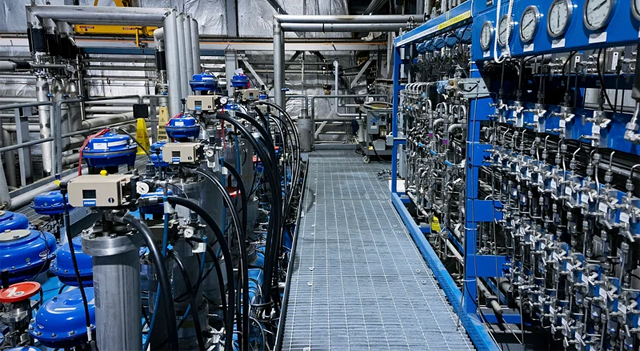
    Petards Group plc is an AIM-listed technology company specialising in advanced security, surveillance and communication systems. The group serves rail and defence markets alongside niche technology businesses, including QRO and Affini. Its products support critical infrastructure and defence customers, with clients including the UK Ministry of Defence and major defence contractors, positioning the company within high-security technology and safety-focused sectors.

  • Secure Trust Bank Grows Profit and Strengthens Capital Following Vehicle Finance Disposal

    Secure Trust Bank Grows Profit and Strengthens Capital Following Vehicle Finance Disposal

    Secure Trust Bank (LSE:STB) reported adjusted profit before tax of £51.1 million for 2025, matching market expectations and representing an increase of more than 30% compared with the previous year. The performance was supported by total net lending rising to £3.7 billion, with the loan book from continuing operations expanding by 8.1%.

    Strong contributions came from the bank’s Retail Finance and Real Estate Finance divisions, both of which delivered solid growth during the year. Customer deposits also increased by 8.2%, providing additional funding to support lending expansion. Meanwhile, Secure Trust Bank improved its CET1 capital ratio to 12.9%, even after accounting for provisions related to potential motor finance compensation claims.

    The group confirmed continued progress on the previously announced sale of its Consumer Vehicle Finance business to funds managed by LCM Partners. The transaction is expected to generate a net gain of approximately £9 million and, on a pro forma basis, increase the CET1 ratio to 14.7%. The additional capital is expected to support reinvestment into higher-return core operations, strengthen the bank’s competitive position and potentially allow for further shareholder distributions. Secure Trust Bank will remain responsible for administering any future redress related to the disposed loan portfolio.

    For accounting purposes, the Vehicle Finance division will be treated as a discontinued operation in the 2025 financial results. The bank will continue servicing the associated loan book on behalf of the buyer until customer accounts are migrated, which is expected to take place in May 2026. Management also plans to present updated strategic priorities, capital allocation plans and revised medium-term targets alongside the full-year results scheduled for March.

    Secure Trust Bank’s outlook reflects moderate financial performance, with some pressure on profitability and weaker cash flow, although the balance sheet remains relatively stable. Technical indicators appear favourable, with the share price trading well above key moving averages and supported by a positive MACD signal. However, elevated momentum indicators, including high RSI and stochastic readings, suggest potential near-term volatility. From a valuation perspective, the stock appears relatively attractive, supported by a modest price-to-earnings ratio and an approximate dividend yield of 2.12%.

    More about Secure Trust Bank

    Secure Trust Bank is a UK-based retail bank with more than 70 years of operating history and a strong capital base, headquartered in Solihull in the West Midlands. The group focuses on business lending through its Real Estate Finance and Commercial Finance divisions, alongside consumer lending through its V12 Retail Finance platform, serving a broad customer base across specialist finance markets.

  • Anglo American Reports Strong Q4 Performance and Raises Copper and Iron Ore Guidance

    Anglo American Reports Strong Q4 Performance and Raises Copper and Iron Ore Guidance

    Anglo American (LSE:AAL) delivered a solid operational performance in the fourth quarter of 2025, supported by strength in its Copper and Premium Iron Ore divisions, despite a year-on-year decline in overall copper production. Group copper output fell 14% to 169,500 tonnes, largely due to lower explained grades at the Quellaveco and Collahuasi operations. In contrast, Premium Iron Ore production increased 6% to 15.1 million tonnes, while manganese ore output rose sharply by 22% as Australian operations recovered from earlier weather-related disruptions.

    Elsewhere in the portfolio, production of rough diamonds and steelmaking coal declined. These reductions were attributed to scheduled maintenance, market-led output adjustments and asset disposals. Despite these mixed divisional results, Anglo American confirmed that all continuing operations achieved their full-year 2025 production guidance targets.

    Looking ahead, the company has modestly increased its production outlook for both copper and premium iron ore across the 2026–2028 period. Plans include the temporary restart of a second processing plant at Los Bronces to help offset lower output at Collahuasi. Anglo American expects its Chilean copper assets collectively to deliver more than 125,000 additional tonnes of production by 2028 compared with 2025 levels. The Quellaveco operation is also anticipated to generate strong cash flow and reach capital payback during 2026.

    Strategically, Anglo American continues to streamline its asset base as part of a broader portfolio transformation. The company is progressing with the disposal of its steelmaking coal business, the planned separation of De Beers, and regulatory work related to its nickel operations. At the same time, Anglo American is advancing its proposed merger with Teck following regulatory clearance in Canada and significant shareholder support, a move expected to strengthen its position in critical minerals and high-grade iron ore markets.

    From an investment perspective, Anglo American benefits from favourable technical indicators and positive strategic developments, including the merger initiative. However, its financial profile faces some pressure, with valuation concerns linked to a negative price-to-earnings ratio and a relatively low dividend yield.

    More about Anglo American

    Anglo American is a global diversified mining company with a streamlined portfolio focused primarily on copper, premium iron ore and manganese. The group is progressively exiting its interests in diamonds, steelmaking coal and nickel. Its key production operations include copper assets in Chile and Peru, premium iron ore operations in South Africa and Brazil, and diamond activities in Canada and southern Africa, with an increasing strategic focus on critical minerals and high-quality steelmaking inputs.

  • Georgina Energy Moves Ahead with Fully Funded Hussar Drilling Plan for Q3 2026

    Georgina Energy Moves Ahead with Fully Funded Hussar Drilling Plan for Q3 2026

    Georgina Energy plc (LSE:GEX) has released an operational update on progress at its Hussar EP513 project, confirming continued advancement toward a planned drilling campaign in 2026. The company said its technical adviser, Aztech, has started issuing requests for quotation to support the programme and has identified a potential Explorer Rig that appears technically suitable, with availability expected to be confirmed later in February.

    A combined technical and management team is scheduled to undertake a site visit from 12 February 2026 to evaluate access requirements and prepare detailed work plans. This will include inspection and remediation planning for the airstrip and access roads, along with preparation of drill pads and accommodation areas. The upcoming drilling is designed to test the subsalt Townsend Formation as well as fractured basement reservoir targets.

    Operations at site will be managed under an operating agreement consistent with the government-approved Well Management Plan, with Harlequin, Schlumberger and Aztech responsible for execution. Harlequin and its partners will fully fund the drilling programme and associated infrastructure through an offtake-linked structure, meaning no equity dilution for Georgina Energy shareholders.

    The proposed schedule anticipates ordering long-lead equipment and securing a drilling rig during Q1 2026. This would be followed in Q2 2026 by water bore drilling, installation of surface conductors, engagement of key service providers, expansion of site access infrastructure and completion of detailed well engineering. Mobilisation of the drilling rig is then expected ahead of drilling targeted for Q3 2026.

    From a market perspective, Georgina Energy continues to be weighed down by weak financial fundamentals, including the absence of revenue, widening losses, rising cash burn and negative equity alongside increasing debt. Technical indicators provide some counterbalance, with the share price in a strong uptrend and a positive MACD signal, although overbought conditions, reflected by an RSI above 80, suggest elevated near-term downside risk. Valuation metrics remain largely neutral due to the lack of meaningful earnings and dividend data.

    More about Georgina Energy

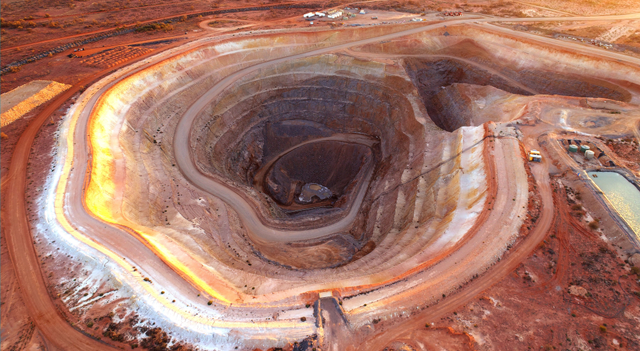
    Georgina Energy plc is an energy exploration company focused on developing helium and hydrogen resources to address growing global supply shortages. Through its Australian subsidiary, Westmarket O&G, the company holds a 100% working interest in the onshore Hussar Prospect (EP513) in the Officer Basin of Western Australia and, subject to completion of a sale agreement, the EPA155 Mt Winter Prospect in the Northern Territory, positioning the group to benefit from rising demand for critical industrial gases.

  • Strategic Minerals Extends Redmoor Mineralisation with New Drilling Success

    Strategic Minerals Extends Redmoor Mineralisation with New Drilling Success

    Strategic Minerals (LSE:SML) has announced additional encouraging assay results from drillholes CRD038 and CRD040 at its Redmoor tungsten-tin-copper project in Cornwall, demonstrating an extension of mineralisation within the deposit. The results confirm the existence of sheeted vein system mineralisation in an area of the JORC Exploration Target that had not previously been tested, while also expanding the known limits of the orebody.

    The newly reported drilling intersected broad zones of consistent and high-grade tungsten and tin mineralisation, alongside notable copper and silver content. The results also verified historical drilling data from the 1980s, strengthening confidence in the project’s geological model. Management believes these findings will help support a larger and more reliable future mineral resource estimate, potentially reducing the scale of required infill drilling and accelerating progress toward a prefeasibility study.

    The company continues to position Redmoor as a significant undeveloped tungsten resource within Europe, with the latest results reinforcing the project’s importance in the regional critical metals supply chain. Stronger resource confidence could also enhance the project’s development potential and strategic value.

    From a financial standpoint, Strategic Minerals benefited from improved performance during 2024, while technical indicators currently suggest a strong upward trend in its shares. However, valuation remains stretched, with a high price-to-earnings ratio and no available dividend yield data. Additionally, technical signals indicating overbought conditions may present short-term volatility risks.

    More about Strategic Minerals

    Strategic Minerals plc is an AIM-listed global exploration and production company focused on advancing the Redmoor tungsten-tin-copper project in southeast Cornwall, United Kingdom. Through its wholly owned subsidiary, Cornwall Resources Limited, the company is targeting high-grade tungsten and tin mineralisation, positioning Redmoor as a potentially leading undeveloped tungsten resource in Europe and an important contributor to the global critical minerals sector.

  • Tavistock Strengthens Legal Counterclaims Against Titan Following Court Decision

    Tavistock Strengthens Legal Counterclaims Against Titan Following Court Decision

    Tavistock Investments (LSE:TAVI) has announced further progress in its legal dispute with Titan Wealth Services and Titan Asset Management after a court ruling in December 2025 granted permission for the company to broaden its counterclaims. The updated legal action introduces additional allegations connected to Titan’s Model Portfolio Service, including claims of breach of confidence, misuse of trade secrets, and copyright infringement.

    The court’s decision enables Tavistock to advance these expanded claims, with the judge reportedly criticising Titan’s resistance by describing it as an attempt to block a legitimate case. The ruling also concluded that Tavistock’s copyright claim carries a realistic chance of success, highlighting the potential importance of the dispute as both companies compete within the model portfolio service market.

    Operationally, Tavistock continues to pursue its strategic restructuring and maintains stable corporate governance, which provide supportive factors for its longer-term business positioning. However, the company’s financial performance remains under pressure, with ongoing cash flow constraints and litigation-related uncertainties posing notable risks.

    From a market perspective, Tavistock benefits from comparatively attractive valuation metrics, though these are counterbalanced by weaker financial results and bearish technical signals. The ongoing legal proceedings add an additional layer of uncertainty that investors are likely to monitor closely.

    More about Tavistock Investments

    Tavistock Investments plc is a UK-based financial services company operating within the investment and wealth management industry. The group provides model portfolio services alongside advisory and asset management solutions for private investors and financial intermediaries.

  • Rome Resources Highlights Deep High-Grade Tin Potential at Bisie North

    Rome Resources Highlights Deep High-Grade Tin Potential at Bisie North

    Rome Resources (LSE:RMR) has reported positive signs of high-grade tin mineralisation at depth from continued drilling at the Kalayi prospect, part of its Bisie North project in the Democratic Republic of Congo. The update follows the project’s inaugural mineral resource estimate published in October 2025. Recent drilling returned strong handheld XRF readings, notably 2 metres grading an indicative 8.3% tin from a depth of 74 metres in drill hole KBDD023, alongside further intervals showing tin and copper mineralisation across additional holes.

    The latest drilling results support the company’s geological interpretation that high-grade tin zones extend beyond previously explored depths. Rome Resources emphasised that the portable XRF readings are preliminary and require confirmation through laboratory assays. However, the results strengthen confidence in the potential presence of deeper tin-rich mineralisation, as the company continues drilling activities at Kalayi.

    Looking ahead, Rome plans to resume work at the Mont Agoma prospect, where exploration will focus on identifying deeper tin mineralisation beneath an already recognised polymetallic system. Success at both Kalayi and Mont Agoma could support expansion opportunities and improve the long-term development outlook for the broader Bisie North project.

    From a financial perspective, Rome Resources continues to face challenges linked to its pre-revenue status, widening losses, and ongoing negative free cash flow, highlighting explained reliance on future funding. Market technical indicators also reflect mild downward pressure, with a weak longer-term share trend and a negative MACD signal. Additionally, valuation metrics remain limited in usefulness due to negative earnings and the absence of dividend payments.

    More about Rome Resources

    Rome Resources plc is an AIM-listed exploration company concentrating on tin and copper assets in the Democratic Republic of Congo. Its primary asset, the Bisie North project, is located roughly 8 kilometres from Alphamin’s Mpama tin mining operation, with exploration currently focused on advancing the Kalayi and Mont Agoma prospects within the mineral-rich region.

  • U.S. Shares Poised for an Uneven Open as Investors Search for Direction: Dow Jones, S&P, Nasdaq, Wall Street Futures

    U.S. Shares Poised for an Uneven Open as Investors Search for Direction: Dow Jones, S&P, Nasdaq, Wall Street Futures

    U.S. equity futures are indicating a largely flat start to Wednesday’s session, suggesting that markets may struggle to find clear direction following the previous day’s technology-led selloff.

    Futures held steady even after fresh data from payroll processor ADP showed that private-sector job growth in January came in well below expectations. ADP reported that private employment increased by just 22,000 jobs last month, following a downwardly revised gain of 37,000 in December. Economists had been forecasting an increase of around 45,000 jobs, compared with the 41,000 initially reported for the prior month.

    Despite the muted reaction to the data, technology stocks could remain under pressure after a sector rotation weighed heavily on markets on Tuesday. Shares of Advanced Micro Devices (NASDAQ:AMD) are likely to be a drag, with the chipmaker tumbling 10.1% in premarket trading.

    The sharp move in AMD follows the release of better-than-expected fourth-quarter results, offset by first-quarter guidance that fell short of some analysts’ expectations.

    By contrast, Super Micro Computer (NASDAQ:SMCI) is providing a lift to sentiment within the sector. The stock is surging 9.5% ahead of the open after the company reported fiscal second-quarter results that beat estimates and raised its full-year revenue forecast.

    Wall Street closed sharply lower on Tuesday, reversing much of the prior session’s gains. All three major indexes finished in the red, led by pronounced losses in technology shares. The Nasdaq dropped 336.92 points, or 1.4%, to 23,255.19. The S&P 500 declined 58.63 points, or 0.8%, to 6,917.81, while the Dow Jones Industrial Average fell 166.67 points, or 0.3%, to 49,240.99.

    The pullback was driven largely by investors rotating out of technology, a trend underscored by the Nasdaq’s underperformance. Software stocks were among the hardest hit, dragging the Dow Jones U.S. Software Index down 3.5% to its lowest close in more than nine months.

    This weakness came despite a notable rally in Palantir Technologies (PLTR), which jumped 6.9% after the AI-focused software company delivered stronger-than-expected fourth-quarter results and issued an upbeat outlook.

    Semiconductor shares also faced broad selling pressure, with the Philadelphia Semiconductor Index sliding 2.1%. NXP Semiconductors (NASDAQ:NXPI) fell 4.5% even though the Dutch chipmaker topped expectations on both earnings and revenue.

    Outside the technology space, several sectors benefited from the rotation. Retail giant Walmart (NYSE:WMT) climbed 2.9%, pushing its market capitalization above $1 trillion for the first time.

    “It would be hard to find a better illustration of the market’s recent rotation away from tech than Walmart achieving a $1 trillion valuation for the first time,” said AJ Bell head of markets Dan Coatsworth. He added, “This bastion of Main Street joins a club which has previously only been populated by technology businesses and Warren Buffett’s Berkshire Hathaway vehicle.”

    Gold-related stocks also advanced sharply, supported by a strong rebound in bullion prices. The NYSE Arca Gold Bugs Index jumped 4.4%.

    Strength in steel, energy, and housing stocks also helped cushion broader market losses, preventing a deeper decline across U.S. equities.

  • European Shares Trade Mixed Following Eurozone Inflation Print: DAX, CAC, FTSE100

    European Shares Trade Mixed Following Eurozone Inflation Print: DAX, CAC, FTSE100

    European equity markets were mixed on Wednesday as investors digested the latest Eurozone inflation figures and looked ahead to key central bank decisions.

    Fresh data showed that inflation in the euro area slipped below the European Central Bank’s 2% target in January, helped by lower energy prices and a firmer euro. According to flash estimates from Eurostat, the harmonized index of consumer prices rose 1.7% year on year last month, in line with expectations and down from 2.0% in December.

    Core inflation, which strips out volatile items such as energy, food, alcohol and tobacco, edged down slightly to 2.2% from 2.3% in the previous month.

    Government bond yields across the region eased modestly after surveys indicated that economic momentum in the Eurozone weakened for a second straight month in January. Final data from S&P Global showed that private sector activity expanded at its slowest pace since September, weighed down by softer growth in services.

    The final composite output index came in at 51.3 in January, below both the preliminary estimate and December’s reading of 51.5. While the index remains above the 50 mark—signaling expansion—it points to more subdued growth, albeit for a thirteenth consecutive month.

    Attention now turns to central bank meetings on Thursday. The European Central Bank is widely expected to keep interest rates unchanged, with markets focusing on its assessment of the growth and inflation outlook. The Bank of England is also anticipated to leave rates on hold, with any revisions to its economic forecasts likely to be limited.

    In equity markets, Germany’s DAX was down 0.4%, while France’s CAC 40 gained 0.9% and the UK’s FTSE 100 rose 1.2%.

    On the corporate front, Novo Nordisk (NYSE:NVO) slid sharply in Copenhagen after CEO Mike Doustdar pointed to headwinds from significantly lower U.S. pricing for its blockbuster weight-loss drug Wegovy. Shares in Swiss drugmaker Novartis (NYSE:NVS) also moved lower after the company warned of a decline in profits this year.

    Banco Santander (LSE:SAN) fell after the Spanish lender agreed to acquire Webster Financial Corp. in a $12 billion transaction. French bank Credit Agricole (EU:ACA) also dropped following a 39% fall in fourth-quarter profit.

    Germany’s Infineon Technologies (TG:IFX) traded lower after announcing plans to step up investment in data-center technology to meet rising demand for artificial intelligence solutions.

    On the upside, UK pharmaceutical group GSK (LSE:GSK) advanced after reporting stronger-than-expected fourth-quarter profits. Beazley (LSE:BEZ) shares surged after Zurich Insurance Group reached an agreement in principle on the key financial terms of a potential cash offer for the London-based specialty insurer.

  • GenIP’s 330% Growth Story: Building the Future of Invention Intelligence

    GenIP’s 330% Growth Story: Building the Future of Invention Intelligence

    Innovation is everywhere, but turning research into real-world impact is still one of the biggest challenges facing institutions today. With trillions spent globally on R&D each year, too much promising science never makes it to market. The missing link? Fast, evidence-based decision-making.

    In the latest episode of The Watch List, host Ricki Lee sits down with Melissa Cruz, CEO of GenIP (LSE:GNIP), to unpack how her company is changing the way innovation is evaluated and prioritized. With GenIP reporting 330% revenue growth in 2025 and rapidly expanding across international markets, Cruz shares what’s driving the momentum and why invention intelligence is becoming essential infrastructure for modern research organizations.

    From helping universities focus their portfolios to supporting national agencies in Brazil and Saudi Arabia, GenIP is positioning itself as a global “decision ledger” for innovation. In the conversation below, Cruz explains how smarter tools, better data, and faster insights can turn great ideas into outcomes that reach society.

    Watch the full interview below to learn how Gen IP is transforming R&D into real impact.