Blog

  • European stocks search for direction as Iran war enters second month: DAX, CAC, FTSE100

    European stocks search for direction as Iran war enters second month: DAX, CAC, FTSE100

    European equity markets opened Monday without a clear trend, while oil prices climbed again as the joint U.S.-Israeli conflict with Iran moved into its second month.

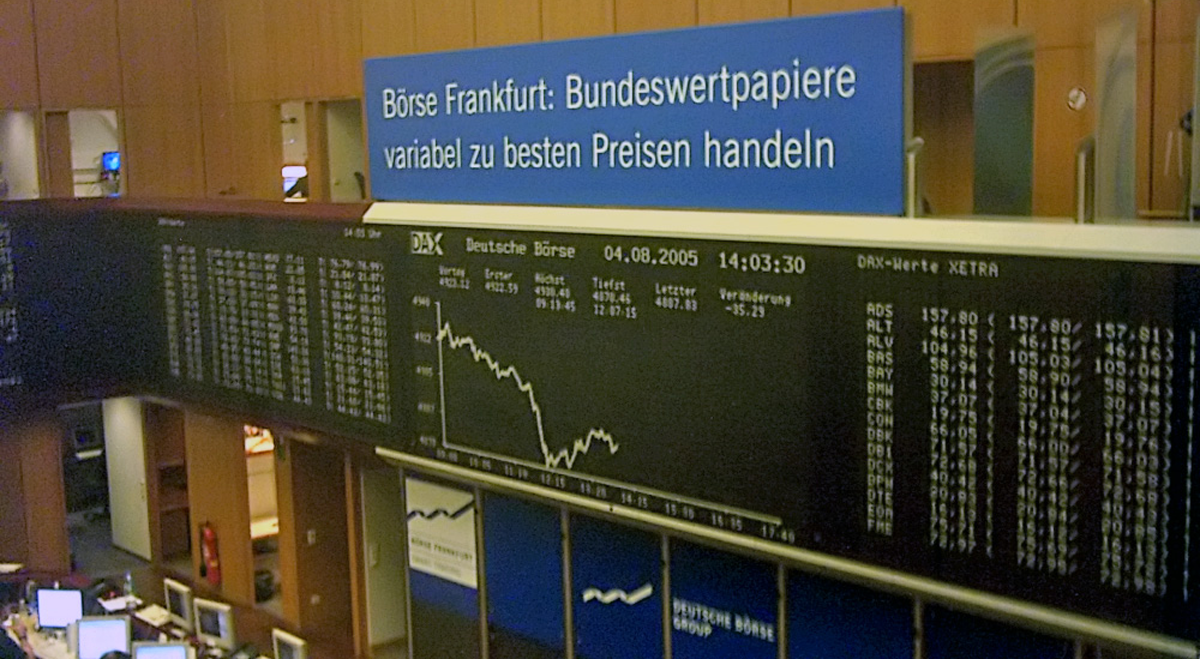
    At around 08:10 GMT, the pan-European Stoxx 600 was largely flat, with France’s CAC 40 also little changed. Germany’s DAX slipped 0.2%, while the UK’s FTSE 100 edged 0.2% higher.

    As fighting in the Middle East continues, media reports indicate that President Donald Trump is weighing a complex and potentially risky military mission aimed at removing nearly 1,000 pounds of uranium from Iran.

    At the same time, troops from the U.S. 31st Marine Expeditionary Unit have been deployed to the region, a step reportedly intended to give Trump additional military options as he considers the next stage of the conflict. According to a Washington Post report, the Pentagon is preparing for the possibility of several weeks of ground operations inside Iran.

    Tehran has responded by warning it would destroy any U.S. forces attempting to launch a ground invasion.

    Over the weekend, at least 12 U.S. service members were injured in Iranian attacks on an air base in Saudi Arabia. Yemen’s Houthi rebels also entered the conflict for the first time, launching strikes against Israel and intensifying concerns about potential disruptions to major global energy routes.

    Analysts at Vital Knowledge warned that if the Houthis were to target the Bab al-Mandab Strait, the impact of the global shipping disruption already caused by the effective closure of the Strait of Hormuz off Iran’s southern coast could be “dramatically amplif[ied].” The Bab al-Mandab Strait is a critical maritime chokepoint connecting the Red Sea with the Gulf of Aden and the Indian Ocean.

    Last week, Trump extended a deadline until April 6 for Iran to reopen the Strait of Hormuz or risk U.S. missile strikes on power facilities. Despite the extension, investors remain cautious as uncertainty persists over the direction of the conflict and its broader implications for the global economy. Equity markets declined last week, bond yields moved higher, and Brent crude—the international oil benchmark—remained above $100 per barrel.

    By 03:09 ET on Monday, Brent crude had climbed 3.0% to $108.55 per barrel.

    Although rising oil prices have raised fears that higher energy costs could trigger renewed inflation and force governments and central banks to respond with tighter policy, markets do not appear to be “too concerned, yet, about fiscal and inflation risks,” according to Thomas Mathews, Head of Markets, Asia Pacific, at Capital Economics.

    However, Mathews noted in a research note that “[t]he war’s effects on markets may continue to elude an easy solve.”

  • Rio Tinto resumes operations at three Pilbara port terminals after cyclone Narelle

    Rio Tinto resumes operations at three Pilbara port terminals after cyclone Narelle

    Rio Tinto (LSE:RIO) said on Monday that operations have restarted at three of its four iron ore export terminals in Western Australia’s Pilbara region after Tropical Cyclone Narelle disrupted activity, although the company maintained its annual shipment guidance.

    The cyclone brought heavy rainfall and power outages to parts of Australia’s northeast coast earlier this month, prompting the miner to temporarily suspend operations at two of its bauxite mines. Other producers were also affected, with South32 halting activity at the Gemco manganese mine it jointly owns with Anglo American.

    Narelle struck Australia’s northwest coastline last week, leading to the closure of several ports across the Pilbara, one of the world’s most important iron ore producing regions.

    Rio, the world’s largest iron ore producer, said ship loading at three of its Pilbara terminals resumed on March 28 after the facilities had been shut since March 24.

    Shipping at Cape Lambert A, the fourth terminal that is currently undergoing repairs, is expected to recommence “in the coming days”, the company said.

    According to Rio, two tropical cyclones that passed through the region in February and March are estimated to have reduced its iron ore shipments by about eight million metric tons. The company added that it has “identified a pathway to recover around half of these losses.”

    Despite the disruption, Rio maintained its guidance for Pilbara iron ore shipments in 2026 at between 323 million and 338 million tons.

  • Debenhams Group lifts outlook as turnaround boosts profits and cuts debt

    Debenhams Group lifts outlook as turnaround boosts profits and cuts debt

    Debenhams Group (LSE:DEBS) said it expects Adjusted EBITDA of £53 million for the year to 28 February 2026, representing a 36% increase and exceeding previous guidance. The improvement was driven largely by a strong second half, where performance rose 76% year-on-year. The company noted that all brands within the group are now profitable on an Adjusted EBITDA basis, while gross merchandise value trends have strengthened over three consecutive quarters, finishing February around 5% below the prior year.

    Management pointed to significant progress in its multi-year turnaround strategy, which focuses on transitioning the business to a stock-light, asset-light online marketplace model while reducing operating costs. Fixed costs have been cut from £175 million to an exit run-rate of £119 million, while capital expenditure has nearly halved. Lease and interest expenses are also expected to decline further as the company continues to exit non-core assets and reduce leverage.

    At the end of the financial year, net debt stood at £90 million following a £40 million capital raise, bringing leverage to below two times Adjusted EBITDA. The company now expects leverage to fall below one times EBITDA by FY27. Management also anticipates stronger free cash flow as exceptional restructuring costs decline, depreciation falls in line with a smaller asset base and marketplace growth improves working capital efficiency.

    Reflecting these improvements, the board has raised its outlook for FY27 and now expects double-digit Adjusted EBITDA growth from the new £53 million base. Directors said the restructured cost base, consolidation of warehouse operations, technology platform upgrades and strengthened brand management position the group to return its brands to growth and reinforce its competitive standing as an asset-light online marketplace operator.

    Despite operational improvements, the company’s broader outlook remains influenced by weaker financial metrics including declining revenue, ongoing losses, relatively high leverage and negative operating cash flow. Technical indicators also remain bearish, with the share price trading below key moving averages despite oversold signals. Valuation metrics offer limited support given the negative price-to-earnings ratio and the absence of dividend yield data.

    More about Debenhams Group

    Debenhams Group, part of boohoo group plc, operates an online retail platform specialising in fashion, home and beauty products. The business serves millions of customers through five main online shopping destinations: Debenhams, Karen Millen, boohoo, MAN and PrettyLittleThing. Originally known as a department store chain, the Debenhams brand has been transformed into a digital marketplace model aimed at UK and international consumers.

  • Jadestone shuts Stag field after cyclone but sees limited financial impact

    Jadestone shuts Stag field after cyclone but sees limited financial impact

    Jadestone Energy (LSE:JSE) has temporarily halted production at its Stag oil field offshore Australia following damage caused by Cyclone Narelle, a Category 5 storm that affected the platform and its offloading systems. Ahead of the cyclone’s arrival, the company safely demobilised the platform and cleared export pipelines of hydrocarbons as a precaution. Jadestone also confirmed that the storm did not result in any hydrocarbon release into the environment.

    Technical teams are now assessing the extent of the damage and preparing repair plans along with a schedule for restarting operations. Before the shutdown, the field had been producing roughly 2,000 barrels of oil per day. The company said it holds insurance covering both physical damage and production losses and expects the interruption to have only a limited financial impact, with no material change anticipated to its full-year or longer-term cash flow forecasts.

    The company’s outlook remains weighed down by weak financial fundamentals, including declining revenue, negative profitability, elevated leverage and negative cash flow. Technical indicators present a mixed picture but lean slightly negative, with the share price trading below short-term averages and an RSI around 40. Valuation metrics provide some support due to a relatively low price-to-earnings ratio.

    More about Jadestone Energy

    Jadestone Energy Inc is an independent upstream oil and gas producer focused on the Asia-Pacific region. The company holds a diversified portfolio of producing and development assets across Australia, Malaysia, Indonesia and Vietnam. Headquartered in Singapore and listed on London’s AIM market, Jadestone pursues growth through both organic developments and acquisitions while also positioning for the energy transition through increased natural gas production and a target of achieving net-zero Scope 1 and 2 emissions from operated assets by 2040.

  • Genedrive bolsters finances as NHS and global pilots drive uptake of rapid genetic tests

    Genedrive bolsters finances as NHS and global pilots drive uptake of rapid genetic tests

    Genedrive (LSE:GDR) reported interim results for the period to 31 December 2025 showing higher revenue alongside a broadly unchanged operating loss, as the company continues investing in the commercial rollout of its CYP2C19 and MT-RNR1 pharmacogenetic tests in the UK and international markets. The group has gained access to several key NHS procurement and implementation channels, including formal guidance pathways, the Dynamic Procurement System and a range of pilot and rollout programmes across England, Scotland, Ireland and Saudi Arabia. These initiatives support its strategy to integrate rapid genetic testing into routine clinical pathways for stroke treatment and neonatal care.

    Operationally, the CYP2C19 ID Kit is now deployed at England’s largest hyper-acute stroke unit and is also being evaluated through “test of change” pilot programmes in Scotland. A separate 12-month study is exploring its use in acute coronary syndrome, while the company is preparing for international market expansion and assessing the pathway toward U.S. FDA 510(k) clearance. Meanwhile, the MT-RNR1 ID Kit is currently used in 14 UK hospitals as part of the PALOH UK programme and forms part of a phased national rollout in Scotland. The test has also been introduced at Dublin’s Rotunda Hospital and will be evaluated through a national pilot programme in Saudi Arabia, helping generate real-world evidence to support broader adoption.

    From a financial perspective, Genedrive strengthened its balance sheet through a post-period equity raise that generated around £4.9m net proceeds, alongside the conversion of a £0.5m shareholder loan into equity. As of 27 March 2026, the company reported cash of £3.65m, up from £0.4m at the end of the reporting period, and stated that it is now debt free. Management said the improved financial position will support FDA submission work, manufacturing scale-up, product usability enhancements and further international regulatory approvals as the company aims to transition from early commercial activity to more scalable revenues, despite ongoing NHS funding pressures.

    The company’s outlook remains constrained by weak financial fundamentals, including continued losses, ongoing cash burn and a reduced equity base. Technical indicators offer some support, with the share price trading above key moving averages and showing positive MACD momentum, although an elevated RSI suggests the possibility of short-term overheating. Valuation remains challenging due to negative earnings and the absence of a positive price-to-earnings ratio.

    More about Genedrive

    Genedrive plc is a UK-based pharmacogenetic diagnostics company focused on rapid, point-of-care testing designed to guide safer and more effective medication use in emergency and acute care settings. Its CE-IVD approved and NICE-recommended Genedrive CYP2C19 and MT-RNR1 ID Kits are already used within the NHS, helping determine stroke patients’ response to the drug Clopidogrel and preventing antibiotic-related hearing loss in newborns. The company’s strategy centres on scaling UK-developed precision diagnostic technologies and expanding their adoption internationally.

  • Spectra Systems delivers record profit on sensor contracts and expands security printing pipeline

    Spectra Systems delivers record profit on sensor contracts and expands security printing pipeline

    Spectra Systems (LSE:SPSY) reported a strong set of results for 2025, with revenue increasing 30.7% to $64.3m and adjusted EBITDA climbing 82.9% to $27.3m. The growth was largely driven by sensor manufacturing and related hardware sales linked to a major central bank agreement. Adjusted earnings per share more than doubled during the year, supported by strong cash generation that reduced net debt. The company also increased its annual dividend, reflecting an improved balance sheet and strengthened liquidity.

    Operationally, Spectra delivered its first batch of sensors, triggering a $5.7m payment and securing a maintenance contract valued at around $6.7m through 2030. Its gaming software division also achieved record revenue and profitability. In the security printing segment, the Cartor subsidiary won a $4m four-year contract for hybrid stamps and progressed qualification work for its Fusion polymer substrate with several central banks. At the same time, the group has initiated restructuring measures—including workforce reductions and the delayed closure of its French operations—to improve long-term profitability.

    Management noted that 2025 represented the most profitable year in the company’s history, with further sensor shipments expected to strengthen cash flow and reduce restricted balances in 2026. Trials of smartphone-based authentication systems with government authorities in the Middle East have also been successful, while ongoing discussions around new tax stamp and secure document contracts could expand high-margin authentication revenues. Although government procurement cycles remain slow, these developments support Spectra’s longer-term growth prospects.

    The company’s outlook is underpinned by strong financial performance, healthy margins and effective cash flow management, alongside an attractive valuation profile. Recent corporate developments further strengthen its market position. However, technical indicators point to a broadly neutral share price trend, slightly moderating the overall outlook.

    More about Spectra Systems

    Spectra Systems Corporation specialises in machine-readable banknote authentication, brand protection technologies and security solutions for gaming systems. The company also operates a growing security printing division in the UK through its Cartor Security Printers subsidiary, which develops polymer substrates, hybrid tax and postage stamps, and secure documents for governments and central banks worldwide.

  • Afentra fast-tracks Angola Block 3/05 drilling with Sonangol-funded rig deal

    Afentra fast-tracks Angola Block 3/05 drilling with Sonangol-funded rig deal

    Afentra (LSE:AET) has accelerated its 2026 drilling campaign on Angola’s offshore Block 3/05 after securing the Borr Grid jack-up rig through a commercial agreement with national oil company Sonangol. The arrangement allows a two-well programme to begin within days, starting with the Pacassa SW exploration well. Under the deferred funding structure, Sonangol will cover the upfront drilling costs and recover them from future incremental production. This structure is expected to leave Afentra’s planned 2026 capital expenditure unchanged while targeting a potential gross production increase of about 9,000 barrels per day and unlocking additional recoverable resources across the Pacassa SW area and the Impala field.

    The campaign will initially focus on the previously undrilled Pacassa SW fault block, which could be quickly tied back to existing infrastructure if the well proves successful. The rig will then move to either a Pacassa SW injection well or the Impala-2 development well, aimed at refining the development plan for as much as 50 million barrels of incremental recoverable resources at Impala. Management views the accelerated drilling as an important step in advancing Afentra’s organic growth strategy, leveraging established platforms and infrastructure to bring additional resources into production while gathering new subsurface data to support future exploration opportunities across Block 3/05.

    The company’s outlook is supported by solid financial performance and an attractive valuation profile, suggesting positive long-term potential. However, technical indicators point to some bearish share price momentum in the near term. Strategic initiatives and recent operational developments are expected to strengthen Afentra’s growth trajectory and support value creation for shareholders.

    More about Afentra

    Afentra plc is a London-listed upstream oil and gas company focused on acquiring and developing mature producing and development assets across Africa. The company holds non-operated interests in several offshore blocks in Angola’s Lower Congo and Kwanza basins, alongside operated and non-operated positions in nearby exploration acreage. Afentra’s strategy centres on working with international oil companies and host governments to maximise value from existing assets while supporting the region’s evolving energy landscape.

  • Emmerson advances $1.2bn arbitration claim over Moroccan potash project

    Emmerson advances $1.2bn arbitration claim over Moroccan potash project

    Emmerson PLC (LSE:EML) has submitted its full arbitration Memorial in its dispute with the Kingdom of Morocco, marking a major step forward in its investment treaty case related to the Khemisset potash project. The filing, prepared by law firm Boies Schiller Flexner LLP and supported by independent valuation experts, outlines a damages claim of approximately US$1.215bn. The figure reflects the company’s assessment of the project’s value at the stage it had reached when the alleged breaches occurred.

    The arbitration is being conducted under the rules of the International Centre for Settlement of Investment Disputes (ICSID) and centres on alleged violations of the UK–Morocco bilateral investment treaty. Emmerson claims Morocco breached the treaty through actions including expropriation and failing to provide fair and equitable treatment as well as full protection and security for the investment. With the Memorial now formally submitted, the process moves into the next phase in which Morocco will prepare its response in the coming months. The outcome of the proceedings could carry significant financial and strategic consequences for the company and its shareholders.

    The company’s outlook remains constrained by weak financial fundamentals, including the absence of reported revenue, widening losses and continued negative free cash flow that has eroded equity. Technical indicators offer some support, with the share price trading above key longer-term averages and showing positive MACD momentum. However, valuation metrics remain limited due to the company’s loss-making status and the absence of dividend yield data.

    More about Emmerson

    Emmerson PLC is an AIM-listed mining company focused on potash development in Morocco. Its flagship asset is the Khemisset potash project, which the company aims to advance as a significant fertilizer supply source for international agricultural markets. By developing this project, Emmerson seeks to position itself within the broader global fertilizer and commodity supply chain.

  • Metals Exploration’s La India gold project runs ahead of schedule as budget rises

    Metals Exploration’s La India gold project runs ahead of schedule as budget rises

    Metals Exploration (LSE:MTL) said construction at its La India gold project in Nicaragua has progressed faster than planned, reaching around 40% completion by mid-March 2026 compared with the original target of 35%. Project expenditure has reached approximately US$80 million and remains broadly aligned with expectations. However, the overall capital budget has been increased to US$171 million, largely reflecting higher costs for electrical infrastructure. The company said funding remains supported by free cash flow generated from its Runruno mine and access to an undrawn US$30 million gold pre-pay facility.

    Work across the site continues to advance, with foundations for the processing plant now about 65% complete and the primary crusher already installed. Major earthworks have been finished and non-processing infrastructure is around 77% complete. Metals Exploration has also agreed a collaborative arrangement with Nicaragua’s national grid operator ENATREL to develop a 138kV substation, which is expected to reduce costs. In addition, the company is pursuing a US$20 million equipment financing facility to fund its mining fleet. Management highlighted strong safety performance across the project and reiterated that first gold production remains scheduled for December 2026, signalling steady project execution and further de-risking for investors.

    The company’s outlook is supported by solid financial performance, including revenue growth, improving margins and strong cash flow generation. Technical indicators also point to a clear upward trend in the share price, although elevated momentum readings suggest the stock may be approaching overbought levels in the near term. Valuation metrics are less supportive due to a negative price-to-earnings ratio and the absence of dividend yield data.

    More about Metals Exploration

    Metals Exploration plc is a gold-focused mining, development and exploration company with operations in the Philippines and Nicaragua. Its principal producing asset is the Runruno gold mine in the Philippines, which is generating the cash flow used to fund development of the La India gold project in Nicaragua. The company aims to build a portfolio of open-pit gold operations and position itself as an emerging regional mid-tier gold producer.

  • Burford faces YPF setback after U.S. appeal court overturns key judgment

    Burford faces YPF setback after U.S. appeal court overturns key judgment

    Burford Capital (LSE:BUR) has encountered a significant setback in the long-running YPF litigation after the U.S. Court of Appeals for the Second Circuit overturned a previous ruling that had favored claimants Petersen and Eton Park. The case relates to Argentina’s failure to comply with shareholder protections embedded in YPF’s bylaws. While the appellate court criticized Argentina’s conduct and rejected its jurisdictional arguments, the majority concluded that minority shareholders could not enforce the tender offer provisions directly and that such claims should instead have been pursued in Argentine courts. One judge issued a strong dissent opposing the majority’s interpretation.

    The ruling introduces uncertainty for NYSE investors who rely on U.S. courts to enforce governance protections in foreign-listed companies and may prompt a reassessment of legal strategy by Burford and the claimants involved in the YPF dispute. The plaintiffs are expected to seek further review, potentially including an en banc rehearing by the full appellate court and, if necessary, an appeal to the U.S. Supreme Court. Another possible avenue under consideration is pursuing compensation through investment treaty arbitration against Argentina.

    In response to the adverse decision, Burford plans to record a non-cash partial write-down of its YPF-related asset, which will be quantified in its first-quarter results. The company noted that a substantial reduction in balance sheet equity could limit its flexibility to raise new debt or make certain payments tied to debt-to-equity thresholds. However, management emphasised that the rest of its diversified portfolio continues to perform well and that its capital structure remains supported by recent fundraising activity and the absence of maintenance covenants on its outstanding debt.

    The company’s outlook reflects mixed fundamentals, with volatility in cash flows and increased leverage weighing on the investment case. Technical indicators are also weak, with the share price trading well below major moving averages and showing negative MACD momentum. On the other hand, operational momentum and liquidity remain constructive according to recent earnings commentary, though valuation remains difficult to assess given a negative price-to-earnings ratio and only a modest dividend yield.

    More about Burford Capital

    Burford Capital is a global finance and asset management firm focused on legal-related investments, including litigation finance, risk management, asset recovery and broader legal finance advisory services. Listed on both the New York Stock Exchange and the London Stock Exchange, the company works with corporations and law firms around the world through a network of international offices to fund and manage legal claims and related assets.