Blog

  • Buccaneer Energy pursues production growth across East Texas portfolio amid improving oil market backdrop (BUCE)

    Buccaneer Energy pursues production growth across East Texas portfolio amid improving oil market backdrop (BUCE)

    Buccaneer Energy (LSE:BUCE) reported its audited results for 2025, outlining progress across its East Texas operations and highlighting opportunities to expand production and profitability despite a period of significant volatility in global oil prices. The company noted that after weakening during the latter part of 2025, WTI crude prices rebounded sharply to above $100 per barrel in early 2026, a development it believes could support stronger margins given its relatively stable operating cost base. Management also maintains that the company’s current market valuation does not fully reflect the value of its underlying assets.

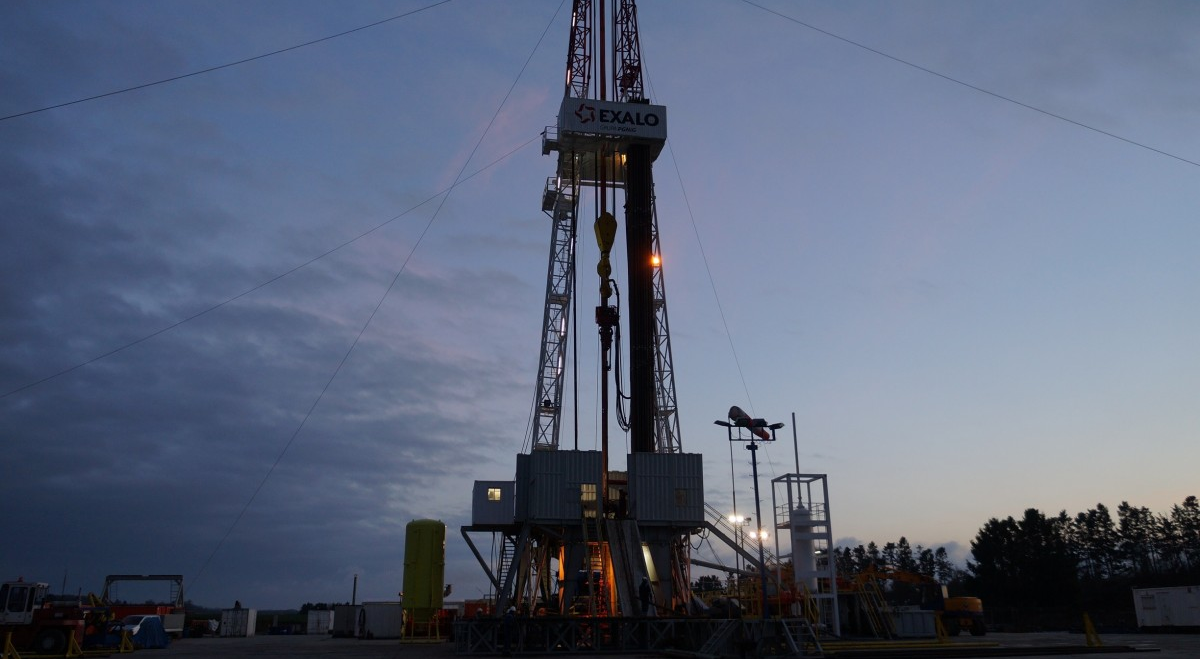
    Operational activity during the year was focused on revitalising existing production and advancing key development projects. A major workover programme on previously idle wells increased field output to a peak of 186 barrels of oil per day, compared with around 50 barrels per day when the current management team assumed control. While adverse weather conditions temporarily disrupted production, the company reported continued progress across its asset base.

    At the Fouke project, Buccaneer drilled the Allar #1 well and expanded its position through the acquisition of the Turner acreage, which is expected to play a role in future waterflood operations. The subsequent purchase of the Carlisle-1 well is anticipated to increase the company’s working interest in the planned Fouke waterflood project to more than 50%, positioning Buccaneer as the operator.

    The company also continued development work at the Pine Mills field, where efforts have included well workovers, waterflood planning and an Organic Oil Recovery pilot programme. According to the company, the pilot delivered encouraging results, doubling oil production within the treated area while significantly reducing water production at several wells. Buccaneer remains active in evaluating additional acquisition opportunities both within its core operating region and further afield, focusing on projects capable of delivering meaningful increases in reserves and production.

    Financially, the group improved its funding position by securing a three-year extension to its credit facility with WAFD on favourable terms. The company also benefited from lower US interest rates and reported a 6% increase in independently assessed reserves compared with mid-2025 levels. During the year, the business rebranded from Nostra Terra Oil & Gas Company plc to Buccaneer Energy plc and appointed a new joint broker, moves intended to better reflect its strategic direction and enhance investor recognition of the company’s growth potential.

    The outlook remains challenged by weak financial metrics, including ongoing losses, negative shareholder equity and negative operating and free cash flow. Technical indicators also remain subdued, with the shares trading below key moving averages and exhibiting negative momentum signals. While oversold conditions may provide some support, valuation metrics remain constrained by the absence of earnings and a stated dividend.

    More about Buccaneer Energy Plc

    Buccaneer Energy Plc is an oil and gas exploration and production company focused on conventional development assets in East Texas, United States. Its core operations include the Pine Mills and Fouke fields, where the company seeks to increase production and reserves through low-cost development strategies, enhanced recovery methods such as waterflooding and Organic Oil Recovery, and targeted acquisitions that complement its existing portfolio.


  • Drax assumes control of first 299MW gas-fired peaking plant in Wales (DRX)

    Drax assumes control of first 299MW gas-fired peaking plant in Wales (DRX)

    Drax (LSE:DRX) has taken commercial control of the Hirwaun Power Station in South Wales following the completion of commissioning works, marking the company’s first operational 299MW open cycle gas turbine (OCGT) facility. The asset was acquired from developer Metlen Energy & Metals and represents the first of three planned OCGT plants across England and Wales that are expected to deliver a combined capacity of approximately 900MW.

    The Hirwaun facility forms part of Drax’s strategy to expand its flexible generation portfolio and will generate income through a combination of peak electricity production, grid balancing and support services, and long-term Capacity Market contracts. These index-linked agreements extend to 2039 and are valued at more than £260 million across the portfolio.

    Drax will oversee the operation and dispatch of the plants from its central control functions, while Siemens Energy has been appointed to manage day-to-day site operations. The facilities have been designed to respond rapidly to fluctuations in electricity demand and will also be capable of operating as synchronous compensators, helping to maintain grid stability as renewable generation continues to increase across the UK energy system.

    The company’s outlook is supported by solid cash generation, manageable debt levels and favourable valuation metrics, including an attractive earnings multiple and dividend yield. Technical indicators remain constructive, with the shares trading above key moving averages, although momentum indicators are broadly neutral. Management has also reiterated its longer-term free cash flow and shareholder return targets, though these positives are balanced by impairment charges and near-term earnings pressures associated with the UK’s new Contracts for Difference framework.

    More about Drax Group plc

    Drax Group plc is a UK-based energy company focused on power generation, flexible energy infrastructure and grid support services. Alongside investments in open cycle gas turbine facilities, the company is developing battery energy storage projects to help support the transition to a lower-carbon electricity system while enhancing energy security and grid resilience across the UK.

  • Beowulf Mining highlights funding needs as first-quarter loss increases (BEM)

    Beowulf Mining highlights funding needs as first-quarter loss increases (BEM)

    Beowulf Mining (LSE:BEM) reported unaudited results for the first quarter of 2026, outlining continued progress across its Nordic development projects while warning that additional funding will be required by mid-June to support operations and advance key initiatives.

    During the quarter, the company continued technical, environmental and planning work at its Kallak iron ore project in Sweden, including studies focused on optimising mining operations through battery-electric and autonomous haulage solutions. Beowulf also introduced updated sustainability strategies for its Jokkmokk Iron and Grafintec subsidiaries. In parallel, a consortium led by the company elected to withdraw from European Institute of Innovation and Technology funding for the NordicPipe slurry pipeline project in favour of pursuing the development independently.

    In Finland, Grafintec submitted an application for EU Strategic Project status for its planned Graphite Anode Materials Plant. The subsidiary also intends to reapply for support from Business Finland after an earlier application failed to meet one of the programme’s eligibility requirements.

    On the financial side, underlying administration costs declined compared with the same period last year. However, the group’s loss before tax widened to £536,816, primarily due to a loss arising from the conversion of a £500,000 convertible loan. Cash reserves fell to £87,100 by the end of the quarter, while certain exploration assets in Kosovo were reclassified as held for sale following receipt of a non-binding €4 million offer for Vardar Mineral.

    Beowulf said it is engaged in advanced, though non-binding, discussions with potential financing partners, including a strategic investor. The company cautioned that securing fresh capital by mid-June is essential to maintain adequate working capital and continue progressing its projects, highlighting ongoing liquidity challenges despite operational advances across its portfolio.

    More about Beowulf Mining

    Beowulf Mining plc is a mineral exploration and development company focused on critical raw materials across Europe. Its portfolio includes the Kallak iron ore project in Sweden, operated through Jokkmokk Iron Mines AB, the Grafintec graphite and battery materials business in Finland, and base metals exploration interests in Kosovo. The company aims to support European supply chains through the development of strategically important mineral resources.

  • Great Portland Estates secures major pre-lets at Elsley House above rental expectations (GPE)

    Great Portland Estates secures major pre-lets at Elsley House above rental expectations (GPE)

    Great Portland Estates (LSE:GPE) has agreed pre-let deals for more than 13,000 sq ft of fully managed office accommodation at Elsley House in London’s West End, with the first and second floors leased at an average rent of £260 per sq ft. The achieved rent is 4.4% higher than the property’s estimated rental value as of March 2026.

    The space has been predominantly taken by a currency and cash management business and an international advertising agency, resulting in the refurbished floors being 80% occupied before their official launch. The agreements demonstrate continued demand for GPE’s flexible, fully fitted office offering and support the company’s strategy of upgrading and repositioning assets within its West End portfolio.

    The lettings come after Heineken relocated from Elsley House to another building within the GPE estate, creating an opportunity to redevelop approximately 17,000 sq ft into four fully managed office suites alongside enhanced tenant amenities. The strong leasing activity at the Fitzrovia–West End property, which combines a collection of Art Deco buildings in a sought-after location, highlights the company’s success in attracting occupiers seeking premium, ready-to-use workspace and supports both occupancy growth and rental performance across its central London holdings.

    The outlook for Great Portland Estates is supported by an attractive valuation profile, including a relatively low price-to-earnings ratio, as well as positive management commentary around leasing activity and future growth prospects. These strengths are partially offset by weaker recent cash generation, with negative operating and free cash flow, while technical indicators remain mixed, reflecting share price performance below longer-term moving averages and a negative MACD reading.

    More about Great Portland Estates plc

    Great Portland Estates plc is a UK real estate investment trust specialising in the ownership, development and management of office-focused properties across central London, with a particular emphasis on the West End. The company provides a combination of conventional leased space and flexible, fully managed offices designed to meet the needs of businesses seeking high-quality workspace in prime locations.

  • Europa Oil & Gas advances Equatorial Guinea project with farm-out approval (EOG)

    Europa Oil & Gas (LSE:EOG) said its associated company, Antler Global, has secured approval from Equatorial Guinea’s Ministry for Mining and Hydrocarbons to move forward with a farm-out agreement with Fuhai covering the EG-08 production sharing contract.

    Once the remaining approval is obtained from authorities in Shandong province, the ownership structure will see Antler retain operatorship and a 40% working interest in the block, alongside Fuhai’s 40% stake and a 20% interest held by state-owned oil company GEPetrol.

    Europa, which owns a 42.9% equity stake in Antler, said the Barracuda-1 exploration well on the EG-08 licence is expected to be drilled at the earliest opportunity, with current plans targeting early 2027. The latest regulatory clearance represents an important milestone for the project and allows preparations for rig contracting to progress once the final overseas investment approval is received.

    The company’s outlook remains influenced by weaker financial performance, including declines in both revenue and profitability. However, recent corporate developments and supportive technical indicators provide some encouragement for future progress. While valuation measures continue to reflect the group’s current lack of profitability, management confidence and ongoing strategic initiatives offer a more positive longer-term perspective.

    More about Europa Oil & Gas (Holdings)

    Europa Oil & Gas (Holdings) plc is an AIM-listed oil and gas exploration, development and production company with interests spanning West Africa, the UK and Ireland. Through its direct and associated investments, the company pursues upstream opportunities across a range of licences and production-sharing contracts, with the aim of expanding reserves and increasing future production potential.

  • Wall Street futures slip as oil rebounds amid renewed Middle East tensions: Dow Jones, S&P, Nasdaq

    Wall Street futures slip as oil rebounds amid renewed Middle East tensions: Dow Jones, S&P, Nasdaq

    U.S. stock futures traded modestly lower early Thursday, signaling a weaker start for Wall Street after markets closed slightly higher in the previous session despite uneven trading throughout the day.

    Investor sentiment was pressured by a recovery in oil prices as geopolitical concerns resurfaced following renewed military activity involving the United States and Iran.

    U.S. crude futures rose more than 2% after suffering losses of over 8% during the previous two trading sessions.

    The rebound in oil came after reports that the United States carried out another round of “self-defense strikes” in southern Iran, while Tehran reportedly responded by targeting a U.S. military base.

    “Investors are still broadly positioned for a de-escalation scenario in the Middle East, but recent headlines are a reminder that the path toward any agreement remains fragile,” said Daniela Hathorn, Senior Market Analyst at Capital.com.

    Futures trimmed some of their declines after fresh inflation data suggested price pressures in the U.S. were slightly softer than expected in April.

    Data from the Commerce Department showed the personal consumption expenditures (PCE) price index increased 0.4% in April following a 0.7% rise in March. Economists had forecast a 0.5% gain.

    On a yearly basis, PCE inflation accelerated to 3.8% from 3.5% in March, matching analyst projections.

    Core PCE, which excludes food and energy costs, rose 0.2% in April after increasing 0.3% in the prior month. Economists had expected another 0.3% increase.

    Annual core inflation edged up to 3.3% from 3.2%, also in line with market expectations.

    Separately, Labor Department figures showed initial claims for unemployment benefits in the United States increased slightly more than analysts had anticipated in the week ended May 23.

    On Wednesday, U.S. markets delivered modest gains despite a relatively subdued session. The Dow Jones Industrial Average outperformed and closed at another record high, joined by both the Nasdaq and S&P 500.

    The Dow advanced 182.60 points, or 0.4%, to finish at 60,644.28. The Nasdaq Composite rose 18.55 points, or 0.1%, to 26,674.73, while the S&P 500 added 1.24 points to close at 7,520.36.

    The uneven market action reflected lingering uncertainty among investors following the recent rally in equities.

    Traders also remained focused on diplomatic developments involving the United States and Iran, with many market participants still optimistic that some form of agreement could eventually be reached.

    Expectations that tensions could ease had previously weighed on oil markets, contributing to a drop of more than 5% in U.S. crude futures earlier in the week.

    Speaking from the White House, President Donald Trump said Iran is seeking a deal but added that Washington remains dissatisfied with the offers presented so far. He also stressed that the Strait of Hormuz should remain accessible to all countries.

    Secretary of State Marco Rubio stated that the United States would give diplomacy “every chance to succeed” while reiterating that President Trump retains alternative options.

    Oil prices remained volatile even after the White House denied reports that Iranian state television had obtained a draft proposal outlining an unofficial framework agreement between Washington and Tehran.

    Reuters reported that the proposal would require Iran to restore commercial shipping traffic through the Strait of Hormuz to pre-conflict levels within one month.

    Sector performance was mixed during Wednesday’s trading session. Airline stocks continued their recent rally, with the NYSE Arca Airline Index climbing 2%.

    Telecommunications shares also performed well, as the NYSE Arca North American Telecom Index gained 1.6%.

    Technology hardware, housing, and retail stocks also posted notable gains.

    Meanwhile, oil service companies came under pressure alongside weaker crude prices, dragging the Philadelphia Oil Service Index down 3.3%.

    Gold-related shares also moved sharply lower after a steep decline in bullion prices, with the NYSE Arca Gold Bugs Index falling 3.3%.

  • European markets retreat as renewed U.S.-Iran strikes push oil prices higher: DAX, CAC, FTSE100

    European markets retreat as renewed U.S.-Iran strikes push oil prices higher: DAX, CAC, FTSE100

    European equities traded lower on Thursday after fresh military strikes involving the United States and Iran fueled concerns over rising energy costs and renewed inflationary pressure across global markets.

    The U.K.’s FTSE 100 Index declined 1%, while France’s CAC 40 and Germany’s DAX Index each fell around 0.6%.

    Investor sentiment weakened after the U.S. carried out additional self-defense strikes in southern Iran, while Tehran reportedly launched attacks targeting a U.S. air base. The escalation pushed Brent crude prices nearly 3% higher to around $97 per barrel.

    Airline stocks came under pressure as higher oil prices raised concerns about increasing fuel costs and weaker profitability for the sector.

    Among individual movers, shares of Johnson Matthey (LSE:JMAT) declined after the British specialty chemicals company announced an agreement to acquire U.S.-based emissions catalyst producer CORMETECH in a cash deal valued at $360 million on an enterprise-value basis.

    Energy company SSE (LSE:SSE) also traded lower after reporting a 5% decline in adjusted earnings per share for the financial year ended March 31, 2026.

    BT (LSE:BT.A) shares dropped following reports that the British government would oppose any effort by Sunil Bharti Mittal to increase his ownership stake in the telecommunications group beyond 25%.

    Meanwhile, semiconductor-related stocks outperformed after Soitec (EU:SOI) reported annual sales that exceeded market expectations.

    The positive read-through lifted shares of sector peers STMicroelectronics (BIT:STMMI) and Infineon (TG:IFX), both of which posted gains during the session.

  • Oil Advances as Renewed U.S.-Iran Conflict Revives Fears Over Global Supply

    Oil Advances as Renewed U.S.-Iran Conflict Revives Fears Over Global Supply

    Oil prices moved higher on Thursday after fresh military action between the United States and Iran undermined confidence in a near-term diplomatic resolution and renewed concerns over disruptions to energy flows through the Strait of Hormuz.

    By 05:51 ET (09:51 GMT), Brent crude futures had climbed 2.3% to $96.42 per barrel, while U.S. West Texas Intermediate crude futures gained 2.2% to $90.52 per barrel.

    New Attacks Intensify Tensions Across the Gulf

    Iran’s Islamic Revolutionary Guard Corps said it had launched strikes against a U.S. airbase in Kuwait in retaliation for earlier American attacks on the Iranian port city of Bandar Abbas.

    Separately, Kuwaiti officials confirmed that the country’s air defense systems were responding to incoming missile and drone attacks, although authorities did not identify where the strikes originated.

    The latest exchange marked a renewed escalation in hostilities between Washington and Tehran despite repeated U.S. claims that a fragile ceasefire remained intact. Earlier this week, the United States characterized its strikes on Iranian targets as defensive measures.

    Trump Remarks Reduce Optimism Around Peace Negotiations

    Thursday’s developments came after U.S. President Donald Trump rejected reports suggesting that Iran could reopen commercial shipping routes through the Strait of Hormuz within a month.

    Trump later signaled that he remained unconvinced by current proposals aimed at ending the conflict, which has now stretched into its third month.

    Oil prices had weakened on Wednesday and were also heading for notable weekly losses amid growing market expectations that a diplomatic breakthrough between the U.S. and Iran was close. However, Trump’s latest comments suggested investors may have moved too quickly in pricing in a peace agreement.

    Although U.S. officials had offered encouraging remarks regarding negotiations with Tehran over the past week, major disagreements persisted over Iran’s nuclear programme and future arrangements surrounding the Strait of Hormuz.

    Shipping Disruptions Continue to Affect Energy Markets

    Recent shipping data indicated that some vessels had resumed passing through the Strait of Hormuz, although overall traffic volumes remained significantly below pre-conflict levels.

    Ongoing disruption around the strategic passage continues to impact roughly 20% of global oil supplies, leaving energy markets highly sensitive to any further escalation.

    Trump also dismissed proposals for Iran and Oman to jointly oversee the waterway, arguing that such an important global shipping route should not fall under the control of any single nation.

    Analysts Warn of Increasing Pressure on the Oil Industry

    Analysts at Yardeni Research cautioned that both Iran and the wider global oil market were approaching increasingly vulnerable conditions.

    “If an agreement is reached, it may be because the oil market is approaching a dangerous stage for both Iran and the global oil industry. Iran faces a lack of oil storage that could force it to shut down oil production, and the global oil industry is running on such slim supplies that it could start affecting pipelines and other oil infrastructure,” analysts at Yardeni Research said in a note to clients.

  • Gold Drops Sharply as U.S.-Iran Conflict Revives Inflation and Rate Concerns

    Gold Drops Sharply as U.S.-Iran Conflict Revives Inflation and Rate Concerns

    Gold prices retreated on Thursday, falling to their lowest level in two months as escalating tensions between the United States and Iran drove oil prices higher and renewed fears of persistent inflationary pressures.

    At 05:33 ET (09:33 GMT), spot gold was down 1.4% at $4,392.88 per ounce, while gold futures declined 1.3% to $4,423.37 per ounce. The latest move pushed spot prices below the key $4,400-per-ounce threshold, breaking out of the broad $4,400 to $4,600 range that had remained largely intact since mid-May.

    Renewed Military Action Pressures Safe-Haven Demand

    Iran’s Islamic Revolutionary Guard Corps said it had targeted a U.S. airbase in Kuwait in retaliation for earlier American strikes against the Iranian port city of Bandar Abbas.

    Separately, Kuwaiti officials confirmed that the country’s defense systems intercepted incoming missiles and drones, although authorities did not specify who launched the attacks.

    The renewed exchange of strikes highlighted the fragile state of relations between Washington and Tehran despite repeated U.S. claims that a ceasefire remained in place. Earlier this week, the United States characterized its attacks on Iran as defensive operations.

    Thursday’s escalation also followed comments from U.S. President Donald Trump, who rejected reports suggesting Iran could reopen commercial shipping routes through the Strait of Hormuz within weeks. Trump later indicated that he remained dissatisfied with current efforts to secure a peace agreement aimed at ending the nearly three-month-long conflict.

    Higher Oil Prices Reinforce Inflation Fears

    Crude oil prices advanced again following the latest developments, remaining below the $100-per-barrel mark but still significantly above levels seen before the conflict began.

    Investors continue to worry that sustained increases in energy prices could fuel another global inflation surge, potentially forcing central banks to tighten monetary policy further through additional interest rate hikes.

    That outlook tends to weigh on gold, which offers no yield and often loses appeal during prolonged periods of elevated interest rates.

    “Rates markets are still displaying elevated central bank pricing,” analysts at ING said in a note.

    Markets Focus on Upcoming U.S. PCE Inflation Data

    Attention is now turning toward Thursday’s release of the U.S. personal consumption expenditures (PCE) price index for April, a key inflation measure closely monitored by the Federal Reserve.

    Analysts expect annual headline PCE inflation to rise to 3.8% from 3.5%, while the monthly reading is projected to slow to 0.5% from 0.7%.

    Core PCE inflation, which strips out food and energy prices, is forecast to edge up to 3.3% year-on-year while remaining unchanged at 0.3% on a monthly basis.

    The PCE index remains one of the Federal Reserve’s preferred gauges for tracking inflation, and recent comments from Fed officials have underscored growing disagreements within the central bank over the future path of interest rates.

  • Wall Street Futures Weaken as Renewed U.S.-Iran Conflict Clouds Market Outlook: Dow Jones, S&P, Nasdaq

    Wall Street Futures Weaken as Renewed U.S.-Iran Conflict Clouds Market Outlook: Dow Jones, S&P, Nasdaq

    U.S. equity futures traded lower on Thursday, while oil prices advanced, after a fresh round of military strikes between the United States and Iran reignited concerns over stability in the Gulf and reduced optimism surrounding a possible peace agreement. Investors were also focused on upcoming U.S. inflation data closely watched by the Federal Reserve.

    At 03:37 ET, futures tied to the Dow Jones Industrial Average were down 53 points, or 0.1%. S&P 500 futures declined 11 points, also down 0.1%, while Nasdaq 100 futures lost 99 points, equivalent to 0.3%.

    The weaker tone followed a relatively positive session on Wall Street the previous day, when major indices managed modest gains amid lingering expectations that diplomatic talks between Washington and Tehran could still progress.

    Analysts at Vital Knowledge said markets continue to price in the possibility that a resolution to the conflict may emerge soon. However, sentiment deteriorated after the White House rejected as “a complete fabrication” reports aired by Iranian state television regarding an alleged draft Memorandum of Understanding.

    Consumer Shares Hold Up While Energy and Tech Stocks Lose Momentum

    Earlier support for equities had come from softer Brent crude prices and stronger-than-anticipated earnings from retailers including Abercrombie & Fitch and Bath & Body Works.

    Vital Knowledge analysts said those developments, together with what they described as “sanguine” commentary from companies attending a major investor conference, helped support consumer discretionary stocks.

    At the same time, energy stocks came under pressure, while investors locked in gains from several high-performing technology shares that had rallied sharply in recent weeks.

    Escalating Military Action Raises Concerns Over Ceasefire Durability

    Geopolitical tensions intensified again after reports emerged that the U.S. military conducted additional strikes inside Iran on Wednesday following Iranian drone attacks against commercial shipping in the Strait of Hormuz.

    According to the Wall Street Journal, citing officials familiar with the situation, U.S. forces destroyed a drone and targeted a drone-control facility near the Iranian port city of Bandar Abbas.

    A U.S. official told Reuters that the operations were “measured, purely defensive and intended to maintain” the fragile ceasefire currently in place.

    Iran’s Islamic Revolutionary Guard Corps later claimed responsibility for strikes against a U.S. military base and warned that any additional attacks would trigger retaliation.

    Meanwhile, Kuwait’s military confirmed that it had intercepted incoming drones and missiles, ending a period of relative calm that had lasted for several weeks.

    Oil Prices Advance as Supply Risks Remain Elevated

    Efforts to secure a diplomatic solution to the conflict continued but failed to produce an immediate breakthrough, with negotiations still hindered by disagreements over Iran’s nuclear programme and tensions surrounding the Strait of Hormuz.

    Against that backdrop, Brent crude climbed 2.8% to $96.95 per barrel. Although prices remained below the psychologically important $100 level, they continued to trade significantly above pre-conflict levels.

    Disruptions around the Strait of Hormuz have fuelled concerns about global energy supplies, helping to drive oil prices higher and increasing fears of renewed inflationary pressure worldwide. Roughly one-fifth of global oil and liquefied natural gas shipments pass through the strategic waterway.

    Investors Await Key U.S. Inflation Reading

    Attention is now turning toward the release of the U.S. personal consumption expenditures (PCE) price index for April, one of the Federal Reserve’s preferred measures of inflation.

    Economists expect annual headline PCE inflation to accelerate to 3.8% from 3.5%, while the monthly reading is forecast to ease to 0.5% from 0.7%.

    Core PCE inflation, which excludes food and energy prices, is projected to edge up to 3.3% year-on-year while remaining unchanged month-on-month at 0.3%.

    Recent remarks from Federal Reserve officials have highlighted growing divisions within the central bank over the future direction of interest rates, particularly amid concerns about the inflationary impact of rising energy costs.

    Markets are increasingly pricing in the possibility that the Fed and other major central banks may need to resume rate hikes if inflation pressures continue to build.

    Musk Clarifies Terms of SpaceX-Anthropic Computing Partnership

    Separately, Elon Musk said Thursday evening that SpaceX’s agreement with artificial intelligence startup Anthropic to provide computing capacity is currently based on a short-term arrangement rather than a multi-year commitment.

    Earlier disclosures from SpaceX had suggested the agreement would give Anthropic access to computing resources at the Colossus data centre through May 2029.

    Responding to social media commentary, Musk said “SpaceX has not committed to leasing Colossus for years, although it’s possible that may be what happens.”

    He added that the deal currently consists of a 180-day lease with a 90-day mutual cancellation clause thereafter. According to Musk, SpaceX specifically requested the shorter-term structure to preserve flexibility in case the company later requires additional internal computing resources.