Blog

  • Alan Greenspan’s Legacy Still Shapes Markets Today

    Alan Greenspan’s Legacy Still Shapes Markets Today

    Alan Greenspan, who served as chairman of the Federal Reserve for nearly two decades between 1987 and 2006, died on Monday at the age of 100. While many assessments of his career focus on his stewardship of monetary policy, one of his most significant contributions to modern markets may be the expectation that the Federal Reserve will intervene whenever financial conditions deteriorate sharply.

    That belief, widely known as the “Fed Put,” continues to influence investor behavior decades after it first emerged. The idea suggests that when market stress becomes severe enough, the central bank will provide support through liquidity measures, rate cuts, or other policy actions.

    The roots of the Fed Put are often traced back to the collapse of Long-Term Capital Management in 1998. The hedge fund, which relied heavily on leverage and employed several Nobel Prize-winning economists, found itself on the brink of failure. Its potential collapse threatened to spread losses throughout the financial system.

    Greenspan helped facilitate a private-sector solution while the Fed simultaneously lowered interest rates by 75 basis points within six weeks. Policymakers also made clear that liquidity would be available if needed. Markets stabilized, but the episode left a lasting impression. Rather than concluding that excessive leverage was dangerous, many investors came away believing that the financial system’s largest participants would ultimately receive support.

    That expectation has resurfaced repeatedly. During the technology crash of the early 2000s, the financial crisis of 2008, and the pandemic turmoil of 2020, the Federal Reserve responded aggressively to restore confidence and market functioning.

    For many investors, Greenspan’s most enduring legacy is therefore the assumption that the central bank stands ready to act as a backstop during periods of extreme stress.

    The Challenges of Using Beta

    Beta remains one of the most popular measures for evaluating investment risk. It seeks to quantify how sensitive a stock or portfolio is to movements in the broader market.

    Investors frequently rely on beta when making allocation decisions. A higher beta may appeal to those expecting rising markets, while a lower beta can be attractive during periods of uncertainty.

    However, beta is far from a perfect metric.

    Its value depends heavily on the data and methodology used. Analysts can calculate beta using daily, weekly, or monthly returns, and over various historical periods. Those choices can lead to dramatically different results.

    Micron (NASDAQ:MU) provides a useful example. Depending on the time frame and data frequency selected, its beta can range from 1.82 to 5.39. Although every reading suggests greater volatility than the overall market, the magnitude differs substantially.

    Even a more stable company such as Procter & Gamble (NYSE:PG) produces varying beta estimates. Some calculations indicate a slightly negative beta, while others place it above 0.40.

    These differences highlight an important point: beta should be viewed as a range rather than a precise measure. Examining multiple time horizons and calculation methods can provide a more balanced assessment of risk.

    Investors should also remember that beta is backward-looking. Future events, changing market dynamics, and shifts in company fundamentals can all influence how a stock behaves relative to the market, regardless of what historical beta figures suggest.

  • Unlocking Hidden Value: How Strategic Acquisition Transformed Buccaneer Energy’s Growth Story

    Unlocking Hidden Value: How Strategic Acquisition Transformed Buccaneer Energy’s Growth Story

    In the energy sector, value creation often gets associated with large-scale discoveries or dramatic production breakthroughs. Yet sometimes, the most meaningful gains come from disciplined strategy, selective acquisitions, and the ability to recognise potential that others overlook.

    A recent update from Buccaneer Energy (LSE:BUCE) highlights exactly this kind of approach, one that turns a modest acquisition into a significant driver of long-term shareholder value.

    From $425,000 to $2.5 Million: A Case of Strategic Integration

    One of the standout developments discussed by CEO Paul Welch is the company’s March acquisition, an asset purchased for approximately $425,000 that has since been independently revalued at around $2.5 million.

    Rather than relying on speculation or market re-rating alone, this uplift is grounded in operational integration. The acquired asset was not simply added to the portfolio; it was actively incorporated into a broader enhanced recovery project already underway within the business.

    This integration proved critical. While the previous owner was not positioned to participate in the development plan, Buccaneer Energy was able to align the asset with its existing infrastructure and strategy, unlocking value that had previously gone unrealised.

    What’s Driving the Broader 35% Increase in Value?

    Alongside the acquisition, Buccaneer Energy also reported a 35% increase in proved net present value, rising to $11.7 million. Two key factors are driving this uplift:

    First, the March acquisition added both reserves and daily production capacity that were not previously reflected in the company’s asset base. This immediately strengthened the company’s production profile and future cash flow potential.

    Second, a more favourable commodity price environment played a supporting role. The updated reserves evaluation used a price deck starting at around $70, compared to $58 in the prior assessment. This change alone materially enhanced the valuation of existing reserves.

    Together, these factors reinforced a stronger financial outlook, but management has been clear that the acquisition itself was the primary catalyst.

    A Focus on Cash Flow, Reinvestment, and Shareholder Value

    For investors, the most important takeaway is not just the increase in valuation, but what it represents for future performance.

    According to Paul Welch, the uplift in value is expected to translate into stronger cash generation over the next 12 months. Importantly, this cash is not viewed as an endpoint, but as a tool for reinvestment, feeding back into the business to support further development and growth.

    This disciplined reinvestment strategy is central to how value is expected to compound over time. Rather than extracting short-term gains, the focus remains on expanding the productive base of the company and allowing value to accrue steadily to shareholders.

    A Strategy Built on Fit, Not Just Price

    Perhaps the most notable aspect of Buccaneer Energy’s approach is how it reframes the idea of acquisitions. Instead of pursuing assets purely on valuation metrics, the company prioritises strategic fit.

    In the case of the March acquisition, the asset’s true value was unlocked because it aligned with an existing enhanced recovery project. This compatibility allowed the company to increase reserves, boost production, and raise its equity exposure within the broader project.

    As management outlined, this is not a one-off tactic but part of a broader pipeline strategy, identifying assets that can be improved through integration rather than passive ownership.

    Looking Ahead

    With a strengthened asset base, improved reserves valuation, and a clear operational strategy, Buccaneer Energy is positioning itself around a simple but powerful principle: value is often created after acquisition, not at the point of purchase.

    If successfully replicated, this approach could continue to support growth in both production and valuation, driven less by market timing and more by execution discipline.

    For more information, visit Buccaneer Energy.

  • EasyJet shares rise on renewed Castlelake takeover interest after fourth bid rejected

    EasyJet shares rise on renewed Castlelake takeover interest after fourth bid rejected

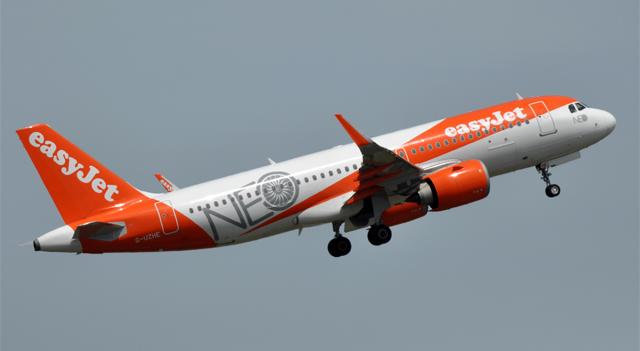
    easyJet PLC (LSE:EZJ) shares climbed 5.5% to 569p, near a one-year high, after the airline rejected a fourth takeover proposal from US private equity firm Castlelake but agreed to provide limited due diligence access.

    The budget carrier said the San Francisco-based firm “hopes to be able to further improve its value following access to limited commercial information”.

    The latest proposal, valuing easyJet at 650p per share, was submitted on Tuesday and follows a previously disclosed 625p approach made public earlier in the week. It also includes a partial alternative allowing shareholders to receive unlisted, non-transferable, non-voting equity in the acquisition vehicle instead of cash.

    The offer represents a significant premium to the 392.4p “undisturbed” share price at the end of May, though only around 10% above highs seen last summer.

    Under the proposed structure, the bidding consortium would be 49% owned by Castlelake and co-investors including Brookfield Asset Management (TSX:BAM, NYSE:BAM), with the remaining 51% held by EU nationals, including former easyJet and Ryanair executive Peter Bellew and aviation investor Mark Breen.

    However, easyJet’s board said the fourth proposal “continues to substantially undervalue the company and its prospects” and raised concerns over deliverability, ownership structure, and regulatory timelines.

    Directors have previously argued that Castlelake is attempting to acquire the airline at an undervalue, pointing to strong underlying performance, including 46% profit growth over the past two years and a medium-term target of at least £1 billion in annual profit.

    The UK Takeover Panel has extended Castlelake’s “put up or shut up” deadline by nine days to 5 July, giving the firm more time to either make a firm offer or walk away.

    easyJet shares had fallen to four-year lows in March and April amid concerns over rising jet fuel costs and uncertainty linked to the Iran conflict, which weighed on booking patterns and widened first-half loss expectations.

    Analyst Chris Beauchamp at IG said the deadline extension has been interpreted by markets as a sign that a deal remains possible, with investors anticipating a potential improved offer, helping support recent share price strength.

  • 3i Group rises as Action sales growth holds up better than feared

    3i Group rises as Action sales growth holds up better than feared

    3i Group PLC (LSE:III) shares jumped 10% to 2,499p after the private equity investor said its largest holding, Action, was still on track for a solid second quarter despite a moderation in like-for-like sales growth.

    Ahead of its annual general meeting, the FTSE 100 firm reported that the European discount retailer posted like-for-like sales growth of 3.3% for the year to 21 June.

    That compares with 3.6% growth in the first quarter and sits slightly below previous full-year guidance of 4% to 5%.

    Action has opened 105 new stores so far this year, keeping it on track to meet its target of at least 400 openings, according to chief executive Simon Borrows.

    He added that Action is expected to deliver “a good quarter of profit growth” and ended the period with a cash balance of €699 million, following a €450 million dividend payout in May.

    Borrows also said the rest of 3i’s private equity portfolio continued to perform in line with expectations, with steady underlying momentum across its investments.

    3i shares had previously reached an all-time high near 4,500p last autumn, driven by strong performance at Action, before sliding to two-and-a-half-year lows below 1,900p in recent months.

    Earlier this month, Citi analysts suggested the market was implicitly pricing Action on just 2.2% medium-term like-for-like sales growth.

  • Caspian Sunrise shares rise 8% as Kazakhstan drilling programme expands

    Caspian Sunrise shares rise 8% as Kazakhstan drilling programme expands

    Caspian Sunrise PLC (LSE:CASP), the Kazakhstan-focused oil and gas company, saw its shares climb 8% to 2.16p after announcing an expanded and accelerated drilling programme at its BNG Contract Area.

    The company said encouraging results from the Yelemes Deep structure prompted it to bring forward additional drilling plans and expand its activity.

    Three further deep wells are now planned at the structure, with Deep Wells 701 and 707 expected to be spudded in July 2026.

    The move follows progress at Deep Well 803, which has been deepened to 3,927 metres and previously produced oil during testing from a Lower Triassic sandstone reservoir.

    Caspian Sunrise intends to perforate and test additional intervals at the well to potentially boost output, although it cautioned that the deeper target zone has not yet been fully penetrated or tested.

    Deep Well 701 is planned to reach 5,000 metres, targeting Permian and Carboniferous reservoirs, including a Moscowian interval that previously produced around 107 barrels of oil per day at a nearby well.

    Deep Well 707 will be drilled to 3,500 metres to test a fault-related structure, while a third well, Deep Well 703, is scheduled for the second half of 2026.

    That well is intended to support a potential reserves upgrade under Kazakhstan’s classification system and will also target an interval that flowed more than 1,000 barrels per day in nearby testing.

    A separate shallow well is also planned at the Airshagyl structure to assess a palaeochannel feature identified through seismic data.

    The Yelemes Deep licence was renewed in December 2025 as an appraisal licence, requiring the drilling of three deep wells by the end of 2027 in order to qualify for a 25-year production licence.

    The company also confirmed it has received independent reserve estimates for the Yelemes area under Kazakh state methodology, although these have yet to be approved by the national reserves commission.

  • Moonpig shares surge 18% as profit, revenue and dividend all rise

    Moonpig shares surge 18% as profit, revenue and dividend all rise

    Moonpig Group PLC (LSE:MOON), the online cards and gifting business, saw its shares jump 18% to 242.2p after reporting stronger revenue, higher profits, robust cash generation and a 25% increase in its dividend.

    Revenue for the year to 30 April 2026 rose 6.5% to £373 million, while adjusted earnings per share increased 19.5% to 18p.

    Reported profit before tax soared to £68.9 million, up from £3 million the previous year, when results were heavily impacted by £64.6 million in adjusting items.

    The board proposed a 25% rise in the total dividend to 3.75p per share.

    Growth was driven by the core Moonpig brand, where revenue climbed 8.6%, while its Dutch arm Greetz posted constant currency growth of 1.5%.

    Active customers across both brands increased to 12.3 million, up from 12 million a year earlier, while average order value rose 5.7%, supported by customers trading up to higher-value gifts, including new ranges from Next and Boots, as well as larger card formats and increased use of tracked UK delivery.

    Adjusted EBITDA rose 8.1% to £104.6 million, with margins slightly improving to 28%, while free cash flow increased 11.2% to £73.5 million.

    The company also completed £60 million of share buybacks during the year and plans to repurchase up to a further £65 million in the current financial year.

    Chief executive Catherine Faiers, who took over in March, said the group’s brands, customer data and operational strength provide a strong platform for long-term growth and shareholder returns.

    Panmure Liberum reiterated its “buy” rating and 300p price target, arguing the shares remain undervalued given strong cash generation and a free cash flow yield of around 9%.

    Trading since the start of the new financial year has been in line with expectations, with forecasts for the year to April 2027 unchanged.

  • Halfords shares jump 13% as profits beat forecasts and margins hit decade high

    Halfords shares jump 13% as profits beat forecasts and margins hit decade high

    Halfords Group PLC (LSE:HFD) saw its shares climb 13% to 203.76p after the retailer posted profits ahead of expectations and reported its strongest gross margin in a decade.

    The motoring and cycling business delivered a 4.8% rise in like-for-like sales over the 53 weeks to 3 April 2026, with retail up 4.1% and its Autocentres division increasing 5.8%.

    Gross margin expanded by 210 basis points to 52.8%, the highest in ten years, helping to offset higher operating costs.

    Underlying profit before tax rose 4.1% to £45.4 million on a comparable 52-week basis, supported by changes in accounting for acquired intangibles. Excluding that adjustment, underlying profit increased more than 8% to £41.5 million.

    The company said performance was driven by progress in the “Optimise” phase of its Fit for the Future strategy, aimed at delivering near-term gains through tighter execution.

    In Autocentres, operating margins improved by 50 basis points as Halfords expanded its Fusion garage concept and improved labour efficiency. The retail division also made progress, reshaping category management, refining pricing and promotions, and testing new in-store initiatives.

    Halfords proposed a final dividend of 6p, taking the total payout for the year up to 9p.

    Looking ahead, the group said trading across April to June had been strong and expects full-year underlying profit to land near the top end of market forecasts.

    While it has not yet seen any impact on consumer behaviour from the recent Middle East conflict, it warned it remains alert to potential shifts in sentiment later in 2026.

    Chief executive Henry Birch said the results reflected stronger sales, improved margins and a higher dividend, while noting that the company is still in the early stages of its growth strategy.

    The group also confirmed that Jock Lennox, a former EY partner and chartered accountant, will join the board as chair after the September AGM, succeeding Keith Williams.

  • Advanced Medical Solutions Agrees £659m All-Cash Takeover by HB Fuller

    Advanced Medical Solutions Agrees £659m All-Cash Takeover by HB Fuller

    Advanced Medical Solutions Group PLC (LSE:AMS) said on Thursday it has agreed to an all-cash takeover by US company HB Fuller Co.

    Under the terms of the deal, AMS shareholders will receive 285 pence per share in cash, valuing the AIM-listed business at around £659 million and implying an enterprise value of approximately £715 million including debt.

    AMS shares rose 16% to 278.61p in early London trading following the announcement.

    In New York, HB Fuller shares closed 2.3% higher at $64.60 on Wednesday, before slipping 2.9% in pre-market trading on Thursday. The US adhesives manufacturer has a market capitalisation of about $3.52 billion and is based in St Paul, Minnesota.

    The acquisition will be carried out through HB Fuller Medical Adhesive Technologies Inc, its wholly owned subsidiary. AMS, headquartered in Cheshire, produces surgical dressings and wound care products.

    HB Fuller first confirmed its interest in AMS at the end of April, with its approach becoming public in May. Last week, AMS extended the deadline for the US group to make a firm offer to 2 July.

    Earlier in May, AMS shares fell after private equity firm TA Associates (UK) LLP confirmed it would not proceed with a competing takeover bid, despite earlier exploratory discussions.

    AMS said on Thursday that all of its directors, who collectively hold around 0.3% of the company’s shares, are recommending shareholders accept the offer.

    Chair Grahame Cook described the deal as delivering “attractive and certain value in cash” to shareholders.

    HB Fuller chief executive Celeste Mastin said the acquisition represented a strategic opportunity, highlighting medical products as a key growth area for the group due to strong demand trends, regulatory barriers to entry, and attractive margins.

  • Mercantile Ports Jumps 21% as Court Filings Reveal Rival Bid During Active Settlement

    Mercantile Ports Jumps 21% as Court Filings Reveal Rival Bid During Active Settlement

    Shares in Mercantile Ports and Logistics Ltd (LSE:MPL) climbed 21% to 1.75p after the AIM-listed company revealed that newly disclosed court filings suggest a rival bid for the debt of its Indian port asset was being considered before its own settlement agreement was terminated.

    The company’s challenge to the cancellation of its settlement proposal for Karanja Terminal & Logistics is scheduled to be heard by the National Company Law Tribunal in Mumbai on 1 July 2026.

    At the heart of the dispute is the termination of Mercantile’s One Time Settlement (OTS), an approved agreement under which the company had been named the successful bidder. Mercantile said it had already deposited approximately ₹43 crore (£3.8 million) under the terms of the settlement.

    According to filings from the lender consortium and Prudent ARC, a competing binding offer of ₹520 crore (around £46 million) was submitted by Prudent ARC while Mercantile’s OTS remained in force. The company said the rival proposal was both submitted and considered before its settlement was annulled, despite Mercantile having won the original process and remaining within a payment window that extended to 30 September 2025.

    Mercantile argued that the newly disclosed information significantly changes the factual narrative surrounding the case and raises questions over whether there was ever a genuine intention to complete the settlement. The company added that legal advisers believe the outcome of previous proceedings, including those before the Delhi High Court, may have been different had these facts been known at the time.

    Managing Director Pavan Bakhshi said the admissions raised serious concerns about transparency, fairness and whether Mercantile had been given a legitimate opportunity to complete the settlement. He noted that the debt was ultimately transferred to the party that had previously lost the original bidding process.

    Bakhshi said the company would continue pursuing all available legal avenues to safeguard shareholder interests and maximise value recovery for stakeholders.

  • ProCook Delivers Strong Growth Momentum as CEO Lee Tappenden Highlights Clear Path to Long-Term Expansion

    ProCook Delivers Strong Growth Momentum as CEO Lee Tappenden Highlights Clear Path to Long-Term Expansion

    ProCook Group (LSE:PROC) has delivered a strong set of full-year results, demonstrating that a clear strategy, disciplined execution, and continued investment can drive growth even as consumers remain cautious with their spending.

    Speaking about the company’s performance, Lee Tappenden, Chief Executive Officer of ProCook, highlighted a year of significant progress across sales, customer acquisition, store expansion, and profitability.

    Strong Sales Growth Across Channels

    Under Tappenden’s leadership, ProCook reported total sales growth of 23.0%, with like-for-like sales increasing by 11.8%. On a two-year basis, like-for-like growth reached 17.3%, reflecting the strength and consistency of the retailer’s performance.

    Tappenden attributed the results to ProCook’s successful omnichannel strategy, with both physical stores and e-commerce delivering strong growth. Alongside existing store performance, the company continues to expand its footprint across the UK, helping to increase brand awareness and attract new customers.

    “We’re driving a very strong omnichannel approach,” Tappenden explained, noting that growth is being supported by both new store openings and innovative marketing initiatives.

    Progress Towards Ambitious Growth Targets

    Two years ago, ProCook set out a medium-term strategy focused on expanding to 100 stores across the UK while delivering a 10% operating profit margin.

    According to Tappenden, the business is making encouraging progress against those objectives. During the year, ProCook opened 13 new stores, following 12 openings the previous year, demonstrating confidence in the long-term opportunity for the brand.

    A particularly positive development has been the introduction of a new store design concept. Eight of the newly opened stores feature the updated format, and Tappenden revealed that these locations are currently amongst the strongest performers within the new store portfolio.

    “The new format is performing exceptionally well,” he said, highlighting the role it is expected to play in future expansion plans.

    Driving Profitability Through Disciplined Execution

    Alongside strong revenue growth, ProCook has continued to improve operational efficiency.

    The company increased its operating profit margin from 4.6% to 5.7%, representing an increase of more than 50% year-on-year in operating profit performance.

    Tappenden emphasised the importance of maintaining strict cost discipline while investing in growth initiatives, demonstrating a balanced approach to value creation.

    Investing in Customer Experience

    A major focus for ProCook over the past year has been enhancing customer service across its retail network.

    Tappenden explained that the company has undertaken an extensive retraining programme for store colleagues, strengthening customer engagement and improving the in-store experience.

    This investment appears to be delivering tangible results. The number of active customers within the business increased by 24% during the year, reflecting both strong retention and successful acquisition efforts.

    Building a Stronger and More Engaging Brand

    Another key driver of growth has been ProCook’s evolving marketing strategy.

    According to Tappenden, the company has significantly increased its focus on paid and social media, helping to create a more engaging and distinctive brand personality.

    “We’re talking to customers in a different way,” he said, explaining that the refreshed approach has enabled ProCook to connect with a broader audience and attract new customers to the brand.

    This combination of enhanced marketing, improved customer service, and continued investment in stores has helped build momentum across the business.

    Confidence for the Future

    While many retailers continue to face challenges from inflation, higher interest rates, and changing consumer spending habits, Tappenden remains confident in ProCook’s ability to continue gaining market share.

    The company’s latest results highlight a business that is executing effectively against a clearly defined strategy, with growth being supported by multiple drivers including store expansion, omnichannel development, customer acquisition, and operational discipline.

    Under the leadership of Lee Tappenden, Chief Executive Officer of ProCook, the company has established a strong foundation for future growth and appears well positioned to continue delivering value for customers, shareholders, and stakeholders alike.

    As ProCook advances towards its goal of 100 stores and improved profitability, the business enters the new financial year with growing momentum and a clear vision for long-term success.

    For more information visit – https://www.procookgroup.co.uk/