Blog

  • Insider Confidence and AI Innovation Drive Momentum at Astrid Intelligence

    Insider Confidence and AI Innovation Drive Momentum at Astrid Intelligence

    As artificial intelligence continues its transition from experimentation to real-world application, investors are increasingly looking for signs that companies can not only innovate but also execute. Recent developments at Astrid Intelligence suggest the company is making progress on both fronts, with senior leadership increasing their ownership stake while simultaneously launching a major upgrade to its flagship AI platform.

    Leadership Puts More Skin in the Game

    One of the strongest signals investors often look for is insider confidence. Astrid Intelligence (AQSE:ASTR) recently saw key executives increase their personal holdings in the company through its ATM (At-The-Market) facility rather than through standard open-market purchases.

    CEO Siam Kidd explained that the decision reflects a strong belief in both the company’s future and the broader opportunities emerging within the Bittensor ecosystem. Following a significant corporate restructuring completed in late 2024, management felt they were underexposed relative to their conviction in the business and sought to increase their alignment with shareholders.

    The move underscores leadership’s long-term commitment to Astrid’s growth strategy and reinforces confidence in the company’s direction.

    Astrid Arena V3 Marks a Major Step Forward

    Alongside insider buying, Astrid Intelligence has launched Astrid Arena V3, the latest evolution of its AI-powered trading platform.

    Astrid Arena was created to harness advances in artificial intelligence by allowing AI trading agents to compete against one another across a range of markets, including precious metals, cryptocurrencies, and other financial instruments. The platform serves as both a competition environment and a powerful data-gathering engine for AI development.

    While Version 2 focused on monitoring how external AI agents executed trades and generated market insights, Version 3 introduces a significantly more sophisticated framework. Participants now submit the underlying code powering their AI agents, enabling Astrid to run and analyse those models internally.

    According to Kidd, this shift provides deeper intelligence, improves transparency, reduces opportunities for gaming the system, and accelerates the development of Astrid’s own proprietary baseline trading agent.

    Growing Evidence of AI Trading Potential

    One of the most compelling outcomes from Astrid Arena has been the rapid improvement in agent performance.

    When the platform first launched, AI trading agents delivered mixed results. However, as competition has intensified and models have evolved, average performance levels have improved dramatically. Kidd noted that many agents participating in month-long trading competitions are now generating returns in the range of 10% to 20% per month.

    While performance figures should always be viewed in context and are not guarantees of future results, the trend highlights the accelerating capabilities of AI-driven trading systems and the valuable dataset Astrid is accumulating through the platform.

    Attracting Global Talent

    Astrid Arena is designed to appeal to a broad range of participants, from professional quantitative traders and financial institutions to independent developers and AI specialists.

    The platform already attracts contributors from around the world, including scientists, entrepreneurs, and experienced traders. To further strengthen participation, Astrid offers what management believes is one of the largest recurring prize pools in the AI trading competition sector, currently distributing approximately $50,000 per month.

    The company expects prize incentives to increase over time, creating a powerful mechanism for attracting top-tier talent and accelerating innovation across the ecosystem.

    Positioned at the Intersection of AI and Digital Assets

    Astrid Intelligence’s strategy places it at the convergence of several high-growth technology trends, including artificial intelligence, algorithmic trading, and decentralised digital asset infrastructure.

    With leadership increasing their personal investment, a major platform upgrade now live, and a growing global community of AI developers contributing to its ecosystem, Astrid appears focused on building long-term value through both innovation and execution.

    For investors monitoring emerging AI opportunities, the combination of insider conviction and continued product development offers a noteworthy indication of management’s confidence in the company’s future direction.

    For more information visit – https://astrid.global/

  • Oil Prices Continue Lower as Hormuz Flows Improve and Iran Diplomacy Advances

    Oil Prices Continue Lower as Hormuz Flows Improve and Iran Diplomacy Advances

    Oil prices fell for a third consecutive session on Wednesday as improving shipping activity through the Strait of Hormuz and progress in U.S.-Iran negotiations reduced concerns about lasting disruptions to Middle Eastern energy exports.

    By 05:39 ET (09:39 GMT), Brent Oil Futures for August delivery had dropped 2% to $75.52 a barrel, while West Texas Intermediate (WTI) crude futures declined 1.8% to $71.89 a barrel.

    Both oil benchmarks closed the previous session near four-month lows.

    Market sentiment was influenced by growing evidence that traffic through the Strait of Hormuz is gradually recovering after months of conflict disrupted one of the world’s most important oil and gas transit routes.

    Reports indicated that several supertankers previously delayed in the Gulf have resumed operations and successfully transported crude cargoes out of the region. At the same time, more liquefied natural gas vessels linked to Qatar have restarted voyages through the strategic waterway.

    Traders view these developments as a sign that regional energy supply chains are steadily returning to normal.

    The United States and Iran have agreed to a 60-day framework designed to support negotiations toward a broader agreement, while Washington has introduced a temporary sanctions waiver allowing certain Iranian crude exports to continue through August.

    The moves have increased expectations that additional oil supplies could soon re-enter global markets.

    “Estimates suggest that roughly 6-7m b/d of oil moved through the strait in recent days, which is still far below pre-war flows of around 20m b/d. However, with pipeline diversions for Saudi Arabia and the UAE, we only need to see oil flows through the strait return to around 14m b/d for oil supply from the Persian Gulf to return to pre-war levels,” ING analysts said in a note.

    “We continue to believe that the oil sell-off is overdone, with the market still tightening. Clearly, price movements suggest the market expects a fairly rapid recovery in Persian Gulf oil supplies,” they added.

    Investors also digested inventory figures released by the American Petroleum Institute (API). U.S. crude stockpiles fell by 765,000 barrels in the week ended June 19, a smaller drawdown than many analysts had anticipated.

    Crude inventories at Cushing, Oklahoma, the delivery point for WTI contracts, declined by 1 million barrels. Meanwhile, gasoline stocks increased by 1.2 million barrels and distillate inventories rose by 1.4 million barrels.

    Attention now turns to official supply data from the U.S. Energy Information Administration (EIA), due later on Wednesday, for confirmation of inventory trends.

  • Gold Near Two-Week Trough as Strong Dollar and Fed Rate Outlook Pressure Market

    Gold Near Two-Week Trough as Strong Dollar and Fed Rate Outlook Pressure Market

    Gold prices remained under pressure on Wednesday, slipping toward their lowest levels in nearly two weeks as a stronger U.S. dollar and growing expectations of further Federal Reserve tightening reduced investor appetite for the precious metal.

    Spot gold declined 1.1% to $4,067.72 per ounce by 05:42 ET (09:42 GMT), after falling to an intraday low of $4,050.6 per ounce earlier in the session.

    U.S. Gold Futures dropped 1.6% to $4,083.60.

    The metal has now posted losses in five of the last six trading sessions and is coming off three consecutive weeks of declines.

    The DXY dollar index climbed to its highest level in 13 months as investors increased expectations that the Federal Reserve may raise interest rates in July and potentially again before year-end. A stronger dollar typically weighs on gold by making it more expensive for buyers using other currencies, while higher interest rates increase the opportunity cost of holding non-yielding assets.

    Market expectations for tighter monetary policy have strengthened following last week’s Federal Reserve meeting and a series of hawkish comments from policymakers.

    Traders are currently assigning around a 70% probability to a rate hike by September, while another increase is fully priced in by December.

    “A stronger US dollar and expectations that the Fed could keep rates higher for longer outweighed safe-haven support from geopolitical risks,” ING analysts said in a note.

    Additional pressure came from easing concerns over potential disruptions to Middle Eastern energy supplies.

    Investors continued to assess diplomatic negotiations between Washington and Tehran after both countries reported progress toward a broader peace arrangement aimed at improving the flow of energy shipments through the Strait of Hormuz.

    Despite the progress, unresolved issues remain, including nuclear monitoring requirements and access to frozen Iranian assets.

    “While geopolitical risks remain elevated, gold is likely to trade in line with Fed expectations, leaving prices vulnerable to higher yields and a stronger dollar in the near term,” analysts added.

    Attention now turns to Thursday’s U.S. Personal Consumption Expenditures (PCE) inflation report, which could offer fresh guidance on the Fed’s next policy moves.

    Elsewhere in precious metals, silver rose 0.8% to $61.12 per ounce after falling more than 5% in the previous session.

    Platinum slipped 1.2% to $1,634.81 per ounce.

    In industrial metals, benchmark copper futures on the London Metal Exchange eased 0.3% to $13,343.88 per tonne, while U.S. copper futures declined 0.6% to $6.10 per pound.

  • Aluminium Extends Decline as Supply Concerns Fade

    Aluminium Extends Decline as Supply Concerns Fade

    Aluminium prices weakened further on Wednesday, reaching their lowest levels in three months as investors reassessed supply risks in the Middle East and reacted to continued strength in the U.S. dollar.

    The three-month aluminium contract on the London Metal Exchange fell 0.76% to $3,208 per metric ton by 07:01 GMT. Earlier in the session, the contract dropped to $3,191 per ton, its lowest level since 24 March.

    On the Shanghai Futures Exchange, the most actively traded aluminium contract settled 1.43% lower at 23,405 yuan ($3,439.23) per ton after touching 23,320 yuan during the day, the weakest level since 20 March.

    Analysts said the market is increasingly pricing in a recovery of aluminium supply from the Gulf region as production and transportation disruptions linked to the conflict begin to ease.

    Improving expectations for shipping activity and lower energy-related pressures have reduced concerns about supply shortages, although market participants expect the return to normal conditions to take place gradually.

  • Investors Eye Tech Rebound as AI Demand Faces Fresh Scrutiny: Dow Jones, S&P, Nasdaq, Wall Street Futures

    Investors Eye Tech Rebound as AI Demand Faces Fresh Scrutiny: Dow Jones, S&P, Nasdaq, Wall Street Futures

    U.S. stock futures moved higher on Wednesday as markets attempted to recover from a sharp technology-led sell-off, while investors looked ahead to key earnings results and developments across the artificial intelligence sector for signs of continued momentum.

    At the same time, lower oil prices and easing geopolitical tensions continued to provide support for broader market sentiment.

    Wall Street Futures Regain Ground

    After a difficult session for technology and semiconductor stocks, futures pointed to a more positive start on Wall Street.

    By 08:22 GMT, Nasdaq futures had risen 0.5%, while S&P 500 futures gained 0.2%. Dow Jones futures, however, slipped 0.16%.

    Investors were encouraged by stronger-than-expected business activity figures and a continued retreat in crude oil prices as concerns over disruptions linked to tensions between the United States and Iran eased.

    Attention is now focused on Micron Technology (NASDAQ:MU), whose quarterly earnings are expected to provide insight into demand for AI-related hardware and infrastructure.

    As one of the world’s leading memory-chip manufacturers, Micron is viewed as an important gauge of spending trends across data centres and advanced computing platforms.

    Nvidia Hardware Commands Premium Prices in China

    Demand for Nvidia’s (NASDAQ:NVDA) latest AI systems remains exceptionally strong despite ongoing U.S. export restrictions.

    According to the Financial Times, Nvidia’s DGX B300 servers are being sold through unofficial channels in China for more than 8 million yuan ($1.1 million), roughly double the price seen six months ago.

    The trend highlights the continued appetite for advanced AI computing power in China and reinforces Nvidia’s dominant role in the sector despite geopolitical restrictions.

    Meta Faces Increased Government Oversight

    Meta Platforms (NASDAQ:META) has reportedly been asked by the Trump administration to voluntarily submit its artificial intelligence models for federal review, according to the New York Times.

    The report notes that Meta is currently the only major U.S. AI company not participating in the government’s evaluation framework.

    The request follows a broader push by Washington to increase oversight of advanced AI technologies, particularly those with potential national security implications.

    For investors, the development underscores the growing importance of regulation as a factor shaping the future of the AI industry.

    Honeywell Aerospace Draws Attention Ahead of Index Inclusion

    Honeywell Aerospace is set to join both the S&P 100 and S&P 500 following its separation from Honeywell International (NASDAQ:HON).

    The company will replace Honeywell in the S&P 100 and take the place of Conagra Brands (NYSE:CAG) in the S&P 500 when the changes take effect on 29 June.

    The prospect of index-related buying helped lift when-issued shares by more than 9% in after-hours trading.

    Alphabet Added to the Dow

    Alphabet (NASDAQ:GOOG) will become a member of the Dow Jones Industrial Average later this month, replacing Verizon (NYSE:VZ).

    The move reflects Alphabet’s growing significance within the U.S. economy and the increasing role of artificial intelligence in shaping corporate growth and investment trends.

    While the Dow comprises only 30 stocks, inclusion often boosts a company’s profile and can generate additional demand from benchmark-tracking investment funds.

  • Buccaneer Energy Unlocks Significant Shareholder Value Through Strategic Acquisition and Operational Growth

    Buccaneer Energy Unlocks Significant Shareholder Value Through Strategic Acquisition and Operational Growth

    In the energy sector, growth is often associated with new discoveries and expanding production. However, some of the most compelling value creation stories emerge from identifying overlooked opportunities and maximizing the potential of existing assets. Buccaneer Energy (LSE:BUCE) appears to be demonstrating exactly that approach.

    The company recently reported a 35% increase in its proved net present value (NPV), which now stands at approximately $11.7 million. This significant uplift reflects stronger future cash flow expectations from the company’s proven reserves and highlights the effectiveness of its growth strategy.

    According to CEO Paul Welch, two key factors drove the increase. The first was a strategic acquisition completed in March, which immediately boosted reserves and production while increasing Buccaneer Energy’s ownership stake in an enhanced recovery project. The second contributor was a stronger commodity price environment, with the valuation model reflecting higher oil prices compared to previous assessments.

    For shareholders, the implications are clear. Higher reserve values translate into greater expected cash generation over the coming year, strengthening the company’s asset base and enhancing long-term shareholder value.

    One of the most impressive developments has been Buccaneer Energy’s acquisition of an asset for approximately $425,000 that has since been independently valued at $2.5 million. The nearly six-fold increase demonstrates the company’s ability to recognize opportunities where additional value can be unlocked through strategic ownership and operational integration.

    Welch emphasized that the company is not solely focused on acquisitions but instead pursues a balanced strategy combining both internal and external growth opportunities. In this case, the acquired asset complemented an enhanced recovery project already underway within the company. By increasing its equity position, Buccaneer Energy was able to create substantially more value from the asset than its previous owner could achieve.

    The transaction highlights a disciplined approach to capital allocation. Rather than pursuing acquisitions for growth alone, the company focuses on carefully selected opportunities where its operational expertise and existing projects can generate meaningful upside.

    “When you hit the right combination,” Welch noted, “that’s when you get a six-fold uplift.”

    The company also benefited from favorable market conditions following the acquisition, as higher energy prices further enhanced the value of the asset and its future cash flows.

    Looking ahead, Buccaneer Energy’s strategy appears centered on three core principles: increasing reserve value, allocating capital selectively, and identifying opportunities where operational execution can unlock hidden potential. The recent results suggest that this approach is delivering tangible outcomes.

    As the company continues to pursue both organic growth and targeted acquisitions, investors will be watching closely to see whether Buccaneer Energy can replicate this success and continue building value for shareholders.

    With a stronger reserve base, improved cash flow expectations, and a demonstrated ability to transform underappreciated assets into high-value opportunities, Buccaneer Energy is positioning itself as a company focused on sustainable growth and long-term value creation.

    For more information visit https://buccaneerenergy.co.uk/

  • European Stocks Struggle for Direction After Tech Sell-Off and Persistent Rate Concerns: DAX, CAC, FTSE100

    European Stocks Struggle for Direction After Tech Sell-Off and Persistent Rate Concerns: DAX, CAC, FTSE100

    European equity markets traded cautiously on Wednesday, with investors reluctant to take on additional risk following a sharp global decline in technology shares and continued concerns that interest rates could remain elevated for longer.

    The pan-European STOXX 600 was broadly unchanged at the open. Germany’s DAX slipped 0.6%, while France’s CAC 40 edged 0.1% higher. Italy’s FTSE MIB and the UK’s FTSE 100 both fell 0.2%.

    The subdued performance followed Tuesday’s technology-led sell-off, which pushed the STOXX 600 to its lowest level in more than a week. Market participants are increasingly reassessing whether current valuations and the scale of artificial intelligence-related investment can be justified by future earnings growth.

    “FOMO was replaced with a fear of being burnt if the now expected chunky earnings numbers don’t continue to surge,” said Danni Hewson, head of financial analysis at AJ Bell.

    She added: “Post-IPO stocks often enter a period of volatility as the market gets to grips with the new entrant, some investors rush to cash out, and others assess at what price they are willing to jump in.”

    According to CME FedWatch data, bond markets are currently pricing in around 50 basis points of additional Federal Reserve tightening by the end of the year, with investors assigning nearly a 40% probability to a rate increase as soon as July.

    For European investors, the prospect of tighter monetary conditions presents a difficult backdrop. Economic indicators across the Eurozone continue to point towards slower growth, while inflation remains elevated enough to limit the European Central Bank’s flexibility on interest rates.

    In the UK, investors are also contending with political uncertainty following the resignation of Prime Minister Keir Starmer, adding another layer of complexity to an already challenging environment marked by weak growth and restrictive monetary policy.

    Movers in Focus

    SEGRO rallies after rejecting takeover proposal

    SEGRO (LSE:SGRO) surged nearly 20% after turning down a takeover approach from Prologis (NYSE:PLD) valued at approximately $16 billion.

    Saipem advances on merger progress

    Saipem (BIT:SPM) gained 4% after receiving approval from Brazil’s competition authority for its planned merger with Subsea7 (TG:SOC).

    Rheinmetall falls on contract concerns

    Rheinmetall (TG:RHM) dropped 15% following reports that the German government may cancel a significant defence contract and instead award the work to TKMS.

  • Market Open: Berkeley Profit Miss, Segro Rejects Bid

    Market Open: Berkeley Profit Miss, Segro Rejects Bid

    FTSE 100 steadies as Berkeley cuts growth targets and Segro rejects a takeover bid. Brent crude weakens while gold advances.

    Market Overview

    UK markets were broadly steady at the open, with the FTSE 100 edging higher to 10,429.02. Across Europe, sentiment was weaker following a global technology sell-off and renewed concerns over the interest rate outlook. The Euronext 100 slipped 0.01 per cent to 1,900.85, while Germany’s DAX fell 0.59 per cent to 24,790.70. In the United States, the Nasdaq closed lower at 25,587.04 and the S&P 500 finished at 7,365.46 as investors reacted to the technology-led retreat and Federal Reserve uncertainty.

    Commodity markets reflected easing geopolitical concerns after expectations of smoother crude flows through the Strait of Hormuz helped push oil prices lower. Copper and gold moved higher, while natural gas also advanced. Against sterling, the US dollar, euro and Swiss franc strengthened, while the Australian dollar and Japanese yen weakened. Bitcoin was unchanged against the pound.


    Market Numbers

    FTSE 100: Up (+0.00%), 10,429.02

    Euronext 100: Down (-0.01%), 1,900.85

    DAX: Down (-0.59%), 24,790.70

    NASDAQ: Down, 25,587.04

    S&P 500: Down, 7,365.46


    In the Headlines

    Profit Outlook Reset – Berkeley Group (LSE:BKG)

    Berkeley reported annual profit below market expectations and revised its medium-term growth targets. The update highlights ongoing challenges in the UK housing market and could influence sentiment towards the wider housebuilding sector.

    Takeover Rebuff – Segro (LSE:SGRO)

    Segro rejected a £12.6 billion approach from a US rival, underscoring continued overseas interest in UK-listed assets. The move reinforces confidence in the company’s long-term strategy and valuation outlook.


    Currencies (vs GBP)

    USD: Up (+0.00%), $1.32

    CHF: Up (+0.03%), Fr.1.0689

    EUR: Up (+0.01%), €1.16

    JPY: Down (-0.01%), ¥213.2955

    AUD: Down (-0.00%), $1.9089

    Bitcoin (BTC/GBP): Unchanged £47,473.62


    Commodities

    Copper: Up

    Gold: Up

    Brent Crude: Down

    Natural Gas: Up

  • FTSE 100 Holds Steady as Tech Weakness Offsets Easing Middle East Concerns

    FTSE 100 Holds Steady as Tech Weakness Offsets Easing Middle East Concerns

    UK equities traded in a narrow and volatile range on Wednesday as investors balanced improving conditions in the Middle East against a broad global sell-off in technology and semiconductor stocks, while also monitoring the political transition following Keir Starmer’s resignation.

    By 07:25 GMT, the FTSE 100 was up 0.09%, having moved between modest gains and losses during the session. Elsewhere in Europe, Germany’s DAX fell 0.65%, while France’s CAC 40 added 0.20%. Sterling weakened 0.05% against the US dollar to $1.3188.

    Political developments remained in focus in the UK. Starmer has continued discussions with expected successor Andy Burnham as part of a planned leadership handover and is due to meet European leaders in Berlin later in the day to discuss Ukraine, NATO defence spending and developments in Iran ahead of next month’s NATO summit.

    Meanwhile, geopolitical tensions appeared to ease further as shipping activity through the Strait of Hormuz gradually returned towards normal levels. Tanker movements increased as concerns over disruption from the Iran-Israel conflict moderated, helping reduce pressure on energy markets.

    The improvement followed comments from US officials rejecting suggestions that Iran could impose fees on vessels using the waterway. Diplomatic efforts continued throughout the region, although conflicting statements from Washington and Tehran highlighted the fragile nature of the current situation.

    Energy markets reflected the calmer backdrop. Brent crude declined 1.22% to $75.86 per barrel, while West Texas Intermediate crude fell 1.35% to $72.22. Precious metals also weakened, with gold futures down 1.14% at $4,102 and spot gold falling 0.61% to $4,084 per ounce.

    Technology stocks remained under pressure globally as investors reassessed valuations across the sector, contributing to a more cautious tone in equity markets despite the reduction in geopolitical risk.

    UK Corporate Highlights

    Berkeley misses profit expectations

    Berkeley Group (LSE:BKG) reported annual pre-tax profit below market forecasts as higher construction costs, slower development activity and cautious buyer demand weighed on profitability.

    SEGRO rejects Prologis approach

    SEGRO (LSE:SGRO) confirmed it had rejected an all-share takeover proposal from Prologis (NYSE:PLD) that valued the logistics property group at approximately £12.6 billion.

    B&M appoints new finance chief

    B&M (LSE:BME) named Asda executive Atheeq Akbar as its incoming Chief Financial Officer. He is expected to join the discount retailer in February 2027 as the company continues efforts to strengthen its UK operations.

  • Big Yellow Shares Jump as Property Sector Sentiment Improves Following SEGRO Developments (BYG)

    Big Yellow Shares Jump as Property Sector Sentiment Improves Following SEGRO Developments (BYG)

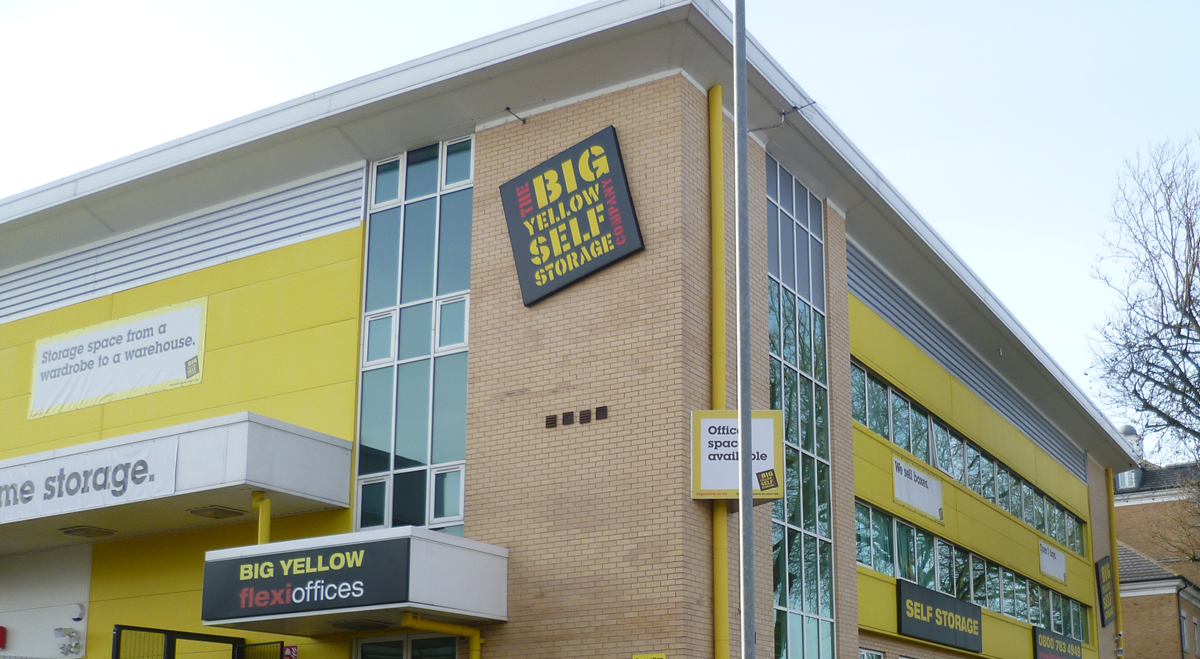
    Big Yellow Group (LSE:BYG) shares climbed 4.2% during Wednesday’s trading session, reaching 895.82p and touching an intraday high of 897.5p as investors returned to UK-listed real estate stocks following renewed takeover interest in the sector.

    The self-storage REIT benefited from stronger sentiment across property names after SEGRO rejected a takeover proposal from Prologis, a development that prompted investors to reassess valuations across the UK real estate market and highlighted the appeal of income-generating property assets.

    Despite the rally, Big Yellow remains significantly below its 52-week high of 1,208p, while trading only modestly above its 52-week low of 800.5p. This gap has attracted attention from value-focused investors who believe the company’s share price does not fully reflect the underlying value of its property portfolio and long-term earnings potential.

    As a property owner with substantial real estate assets, Big Yellow’s valuation is closely linked to expectations for UK interest rates. With the Bank of England base rate currently at 3.75%, investors continue to monitor the outlook for future monetary policy decisions, as lower borrowing costs would generally be supportive for property valuations and real estate investment trusts.

    The wider UK equity market has faced pressure in recent sessions amid domestic political uncertainty and weakness in global technology stocks. Against this backdrop, Big Yellow’s performance stood out, suggesting investors were willing to selectively re-enter parts of the property sector viewed as offering attractive value and defensive characteristics.

    Market participants also continue to watch developments across the self-storage industry, where demand trends have remained relatively resilient despite broader economic uncertainty. Combined with improving expectations for interest rates and a discounted valuation relative to recent highs, these factors helped drive renewed buying interest in the stock.

    More about Big Yellow Group

    Big Yellow Group is one of the UK’s largest self-storage operators, owning and managing a nationwide portfolio of storage facilities serving both individual and business customers. The company generates recurring rental income from its network of purpose-built sites and benefits from long-term structural demand for flexible storage solutions. As a real estate investment trust, Big Yellow combines property ownership with operational expertise in the growing self-storage sector, providing investors with exposure to both property assets and service-based revenues.