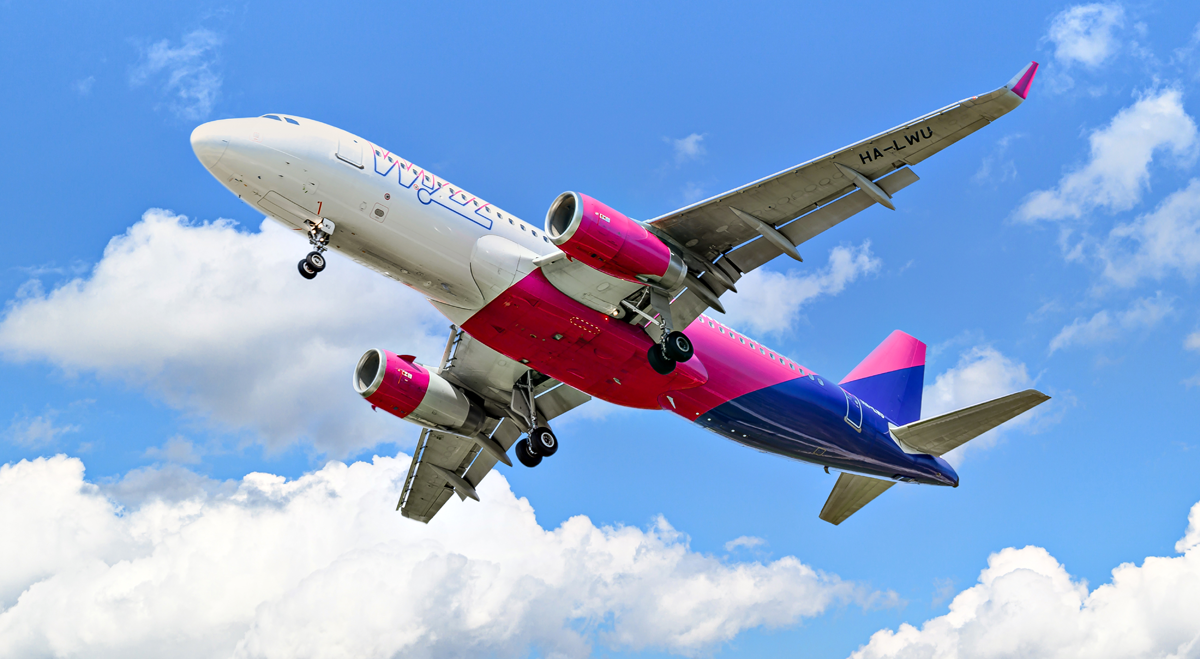
Wizz Air (LSE:WIZZ) has reduced its planned capacity for the second half of its financial year by 5%, citing geopolitical tensions and volatility in fuel prices, while outlining medium-term financial and operational targets at its Capital Markets Day in London.
The low-cost airline also revised its second-quarter revenue per available seat kilometre (RASK) guidance following higher-than-expected summer revenue.
Wizz Air now expects second-quarter RASK to remain broadly unchanged year on year, compared with its previous forecast of a low-single-digit percentage decline.
The company maintained its existing guidance for available seat kilometres and first-half costs excluding fuel.
Wizz Air said current trading supports a liquidity position exceeding €2.2 billion. The airline did not provide guidance for the current financial year.
Looking ahead, the company established financial targets for FY2030, including annual revenue of €10 billion, an ex-fuel cost per available seat kilometre of 3.00 euro cents and an operating profit (EBIT) margin of 10%.
The airline is also targeting an investment-grade balance sheet by FY2030.
Chief executive Jozsef Varadi outlined plans to operate a fleet of 335 aircraft, consisting entirely of Airbus neo models, and carry 127 million passengers annually by that date.
The company’s medium-term strategy focuses on expanding operations in its core Central and Eastern European markets and selected new markets, while improving fleet productivity and developing its existing route network.
Wizz Air said these measures form part of its plans to restore sustainable profitability and improve operational efficiency.
The FY2030 financial and operational figures represent management targets rather than confirmed future outcomes.
Leave a Reply