US equity futures showed contrasting movements on Tuesday as investors prepared for major bank earnings, assessed disappointing sales from luxury group LVMH and reconsidered the financial outlook for companies exposed to artificial intelligence.
Energy market developments and geopolitical tensions added to uncertainty, while upcoming US inflation figures remained an important consideration for expectations surrounding Federal Reserve interest rate policy.
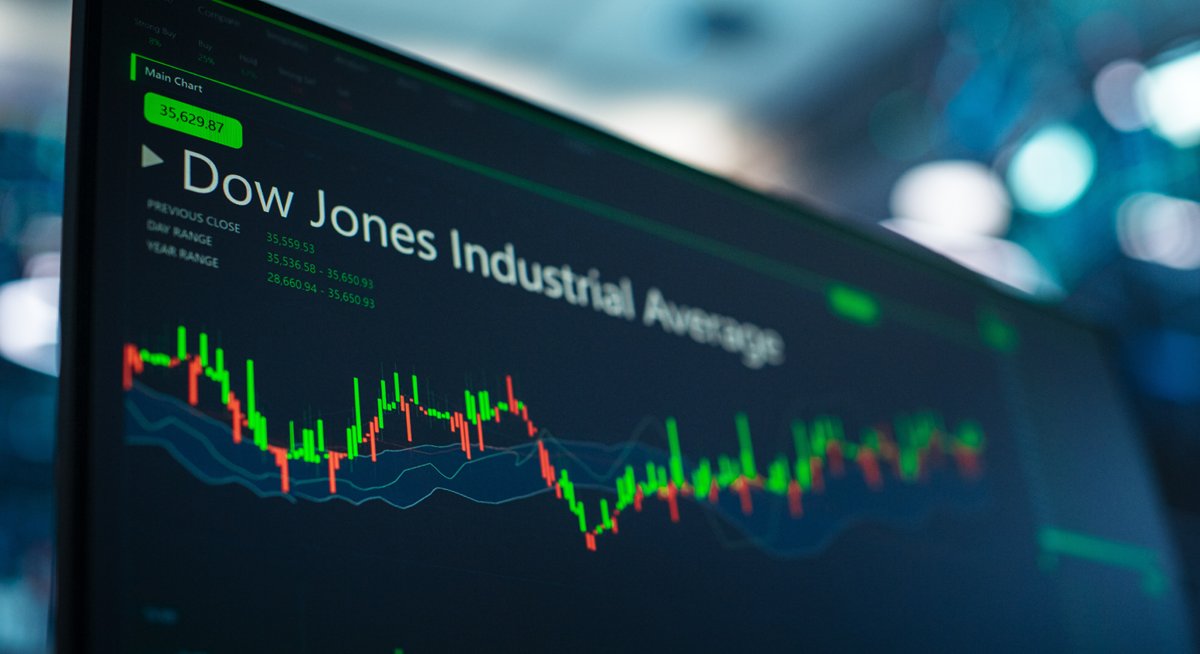
At 02:48 ET (06:48 GMT), Dow Jones Industrial Average futures were up 225 points, or 0.4%. S&P 500 futures edged down six points, equivalent to 0.1%, while Nasdaq 100 futures dropped 237 points, or 0.8%.
The relative weakness of Nasdaq futures followed renewed selling among technology companies, particularly semiconductor manufacturers and businesses associated with large-scale AI infrastructure investment.
The main US stock indices had ended Monday’s session mixed, with investors responding to higher energy prices, questions about technology valuations and weaker-than-expected trading figures from LVMH.
Semiconductor Losses Highlight Uncertainty Over AI Spending
Artificial intelligence remained a significant influence on market sentiment after US semiconductor shares declined sharply at the beginning of the week.
A sector index tracking chip manufacturers lost 2.7% on Monday, reflecting growing investor caution about the relationship between substantial AI-related expenditure and future profitability.
Technology shares in South Korea subsequently experienced considerable selling pressure.
Reports of advances by Chinese memory chip producer ChangXin Memory Technologies contributed to concerns about the competitive position of established semiconductor manufacturers.
The developments raised questions about whether Chinese companies could make further progress in narrowing the technological gap with US suppliers.
Investor uncertainty has also been influenced by scrutiny of revenue expectations surrounding OpenAI, the company behind ChatGPT.
Demand for AI services and infrastructure remains strong, but investors are increasingly examining the returns that technology businesses may generate from their capital expenditure programmes.
Large technology companies are investing heavily in data centres, computing equipment and networking infrastructure, with debt financing contributing to some projects.
The scale of these commitments has prompted closer examination of future cash generation, operating margins and the period required for investments to become profitable.
Technology sector valuations may therefore remain sensitive to evidence of whether commercial AI adoption can generate sufficient revenue to support continued expansion.
LVMH Revenue Misses Forecasts as Fashion Division Contracts
LVMH (USOTC:LVMUY) came under pressure in Paris after reporting third-quarter sales that fell short of analysts’ estimates.
The luxury goods group generated revenue of €18.5 billion, representing a 1% organic increase from the corresponding quarter of the previous year.
The performance was below the 1.3% growth forecast in the Visible Alpha consensus cited by Reuters.
Results from the company’s fashion and leather goods division were particularly weak.
Organic revenue in the segment declined 5%, compared with expectations for a 1.8% fall.
The division accounts for approximately half of LVMH’s total revenue, making its performance an important measure of demand for the group’s core luxury brands.
Growth in watches and jewellery also slowed.
Regional figures showed a 5% year-on-year decline in Asian sales, with China remaining a significant source of weakness.
Luxury spending in the Chinese market has been affected by weaker consumer demand and increased tax scrutiny of wealthy individuals.
Higher costs associated with geopolitical developments have added further challenges for the sector.
The results raised questions about the strength of demand for premium products and the pace at which Chinese luxury consumption might recover.
LVMH’s performance could also influence market expectations for other European luxury companies preparing to publish financial updates.
US Banks Begin Quarterly Reporting Season
A series of earnings announcements from major US financial institutions was scheduled to begin later on Tuesday.
JPMorgan Chase (NYSE:JPM), Goldman Sachs (NYSE:GS), Wells Fargo (NYSE:WFC) and Citigroup (NYSE:C) were due to report third-quarter results.
Bank of America (NYSE:BAC), Morgan Stanley (NYSE:MS) and BlackRock (NYSE:BLK) were expected to follow on Wednesday.
The releases will provide investors with updated information about the profitability of lending activities, deposit costs, credit performance and investment banking revenue.
Higher government bond yields have become an important consideration for financial institutions because of their potential effect on asset valuations and net interest margins.
Analysts at Vital Knowledge indicated that banking results could broadly match expectations, while identifying several possible sources of pressure.
These included increased funding costs, volatility in financial markets and slower securities issuance, which could reduce fee income from capital markets activities.
The analysts also highlighted potential weakness in revenue associated with residential mortgages.
Investors will examine whether merger and acquisition activity, initial public offerings and other corporate financing transactions are contributing to investment banking earnings.
The results will also provide evidence about household and corporate borrowing conditions, particularly through credit loss provisions and loan performance.
Separately, Deutsche Bank forecast third-quarter earnings growth of 34% for the S&P 500.
Its analysts argued that market expectations may underestimate corporate earnings resilience.
“The consensus is once again assuming too sharp a slowdown, leaving room for another quarter in which companies exceed forecasts more frequently than usual,” the analysts said.
The start of the earnings season will therefore be an important test of whether corporate profitability can support current US equity market valuations.
Crude Oil Falls Following Russian Diesel Export Comments
Oil futures declined on Tuesday as the possibility of increased Russian diesel exports partially offset concerns about disruptions to energy supplies in the Middle East.
Brent crude fell 1.5% to $105.09 per barrel by 03:54 ET, while West Texas Intermediate dropped 1.8% to $92.08.
The retreat followed gains on Monday, when Brent reached its highest closing level since 15 September.
Russian Deputy Prime Minister Alexander Novak said the country could increase diesel exports beyond the volumes outlined in a supply agreement announced by US President Donald Trump.
The comments followed a temporary easing of US restrictions on Russian fuel.
Trump also announced an “energy ceasefire” between Russia and Ukraine, although reports of further strikes against Ukrainian energy infrastructure raised questions about the arrangement’s effectiveness.
Elsewhere, tensions in the Middle East continued to threaten regional energy transport.
Attacks attributed to Iran-backed Houthi forces against Saudi Arabia’s international airport and strikes involving tankers in the Strait of Hormuz contributed to concerns about the security of oil shipments.
The waterway is a critical route for international crude exports, making any interruption potentially significant for global supply.
While expectations of additional Russian exports weighed on prices, uncertainty surrounding Middle Eastern shipping routes continued to support a geopolitical risk premium.
The competing supply developments left oil markets sensitive to further announcements and regional security developments.
For equity investors, attention will remain divided between the start of the US earnings season, forthcoming inflation data and the financial outlook for artificial intelligence investment.
Bank results will provide an early indication of corporate earnings conditions, while LVMH’s weaker sales and volatility in semiconductor stocks have highlighted potential risks to market valuations.
Oil prices and geopolitical developments will remain additional factors influencing inflation expectations and the broader direction of financial markets.
Leave a Reply