Author: Fiona Craig

  • Rome Resources identifies additional tin targets at Kalayi ahead of resource estimate

    Rome Resources identifies additional tin targets at Kalayi ahead of resource estimate

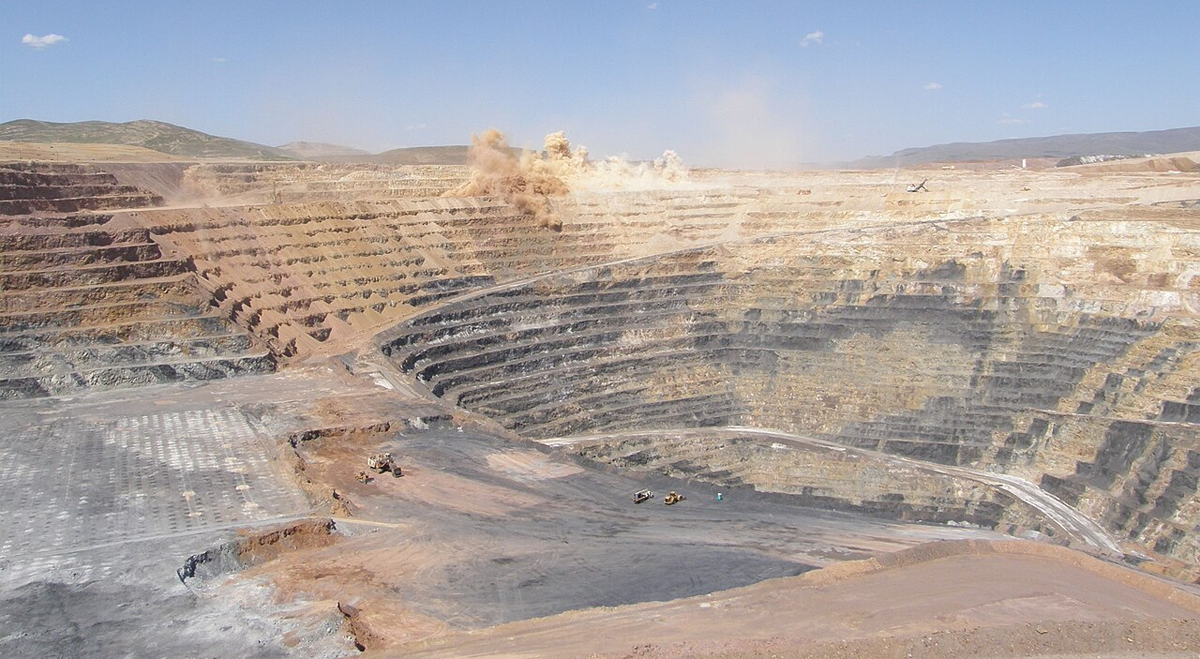
    Rome Resources (LSE:RMR) has highlighted further exploration potential at its Kalayi tin deposit in the Democratic Republic of Congo after independent modelling identified two previously unrecognised mineralised zones.

    Modelling carried out by MSA Group outlined the new MINZ8 and MINZ9 zones, as well as a substantial undrilled extension of a high-grade tin trend towards the southeast. While additional drilling will be needed to establish the continuity of these areas, the targets could provide scope for future resource expansion.

    The newly identified zones will not form part of the upcoming Kalayi Mineral Resource Estimate, which Rome Resources is currently finalising with MSA. Instead, they have been earmarked as priority areas for subsequent drilling and potential additions to the resource base.

    Exploration is also continuing across the wider Bisie North Project, where the company is progressing an airborne geophysical survey. Data from the programme is being interpreted by Southern Geoscience as Rome Resources looks to identify further prospective targets across the project area.

    Outside the DRC, the company is advancing its tin-tungsten-indium project in New Brunswick, Canada. Initial grab sampling has returned encouraging results, prompting follow-up trenching as Rome evaluates the project’s mineralisation potential. The Canadian work forms part of the group’s broader strategy of developing a portfolio of critical mineral assets across multiple jurisdictions.

    Financial considerations remain a key risk for the exploration-stage company. Rome Resources currently has no established revenue stream and continues to record net losses and cash outflows, leaving it exposed to future funding requirements and project execution risks. This is partly offset by low debt levels and its existing equity base.

    From a technical perspective, the shares also face some near-term pressure, with weak price momentum reflected in a negative MACD reading and an RSI below 50. Conventional valuation measures offer limited support because ongoing losses result in a negative price-to-earnings ratio, while the absence of a dividend means there is currently no income component to the investment case.

    More about Rome Resources plc

    Rome Resources plc is an AIM-listed mineral exploration company focused primarily on critical metals. Its principal interests include the Kalayi tin deposit and the broader Bisie North Project in the Democratic Republic of Congo, alongside an optioned tin-tungsten-indium project in New Brunswick, Canada. The company is targeting the discovery and development of metals considered increasingly important to global industrial and strategic supply chains.

    Focus keyphrase: Rome Resources Kalayi tin deposit

    Meta description: Rome Resources identifies two new mineralised zones and an undrilled high-grade tin trend at Kalayi as it prepares an updated resource estimate.


  • Wall Street Futures Rise as Oil and Bond Yields Ease: Dow Jones, S&P, Nasdaq

    Wall Street Futures Rise as Oil and Bond Yields Ease: Dow Jones, S&P, Nasdaq

    U.S. stock futures moved higher on Wednesday, putting Wall Street on course to recover part of its recent decline as investors welcomed a reversal in crude oil prices and a sharp retreat in Treasury yields.

    Crude provided some relief after three consecutive sessions of gains. U.S. oil futures turned negative after earlier rising as much as 1.3% to their highest level in almost three weeks.

    Treasury Buyback Plans Ease Pressure on Bonds

    The improvement in equity futures was accompanied by falling Treasury yields after the U.S. Treasury Department announced a significant expansion of its longer-dated debt buyback programme.

    From September 9, liquidity-support buybacks involving longer-term nominal coupon securities will increase by at least twofold.

    Lower yields can ease pressure on equity valuations, although investors may remain cautious ahead of the Federal Reserve’s latest meeting minutes, which could provide further insight into policymakers’ thinking on inflation and interest rates.

    Tech Sell-Off Weighs on Major Indices

    Wednesday’s stronger futures follow a difficult Tuesday session in which all three major U.S. benchmarks finished lower, extending Wall Street’s recent losing streak.

    The Nasdaq suffered the largest decline, dropping 355.20 points, or 1.3%, to 26,289.71 as technology shares came under heavy selling pressure.

    The S&P 500 lost 53.30 points, or 0.7%, to finish at 7,691.76, while the Dow declined 116.38 points, or 0.2%, to 53,343.40.

    The rise in longer-term borrowing costs had become an increasingly important concern for equities, with the 30-year Treasury yield briefly reaching its highest level in nearly 20 years before retreating.

    Middle East Conflict Keeps Inflation Risks Elevated

    Bond markets have remained sensitive to inflation risks associated with the continuing conflict in the Middle East, particularly as higher energy prices threaten to add to price pressures.

    Oil had extended its recent rally after President Donald Trump said there were no current or scheduled talks between Washington and Tehran.

    Trump also said on Truth Social that the Strait of Hormuz is “open and operating” and “all water mines have been removed or detonated,” although reports suggested shipping activity through the crucial energy corridor remained constrained.

    Daniela Hathorn, Senior Market Analyst at Capital.com, said Treasury yields had risen “despite softer recent economic data reducing expectations for an imminent Fed hike.”

    “Instead, the long end is responding to persistent inflation risks, heavy government borrowing and growing competition for capital—including debt issuance associated with the AI investment boom,” Hathorn said.

    She added, “That creates an uncomfortable environment for equities because financial conditions can tighten even without the Fed raising rates.”

    Industrial Production Falls Short of Forecasts

    The latest U.S. economic figures provided another reason for investors to question how aggressively the Federal Reserve may need to approach interest rates.

    Industrial production increased 0.2% in July, according to the Fed, falling slightly short of economists’ forecast for 0.3% growth.

    June’s increase was revised higher to 0.3% from the previously reported 0.1%.

    Chip Stocks Lead Market Decline

    Semiconductors were at the centre of Tuesday’s technology sell-off, with the Philadelphia Semiconductor Index plunging 5%.

    Computer hardware and networking stocks also suffered substantial declines, adding to pressure on the technology-heavy Nasdaq.

    Gold-related shares weakened as bullion prices declined, sending the NYSE Arca Gold Bugs Index down 2.9%. Airlines, housing and steel stocks were also among the weaker areas of the market.

    Pharmaceutical, healthcare and energy shares provided some resistance to the broader decline, posting notable gains.

    With oil and Treasury yields now retreating, Wall Street has an opportunity to regain some ground, although the Federal Reserve minutes remain a key potential catalyst for the next move in markets.

  • European Stocks Little Changed as Markets Await Fed Minutes: DAX, CAC, FTSE100

    European Stocks Little Changed as Markets Await Fed Minutes: DAX, CAC, FTSE100

    European equities traded close to unchanged on Wednesday as a retreat in global bond yields provided some relief, while investors turned their attention to the Federal Reserve’s July policy meeting minutes due later in the session.

    Sovereign debt markets stabilised after recent volatility. German and French government bond yields steadied, while the 30-year U.S. Treasury yield eased to around 5.27% after reaching 5.3371% on Tuesday, its highest level in almost two decades.

    UK Inflation Rises to 2.9%

    Sterling was broadly stable after the latest inflation figures showed UK consumer prices accelerating in line with expectations during July, largely because of higher household energy costs.

    The consumer price index increased 2.9% year-on-year, compared with a 2.6% rise in June.

    European benchmarks were mixed. France’s CAC 40 Index gained 0.3%, while the UK’s FTSE 100 Index and Germany’s DAX Index both slipped 0.1%.

    Investors are now waiting for the Federal Reserve minutes for further indications of how policymakers assessed inflation, economic conditions and the outlook for interest rates at their July meeting.

    Straumann and Carlsberg Shares Come Under Pressure

    Corporate earnings generated some of the session’s largest individual share-price movements.

    Straumann (TG:QS51) fell sharply after the Swiss dental implant specialist reported first-half net profit below analyst expectations.

    Carlsberg (TG:CBGB) also suffered a significant decline after the Danish brewer’s operating performance for the first half of 2026 missed forecasts.

    Smith & Nephew (LSE:SN.) moved lower after the British medical technology group announced that Chief Financial Officer John Rogers had resigned from the board with immediate effect. Rogers is leaving the company to take up a new position in the United States.

    Geberit Rallies Following Strong Quarterly Results

    Geberit (TG:GBRA) moved in the opposite direction, with shares surging after the sanitary products manufacturer delivered second-quarter results ahead of market expectations.

    With European indices showing limited overall movement, attention remains centred on interest-rate expectations and the upcoming Federal Reserve minutes, which could provide the next major signal for global bond and equity markets.

  • Gold Gains Ground as Softer Dollar and Yields Offer Support

    Gold Gains Ground as Softer Dollar and Yields Offer Support

    Gold prices edged higher on Wednesday as a weaker U.S. dollar and declining Treasury yields provided some relief for the precious metal ahead of the Federal Reserve’s July meeting minutes.

    At 05:42 ET (09:42 GMT), spot gold climbed 0.6% to $4,360.82 an ounce, while gold futures slipped 0.1% to $4,414.30 an ounce.

    Bullion has struggled to sustain its recent recovery as elevated bond yields and rising energy prices continue to limit upside momentum. Gold recently regained the psychologically important $4,000-an-ounce level, supported by renewed investor interest and increased central-bank purchases, particularly from China.

    David Morrison, Senior Market Analyst at Trade Nation, said: “$4,400 is working like a magnet for the price of gold. Given the ongoing consolidation around this level, the question is if this proves to be ceiling for further gains which raises the likelihood of a retest of $4,000.”

    Bond Market Moves Remain Crucial for Bullion

    Treasury yields continue to play a significant role in gold’s direction. The yield on the 30-year U.S. Treasury briefly reached its highest level in almost two decades on Tuesday, while the 10-year yield remained close to its strongest levels since early 2025.

    High yields tend to reduce the appeal of gold because government bonds provide investors with interest income, while bullion offers no yield. As returns available from fixed-income assets increase, the opportunity cost associated with holding gold also rises.

    The modest retreat in Treasury yields on Wednesday therefore helped ease some of that pressure, although rates remain sufficiently elevated to present a challenge for further gains in the precious metal.

    Oil Rally Keeps Inflation Risks on the Radar

    Strength in crude oil is adding another layer of uncertainty to the outlook for gold as geopolitical tensions in the Middle East remain unresolved.

    Higher energy costs can contribute to inflation and potentially discourage the Federal Reserve from lowering borrowing costs. They could also strengthen the case for keeping interest rates elevated for an extended period.

    The Strait of Hormuz remains central to the energy-market outlook. Roughly one-fifth of global oil and liquefied natural gas flows passed through the waterway before the Iran war began in late February, leaving energy markets vulnerable to any prolonged disruption.

    U.S. President Donald Trump said on Tuesday that there were no negotiations underway with Iran. Meanwhile, the ceasefire framework agreed between Washington and Tehran in June has expired without an extension, adding further uncertainty over the future of the strategically important waterway.

    Markets Await Fed Minutes and Warsh at Jackson Hole

    Investors are now preparing for the release of minutes from the Federal Reserve’s July meeting later on Wednesday, hoping for additional insight into policymakers’ assessment of inflation and the likely direction of interest rates.

    The next major monetary-policy focus will be Fed Chair Kevin Warsh’s appearance at the Jackson Hole symposium next week, where traders will be watching for any signals about the central bank’s policy intentions.

    Currency markets offered gold some additional support on Wednesday. The U.S. dollar index fell 0.2% to 99.313 against a basket of major currencies.

    Because gold is priced in dollars, a weaker greenback generally reduces its cost for investors holding other currencies, potentially encouraging demand from international buyers.

  • Oil Extends Rally as U.S.-Iran Impasse Keeps Hormuz Risks in Focus

    Oil Extends Rally as U.S.-Iran Impasse Keeps Hormuz Risks in Focus

    Oil prices moved higher for a fourth straight session on Wednesday, with the continuing confrontation between the United States and Iran over the Strait of Hormuz fuelling expectations that global crude supplies could remain under pressure.

    Brent crude futures advanced 0.3% to $91.32 per barrel by 04:43 ET (08:43 GMT), while U.S. West Texas Intermediate futures gained 0.4% to $85.28 per barrel. Both benchmarks have risen strongly this week and remain close to three-week highs.

    The latest gains come as traders closely monitor shipping activity through the Strait of Hormuz, where uncertainty surrounding the Iran conflict has reduced tanker movements through one of the world’s most strategically important energy corridors.

    Shipping Activity Through Hormuz Slows

    Data cited by Reuters showed that only six commodity vessels passed through the Strait of Hormuz on Tuesday, according to Kpler. That compared with nine vessels on Monday and a 10-day daily average of 11.

    Analysts at ING said: “Reports of reduced vessel traffic through the Strait of Hormuz have also raised concerns over potential oil supply disruptions.”

    Any prolonged decline in shipping activity could have significant implications for global energy markets, particularly if exporters encounter increasing difficulty moving crude through the waterway.

    Al Jazeera reported that U.S. Secretary of State Marco Rubio discussed Gulf security with United Arab Emirates National Security Adviser Sheikh Tahnoon bin Zayed Al Nahyan, with both sides stressing the importance of preserving freedom of navigation through Hormuz.

    U.S. and Iran Show Little Sign of Renewing Talks

    Diplomatic tensions remain elevated after U.S. President Donald Trump said on Tuesday that negotiations with Iran were neither underway nor scheduled. Trump nevertheless maintained that the Strait of Hormuz was open.

    Tehran has also denied that talks with Washington are taking place but disputes the U.S. position on the waterway. Iran says the strait will remain closed until the United States complies with conditions contained in an interim agreement signed in June that has since expired.

    The temporary framework lapsed this week, and neither government has indicated that it is prepared to renew the arrangement.

    The continued diplomatic deadlock is keeping geopolitical risk firmly embedded in crude prices, with markets increasingly focused on whether reduced shipping activity could translate into tighter physical supplies.

    API Data Points to Decline in U.S. Crude Stocks

    Oil received another boost from American Petroleum Institute figures indicating that U.S. crude inventories declined modestly last week.

    “The oil market also drew support from a slightly bullish API inventory report,” ING analysts said.

    Attention now turns to official U.S. inventory figures due later on Wednesday. API data frequently provide an early indication of the direction of the government’s weekly stockpile report.

    The apparent decline in commercial inventories comes as broader U.S. supply buffers are also attracting attention. Recent data showed the Strategic Petroleum Reserve falling to its lowest level in more than 40 years amid the Iran conflict.

    With diplomatic negotiations stalled, tanker traffic through Hormuz reduced and U.S. inventories showing signs of tightening, oil prices remain highly exposed to further developments in the Persian Gulf.

  • Wall Street Futures Flat as Investors Await Fed Minutes: Dow Jones, S&P, Nasdaq

    Wall Street Futures Flat as Investors Await Fed Minutes: Dow Jones, S&P, Nasdaq

    U.S. stock futures were subdued on Wednesday as markets recovered from the previous session’s semiconductor-led decline and investors prepared for the release of minutes from the Federal Reserve’s July policy meeting.

    At 03:11 ET (07:11 GMT), Dow futures advanced 42 points, or 0.1%, while S&P 500 futures were little changed. Nasdaq 100 futures declined 40 points, or 0.1%.

    Wall Street closed lower on Tuesday as weakness in semiconductor stocks combined with rising government bond yields to weigh on sentiment. Vital Knowledge analysts linked the chip-sector retreat to profit-taking and concerns about a “tidal wave” of debt issuance associated with the artificial intelligence investment cycle.

    Heavy spending on AI infrastructure remains under scrutiny, particularly the enormous capital required to develop advanced data centres. Questions over whether current investment levels can generate sufficient returns have become an increasingly important issue for technology investors.

    Deutsche Bank analysts said concerns surrounding fiscal deficits, higher oil prices and the continuing Iran conflict also contributed to the rise in global bond yields. Treasury yields subsequently retreated after weaker U.S. housing and industrial production figures reduced expectations for rapid monetary tightening.

    July Fed Minutes Could Clarify Policy Debate

    Recent softer employment data and relatively contained inflation figures have reduced market expectations for a Federal Reserve rate increase in the coming months.

    Investors will therefore closely examine the minutes from the Fed’s July meeting, when policymakers voted to leave interest rates unchanged.

    Fed Chair Kevin Warsh provided little indication of what could come next, saying the central bank will “not waver” in its commitment to returning inflation to the 2% target.

    The minutes could provide greater detail about divisions within the Federal Open Market Committee. Warsh characterised the meeting as a “good family fight,” with three policymakers opposing the decision to keep rates unchanged and instead favouring a 25-basis-point increase.

    Markets will be looking for evidence of how officials are balancing inflation risks against signs of cooling in parts of the U.S. economy.

    Target, Lowe’s and Analog Devices Prepare to Report

    Corporate earnings are another major focus, particularly results from retailers that could provide fresh information about consumer spending.

    Target (NYSE:TGT) is due to report before the opening bell. The retailer raised its annual sales growth forecast in May for the first time in two years despite acknowledging continued macroeconomic uncertainty.

    Chief Executive Michael Fiddelke previously welcomed the company’s 5.6% first-quarter sales increase but cautioned that he would not “confuse this progress with potential.”

    Lowe’s (NYSE:LOW) will also release quarterly numbers after rival Home Depot (NYSE:HD) delivered better-than-expected second-quarter sales and profit. Demand for repair and maintenance products helped Home Depot offset weaker spending on major renovation projects.

    Semiconductor manufacturer Analog Devices (NASDAQ:ADI) is also scheduled to report. Its previous third-quarter revenue outlook exceeded expectations as growing AI infrastructure investment supported demand for semiconductor and sensor products.

    U.S. Delays 50% Canadian Tariffs

    Trade tensions eased slightly after President Donald Trump announced a three-day suspension of planned 50% tariffs on selected Canadian imports.

    The postponement was announced only hours before the tariffs were scheduled to begin, giving the U.S. and Canada additional time to complete negotiations.

    Trump said the two countries have a “deal,” pending “the finalization of documents.”

    The proposed tariffs would affect approximately $20 billion of Canadian goods, including furniture, wine, fishing rods and hockey sticks.

    The Office of the U.S. Trade Representative said the emerging agreement would provide greater Canadian market access for U.S. products and include “alignment” on digital trade.

    Canadian Prime Minister Mark Carney said negotiations had progressed but warned that “important work” remained. He also reiterated his ambition to make Canada’s economy “more independent” and “competitive”.

    OpenAI and Anthropic Results Highlight Intensifying AI Competition

    Artificial intelligence companies are also in focus following a Wall Street Journal report on the financial performance of OpenAI (NASDAQ:OAI) and Anthropic (NASDAQ:ANTP).

    OpenAI reportedly generated second-quarter revenue of $6.7 billion, an increase of 18% from $5.7 billion during the first quarter, although its losses widened.

    Anthropic reportedly delivered significantly faster growth, more than doubling quarterly revenue to $11.6 billion while recording a small operating profit.

    The figures could point to shifting competitive momentum within the AI industry. Slower growth for ChatGPT and increased developer adoption of Anthropic’s Claude Code are adding pressure on OpenAI to strengthen its growth trajectory as competition across generative AI intensifies.

  • Eurozone Inflation Rises to 2.9% in July

    Eurozone Inflation Rises to 2.9% in July

    Consumer prices across the Eurozone increased by 2.9% in the 12 months to July, accelerating slightly from the 2.8% annual rate recorded in June, according to Eurostat data released on Wednesday that confirmed the preliminary estimate.

    On a monthly basis, headline consumer prices rose 0.2% in July.

    An EU-harmonised underlying inflation measure that excludes volatile components such as food and fuel stood at 2.2% year-on-year. Prices on this measure were unchanged from the previous month.

    Core Inflation Accelerates on an Annual Basis

    The closely watched “core” CPI measure increased 2.5% from a year earlier, compared with 2.4% in June.

    Month-on-month, however, core prices were unchanged, slowing from the 0.2% increase recorded in the previous month. The figures therefore point to some persistence in annual underlying inflation even as shorter-term price momentum remained subdued.

    ECB Faces Inflation and Energy Uncertainty

    The latest inflation figures are likely to form an important part of the European Central Bank’s assessment when policymakers meet again in September.

    At its July meeting, the ECB kept interest rates unchanged but warned that “uncertainty remains high” surrounding the economic consequences of the Iran war. Policymakers also cautioned that the full impact of the associated energy shock “has yet to play out.”

    The possibility of further increases in energy costs adds another layer of uncertainty to the inflation outlook, particularly as the ECB evaluates whether price pressures are becoming sufficiently persistent to justify additional monetary tightening.

    Markets Increase Bets on Further ECB Rate Hikes

    Investors have increasingly begun pricing in further ECB interest-rate increases over the coming months, with expectations also supported by evidence that the Eurozone economy remains relatively resilient.

    Economic output expanded by 0.4% during the second quarter, accelerating from the growth recorded between January and March.

    The combination of firmer annual inflation, resilient economic activity and uncertainty surrounding energy prices could therefore keep pressure on the ECB as officials weigh their next policy decision in September.

  • European Gas Retreats From Five-Month Highs as Traders Lock In Profits

    European Gas Retreats From Five-Month Highs as Traders Lock In Profits

    European natural gas prices moved lower on Wednesday as traders took profits following a five-session rally that had pushed wholesale contracts to their highest levels since March 2026.

    Benchmark Dutch front-month futures pulled back from multi-month peaks after reaching fresh intraday highs, while equivalent British wholesale gas contracts also retreated from five-month highs. The declines followed a sharp repricing of the European energy market driven largely by escalating geopolitical risks in the Middle East.

    Despite the latest correction, traders remain cautious about the potential for a more substantial decline, with supply disruptions in the Persian Gulf continuing to limit the downside for European gas prices.

    Strait of Hormuz Disruption Keeps Supply Risks Elevated

    The recent surge towards March highs accelerated after diplomatic negotiations between Washington and Tehran collapsed. Iran subsequently shifted to what was described as a “fully offensive” military posture, while U.S. President Donald Trump threatened military action in response to interference with maritime transit.

    Disruption through the Strait of Hormuz has emerged as a critical concern for global gas markets. The strategically important waterway previously handled around one-fifth of global liquefied natural gas shipments.

    The disruption has halted Qatari LNG tankers and increased competition for available supplies. European utilities have consequently been forced to bid more aggressively for uncommitted spot cargoes in an already tight international LNG market.

    European Storage Levels Add to Supply Concerns

    Europe is also facing a significant storage challenge as the autumn heating season approaches.

    Figures from Gas Infrastructure Europe show underground storage facilities across the European Union are only slightly above 60% of working capacity. Strong cooling demand during the summer heatwave, combined with delays to LNG deliveries, has restricted the pace at which inventories can be replenished.

    The structure of the futures market is creating an additional obstacle. The European gas forward curve remains in deep backwardation, meaning contracts for immediate delivery command a substantial premium over supplies scheduled for later delivery.

    This reduces the economic incentive for traders to purchase expensive spot gas and place it into storage. The result is a potentially self-reinforcing problem in which weak injections leave Europe with relatively limited inventories heading towards the winter heating season.

    Traders Focus on LNG Shipping Flows

    With relatively few major regional economic releases providing direction, European energy traders are concentrating on physical shipping activity through the Persian Gulf and broader movements across commodity and financial markets.

    Wednesday’s decline therefore appears to represent a pause following the recent rapid rally rather than a significant improvement in the underlying supply picture. Developments around the Strait of Hormuz, LNG cargo availability and European storage injections are likely to remain key drivers of wholesale gas prices in the near term.

  • Pinewood Technologies Shares Jump After £545 Million Ridgeview Takeover Offer

    Pinewood Technologies Shares Jump After £545 Million Ridgeview Takeover Offer

    Pinewood Technologies Group PLC (LSE:PINE) shares climbed around 4% on Wednesday after the automotive software company agreed to a £545 million ($738 million) takeover proposal from technology-focused private equity firm Ridgeview Partners.

    Under the recommended deal, Pinewood shareholders will be offered £4.48 in cash for each share they hold. The transaction values the UK-based company at approximately £545 million on a fully diluted basis.

    The proposed cash price represents a 43% premium to Pinewood’s closing price of 314 pence on July 23, 2026, the final trading session before the company entered an offer period.

    Ridgeview Offer Carries Significant Premium

    The acquisition price also represents a substantial premium when compared with Pinewood’s recent average trading levels. It stands 53% above the one-month volume-weighted average price of 293 pence and 64% higher than the three-month volume-weighted average of 274 pence.

    Ridgeview Partners, a San Francisco-based technology private equity investor, plans to acquire Pinewood through the newly established U.K. Piston Bidco Limited.

    The takeover will be carried out through a court-sanctioned scheme of arrangement under Part 26 of the Companies Act 2006.

    Shareholders Offered Rollover Alternative

    Eligible Pinewood investors will also have an alternative to receiving the entire consideration in cash. Shareholders can elect to receive unlisted limited liability company interests in a rollover vehicle, subject to specified conditions.

    Participation in the rollover arrangement will be capped at a maximum aggregate value of £250 million, giving qualifying investors an opportunity to retain exposure to Pinewood following the company’s transition into private ownership.

    Pinewood Chairman Ian Filby stated that the board believes the transaction allows shareholders to realise their investment in cash at a material premium while also giving eligible investors the option to participate in the company’s future growth through the rollover structure.

    Pinewood Board Unanimously Backs Acquisition

    Pinewood’s board has unanimously recommended that shareholders vote in favour of the proposed scheme.

    Ridgeview has also secured irrevocable undertakings from shareholders representing approximately 48.68% of Pinewood’s issued share capital, providing substantial initial support for the transaction.

    Completion remains dependent on shareholder approval, regulatory clearances and other customary conditions. The acquisition is expected to become effective during the second half of 2026.

    If the transaction completes as planned, Pinewood Technologies will be delisted from the London Stock Exchange and subsequently re-registered as a private limited company.

  • European Stocks Struggle to Recover After Sharp Selloff: DAX, CAC, FTSE100

    European Stocks Struggle to Recover After Sharp Selloff: DAX, CAC, FTSE100

    European equities were subdued on Wednesday as investors struggled to regain confidence following a broad cross-asset selloff that drove sovereign bond yields sharply higher and disrupted the positive momentum previously seen across equity markets.

    The pan-European Stoxx Europe 600 Index was little changed, remaining close to a two-week low after suffering its steepest one-day decline in almost a month during the previous session.

    Performance across major regional markets was similarly restrained. Germany’s DAX declined 0.2%, while France’s CAC 40 gained 0.2%. London’s FTSE 100 and Spain’s IBEX 35 were broadly unchanged.

    Investors were still assessing the fallout from Tuesday’s decline, when escalating tensions in the Persian Gulf, rising crude oil prices and benchmark borrowing costs reaching multi-year highs triggered a rapid reduction in risk exposure.

    Higher Bond Yields Put Pressure on Equity Valuations

    Germany’s 10-year Bund yield climbed to 3.22%, its highest level since May 2011, while the U.S. 30-year Treasury yield moved above 5.30%. The sharp rise in risk-free rates is increasing the discount rate applied to equities and creating additional pressure on valuations.

    Higher discount rates tend to have a particularly significant impact on growth-oriented and duration-sensitive sectors such as technology, software and real estate, as they reduce the present value of expected future cash flows.

    At the same time, elevated government bond yields make sovereign debt more competitive with equities. When corporate earnings yields provide only a limited premium over relatively low-risk government securities, investors have a greater incentive to shift capital away from stocks and towards bonds.

    ECB Comments and Higher Oil Prices Revive Rate-Hike Expectations

    Concerns over tighter monetary policy were reinforced after European Central Bank Chief Economist Philip Lane warned on Tuesday that Eurozone inflation, currently around 3%, remains “well above” the ECB’s 2% objective.

    Although inflation has retreated substantially from its previous double-digit highs, Lane indicated that a rate of around 3% remains problematic for policymakers, particularly given the possibility that higher energy prices could generate a second wave of inflationary pressure.

    Brent crude futures remained close to three-week highs at around $91.50 per barrel as commercial shipping through the Strait of Hormuz continued to face significant disruption amid changes in the military situation across the Persian Gulf.

    Persistent inflation combined with elevated commodity prices has prompted a substantial reassessment of the interest-rate outlook. Money markets are now close to fully pricing in a 25-basis-point ECB rate increase at the September meeting, replacing earlier expectations that policymakers would maintain rates unchanged for an extended period.

    Lagarde Comments and Fed Minutes Take Centre Stage

    Attention is now turning to remarks from ECB President Christine Lagarde, with investors looking for clues about how policymakers intend to respond to the combination of persistent inflation, higher energy costs and weakening economic momentum.

    Markets will also examine the Federal Reserve’s minutes from its July FOMC meeting. Investors across bond and equity markets will be looking for evidence of how concerned Fed officials were about cooling labour-market conditions before the recent sharp rise in longer-term borrowing costs.

    The two events could provide important guidance for global markets as investors assess whether renewed inflationary pressure will force central banks to maintain tighter monetary policy even as economic growth faces increasing headwinds.