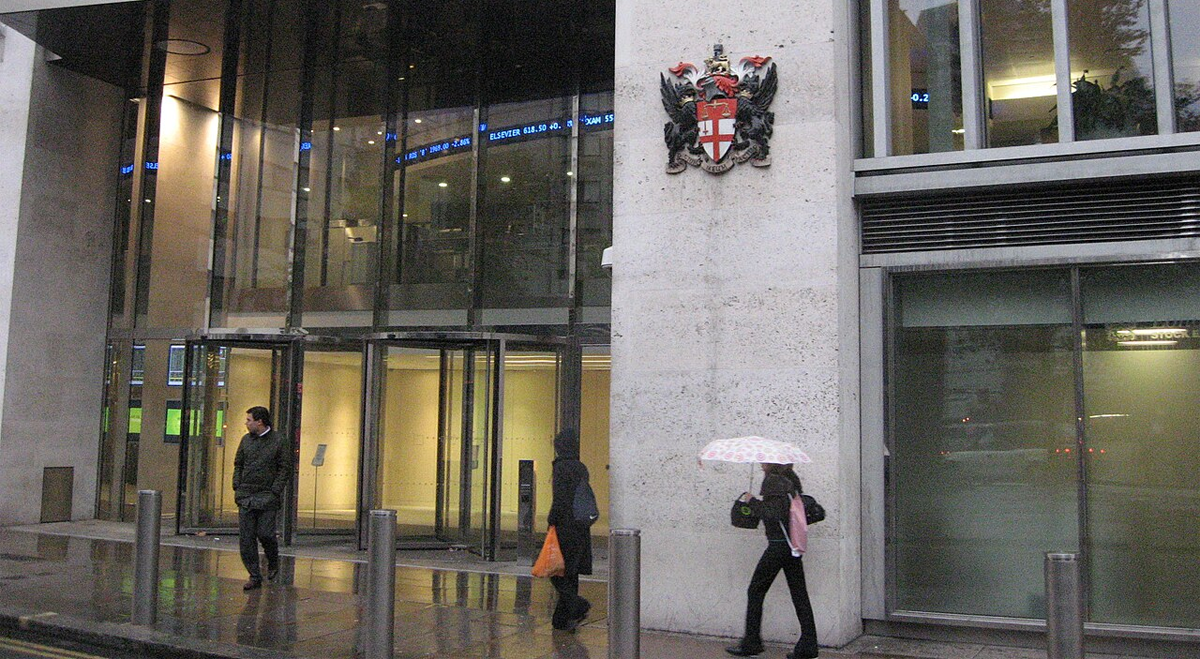
Author: Fiona Craig

  • FTSE 100 Rises as Mining Stocks Offset UK Inflation Increase

    FTSE 100 Rises as Mining Stocks Offset UK Inflation Increase

    UK equities moved higher on Wednesday as strength across major mining companies helped the FTSE 100 overcome a fresh rise in domestic inflation and renewed geopolitical uncertainty surrounding the Persian Gulf.

    The FTSE 100 gained 0.06% as of 03:25 ET (07:25 GMT), putting London ahead of a mixed performance across continental Europe. Germany’s DAX slipped 0.12%, while France’s CAC 40 advanced 0.24%. Sterling strengthened 0.15% against the US dollar to 1.3552.

    Mining Shares Lead London Market Higher

    Mining companies provided much of the support for the FTSE 100, with Rio Tinto (LSE:RIO) and Anglo American (LSE:AAL) among the strongest performers. Glencore (LSE:GLEN) and Antofagasta (LSE:ANTO) also advanced as metals stocks participated in a broader resources rally.

    The gains came alongside another increase in crude oil prices and continued geopolitical risk surrounding the Middle East, helping commodity-related shares offset concerns generated by the latest UK inflation figures.

    UK Inflation Climbs to Four-Month High

    UK consumer price inflation accelerated to 2.9% in the 12 months to July, up from 2.6% in June and matching economists’ expectations. It was the first increase in the annual inflation rate since March.

    Energy costs were a major contributor, with gas prices jumping 14.7%, their largest monthly increase since October 2022. The rise followed Ofgem’s decision to increase the household energy price cap by £221 to an annual equivalent of £1,862.

    Core inflation remained at 2.6%, rather than easing slightly as economists had anticipated. Services inflation provided a more encouraging signal, declining to 3.4% from 3.6%.

    The Office for National Statistics noted that this was the first energy price cap assessment period affected by the Middle East conflict, although the resulting inflationary impact remained relatively concentrated rather than spreading broadly through consumer prices.

    Capital Economics deputy chief UK economist Ruth Gregory said the figures showed that “underlying inflation remains contained,” pointing to a fourth consecutive monthly decline in food and drink inflation to 1.3%, its lowest level since August 2024.

    Analysts See Limited Pressure for Bank of England Rate Hikes

    Capital Economics maintained its forecast that the Bank of England will leave interest rates at 3.75% throughout this year before reducing them to 3.00% next year. That outlook remains considerably below market expectations for rates of between 4.25% and 4.50%.

    Jefferies strategist Mohit Kumar said weaker employment figures combined with the inflation data “would help to contain BoE hike expectations,” with domestically generated inflationary pressures remaining relatively subdued despite higher energy costs.

    However, Capital Economics warned that the delayed impact of elevated energy prices could lift headline inflation towards 3.5% later this year. Manufacturing PMI output-price indicators also suggest core goods inflation could increase from 0.9% towards 3%.

    “It will probably be just a matter of time before this filters through into higher CPI inflation,” Gregory wrote.

    Iran Disputes Missile Claims as Regional Tensions Persist

    Geopolitical concerns remained another influence on markets after Iran rejected allegations that missiles had been launched from its territory towards the United Arab Emirates.

    Iran’s Mehr News Agency quoted foreign ministry spokesman Esmail Baghaei describing the UAE allegations as “completely baseless”. He urged regional governments to avoid “unfounded accusations”, referring to what he characterised as a history of false-flag operations involving the US and Israel.

    Meanwhile, Iranian Parliament Speaker Mohammad Bagher Ghalibaf, during a visit to Baghdad for regional cooperation discussions, said Islamic countries should strengthen relations “without foreign interference”.

    U.S. President Donald Trump said on Truth Social that “there are no talks or conversations going on, or scheduled, with the Islamic Republic of Iran,” while adding that the naval blockade remains “in full force and effect” and that the Strait of Hormuz is “open and operating.”

    Separately, Al Jazeera reported that the U.S. administration had instructed negotiators to pause discussions until Tehran is “ready to make a deal.”

    Oil Prices Rise as Markets Track Persian Gulf Risks

    Energy markets remained sensitive to developments in the region. Brent crude gained 0.62% to $91.59 per barrel, while WTI advanced 0.67% to $84.62.

    Precious metals delivered a mixed performance. Gold futures declined 0.28% to $4,408.26, while spot gold increased 0.46% to $4,354.47.

    For the FTSE 100, strength among heavyweight mining shares was sufficient to keep the index in positive territory despite the hotter UK inflation reading and persistent geopolitical uncertainty. Investors remain focused on whether rising energy costs will feed more broadly into inflation and alter expectations for the Bank of England’s next policy moves.


  • Market Open: Trainline CMA Probe, Defence Fund Investment

    Market Open: Trainline CMA Probe, Defence Fund Investment

    FTSE 100 opens flat as UK inflation rises, Trainline faces a CMA probe, Defence Holdings outlines its fund strategy and Brent crude slips.

    Market Overview

    The FTSE 100 opened broadly unchanged at 10,727.84, down less than 0.01 per cent from its previous close, as gains among miners helped offset concerns after UK inflation rose to a four-month high. The Euronext 100 gained 0.11 per cent to 1,951.77, while Germany’s DAX slipped 0.03 per cent to 26,120.76 as European investors assessed elevated bond yields and awaited comments from ECB President Christine Lagarde and Federal Reserve minutes. Overnight in the US, the Nasdaq closed lower at 26,289.71 and the S&P 500 fell to 7,691.76.

    Commodity markets were mixed, with copper and gold lower, Brent crude edging down and natural gas slightly higher. Oil markets remained sensitive to uncertainty over exports through the Strait of Hormuz. Against sterling, the US dollar and Japanese yen weakened marginally, the Australian dollar strengthened slightly, while the Swiss franc and euro were unchanged. Bitcoin was down.


    Market Numbers

    FTSE 100: Down (-0.001%), 10,727.84
    Euronext 100: Up (+0.11%), 1,951.77
    DAX: Down (-0.03%), 26,120.76
    NASDAQ: Down, 26,289.71
    S&P 500: Down, 7,691.76


    In the Headlines

    CMA booking fee investigation – Trainline (LSE:TRN)
    Trainline said it will cooperate fully with a Competition and Markets Authority investigation into how certain fees are displayed during its UK booking process. The regulatory scrutiny puts the transparency of booking charges in focus and could result in further changes to how costs are presented to customers.

    Defence fund strategy – Defence Holdings (LSE:ALRT)
    Defence Holdings CEO Andrew Roughan has explained the rationale behind the company’s £2 million cornerstone commitment to a new defence fund. The investment activates the Investment pillar of its strategy and is intended to give the group equity exposure to defence technology businesses alongside its core commercial activities.


    Currencies (vs GBP)

    USD: Down (-0.02%), $1.3537
    CHF: Unchanged (0.00%), Fr.1.0995
    EUR: Unchanged (0.00%), €1.1693
    JPY: Down (-0.01%), ¥215.978
    AUD: Up (+0.00%), $1.9116
    Bitcoin (BTC/GBP): Down, £47,464.50


    Commodities

    Copper: Down
    Gold: Down
    Brent Crude: Down
    Natural Gas: Up

  • Smith+Nephew CFO John Rogers to Leave for U.S. Role

    Smith+Nephew CFO John Rogers to Leave for U.S. Role

    Smith+Nephew (LSE:SN.) has announced that Chief Financial Officer John Rogers will step down from his role on September 30 to take up an external opportunity in the United States.

    Rogers has already resigned from the company’s Board with immediate effect, while Smith+Nephew has started the process of identifying a permanent successor.

    Rogers Departs After Three Years as CFO

    Rogers has served as Chief Financial Officer for the past three years, a period that included the delivery of Smith+Nephew’s 12-Point Plan, improvements in the medical technology group’s financial performance and the development of its RISE strategy.

    Chief Executive Officer Deepak Nath thanked Rogers for his contribution to the business, saying: “I would like to thank John for his many contributions over the last three years as we’ve delivered the 12-Point Plan, improved our financial performance and developed the RISE strategy. He has been a valued colleague and a highly regarded member of our Executive Committee.”

    Rogers will remain in his CFO position until the end of September, providing a transition period before his departure for the new U.S.-based role.

    Pierre Palassian Named Interim CFO

    Smith+Nephew has appointed Pierre Palassian, currently Senior Vice President Finance and Group Controller, as interim Chief Financial Officer until a permanent replacement is selected.

    Palassian brings more than 20 years of financial leadership experience and has previously overseen finance functions across several areas of Smith+Nephew’s operations. These include Global Operations, R&D, Advanced Wound Management, Sports Medicine, International Markets and Emerging Markets.

    He joined Smith+Nephew in June 2017 after previously holding senior positions at Abbvie and Abbott Laboratories. His extensive experience within the group should provide continuity while the company conducts its search for a new permanent CFO.

  • Amcomri Shares Rise as Company Lifts First-Half Profit Expectations

    Amcomri Shares Rise as Company Lifts First-Half Profit Expectations

    Amcomri (LSE:AMCO) shares gained around 3.2% during the session after the industrial engineering group forecast stronger first-half earnings and substantial revenue growth, supported by continued demand across its core markets and contributions from recent acquisitions.

    The company expects first-half core profit to increase 9% to £4.7 million, while revenue is projected to rise 33% to £42.4 million. The update provides further evidence of growth across the business as Amcomri combines organic demand with its acquisition-led expansion strategy.

    Shares Continue Recovery From 52-Week Low

    The latest gain extends Amcomri’s recovery from its 52-week low of 91p. Despite the improvement, the shares remain some distance below their 52-week high of 165p, leaving scope for investors to assess whether stronger financial performance can support a more sustained recovery.

    The broader market offered a relatively neutral backdrop, with major global equity indices showing little movement during the session. This meant Amcomri’s share-price advance was driven primarily by company-specific developments rather than a wider improvement in market sentiment.

    AIM Listing Can Amplify Share-Price Movements

    Amcomri trades on the FTSE AIM All-Share, where smaller companies can experience comparatively large percentage movements when trading volumes are limited.

    Given Amcomri’s small-cap profile, relatively modest changes in buying or selling activity can therefore have an amplified effect on its share price. This can increase short-term volatility even when the underlying news is incremental rather than transformative.

    The latest advance reflects a combination of improving first-half expectations, continued demand within Amcomri’s core markets and positive share-price momentum. A relatively calm wider market environment also allowed investors to respond to the company’s improved outlook without significant pressure from broader risk-off sentiment.

  • Safestore Shares Slide After Deutsche Bank Downgrades Stock to Hold

    Safestore Shares Slide After Deutsche Bank Downgrades Stock to Hold

    Safestore (LSE:SAFE) shares fell nearly 4.9% after Deutsche Bank downgraded the self-storage operator from “buy” to “hold” as concerns over increasingly aggressive pricing competition weighed on the outlook for the European sector.

    The broker highlighted several pressures affecting earnings, including subdued housing transaction volumes and swap rates. Rising property taxes are also contributing to higher costs, adding another challenge for operators seeking to protect profitability.

    Self-Storage Sector Has Struggled Since March

    Deutsche Bank pointed to significant weakness across European self-storage stocks in recent months. Since March, Shurgard has fallen by approximately 16%, while Safestore has declined by around 25%.

    Although the broker believes self-storage yields continue to offer “significant long-term upside potential,” it stressed that earnings growth remains the main factor influencing share-price performance in the near term.

    With further earnings downgrades potentially still to come and few obvious catalysts expected over the next 12 months, Deutsche Bank nevertheless believes much of the anticipated deterioration has already been reflected in sector valuations.

    Safestore Technical Picture Adds to Investor Caution

    Safestore has substantially underperformed the FTSE All Share Index over the past six months, reinforcing concerns surrounding the company’s near-term outlook.

    The shares are also trading well below their 200-day moving average, a technical indicator that points to continued weakness in the longer-term trend. Safestore’s 52-week high stands at 837p, highlighting the extent of the decline from its previous peak.

    The combination of weaker momentum, uncertain earnings growth and challenging sector conditions has contributed to greater caution among institutional investors.

    Higher Interest Rates Continue to Pressure Property Stocks

    The challenges facing Safestore form part of a broader difficult environment for UK property and self-storage companies. Elevated interest rates have placed downward pressure on property valuations while simultaneously increasing financing costs across the industry.

    Other operators, including Big Yellow Group (LSE:BYG), have faced similar market conditions. Investors are increasingly focused on rental growth, occupancy levels and balance-sheet strength as they assess how individual companies can navigate the tougher backdrop.

    While longer-term appreciation in self-storage assets remains a potential attraction, near-term earnings visibility has become increasingly important as investors weigh competitive pricing, higher costs and the impact of interest rates on the sector.

  • Empire Metals Resource Upgrade Reinforces Pitfield’s Position as World’s Largest Titanium Resource

    Empire Metals Resource Upgrade Reinforces Pitfield’s Position as World’s Largest Titanium Resource

    Empire Metals (LSE:EEE) has announced a major upgrade to the Mineral Resource Estimate for its Pitfield Project in Western Australia, confirming what the company describes as the world’s largest known titanium resource and introducing a Measured Resource classification for the first time.

    The updated estimate covers the Thomas and Cosgrove deposits and contains a total Mineral Resource of 8.16 billion tonnes grading 4.3% TiO2. This equates to approximately 349 million tonnes of contained titanium dioxide, highlighting the substantial scale of the mineralised system at Pitfield.

    A key feature of the revised resource is a large, near-surface weathered zone containing 4.39 billion tonnes at an average grade of 4.4% TiO2. The material is relatively soft and sits beneath minimal overburden, potentially allowing Empire to consider straightforward mining methods as it advances development studies.

    Within this zone, the company has also identified higher-grade cores containing more than 6% TiO2. These areas could provide opportunities to prioritise higher-grade material during the early stages of a future mining operation, potentially benefiting project economics and development planning.

    The resource upgrade follows recent metallurgical progress at Pitfield. Empire has demonstrated a conventional processing flowsheet capable of producing titanium dioxide with purity exceeding 99%, providing further support for the project’s potential to supply high-quality material to titanium markets.

    Existing infrastructure is another important component of the development proposition. Pitfield benefits from established transport connections providing access to deep-water ports, which could facilitate future exports to customers across major markets including Asia, the U.S., Europe and the Middle East.

    The combination of substantial scale, near-surface mineralisation, high-grade zones, encouraging processing results and infrastructure access strengthens Empire’s case for Pitfield as a potential tier-one titanium development. The upgraded resource also provides a more detailed foundation for mine planning and future economic studies as the company moves beyond the exploration phase.

    Empire Metals’ investment outlook nevertheless remains constrained by its pre-revenue financial profile, sustained losses and continuing cash burn. A relatively low level of debt provides some balance-sheet support. Technical indicators are more constructive in the near term, with the shares trading above key moving averages and showing positive momentum, while valuation remains difficult to assess favourably because of negative earnings and the absence of a dividend yield.

    More About Empire Metals

    Empire Metals Limited is an AIM-quoted and OTCQX-traded natural resources company focused on mineral exploration and development, with the Pitfield Project in Western Australia representing its principal asset.

    The company is advancing Pitfield as a potential large-scale source of high-purity titanium feedstock for applications including pigments and titanium metal. Its location and access to established rail infrastructure could provide routes to international customers across Asia, the U.S., Europe and the Middle East.

    Empire holds a 70% interest in the Pitfield joint venture alongside Century Minerals Pty Ltd and acts as manager and sole operator of the project.

    The Mineral Resource is reported in accordance with the JORC 2012 Code, providing an internationally recognised framework for the estimate as Empire progresses Pitfield from resource definition towards mine planning, economic evaluation and potential development.

  • Defence Holdings CEO Explains Rationale Behind £2 Million Defence Fund Investment

    Defence Holdings CEO Explains Rationale Behind £2 Million Defence Fund Investment

    Defence Holdings (LSE:ALRT) has published an open letter from Chief Executive Officer Andrew Roughan providing shareholders with further detail on the company’s £2 million cornerstone commitment to the newly established Defence Fund.

    The investment formally activates the Investment pillar of Defence Holdings’ five-part operating model and forms part of its strategy to combine revenue-generating defence contracts with equity exposure to promising defence technology businesses. Management believes this approach can create multiple sources of long-term value as the company develops its position within the UK sovereign defence technology sector.

    Roughan said the £2 million commitment was contemplated as part of the company’s June fundraising and is fully funded from existing resources. He stressed that the investment does not represent a diversion of capital away from the group’s core operating activities but is instead intended to strengthen the broader ecosystem supporting its commercial strategy.

    Rather than making a large number of investments directly from its own balance sheet, Defence Holdings is using a separate alternative investment fund governed within an FCA-regulated framework. The structure is designed to attract additional institutional and private capital, spread investment risk among multiple participants and reduce potential regulatory or structural complications associated with extensive direct investing by the listed company.

    The CEO also outlined several governance safeguards surrounding the arrangement. Defence Holdings will be exempt from performance carry on its cornerstone investment, while the fund’s founding principals will participate in due diligence covering technology, financial, legal, customer and product considerations.

    First Sentinel Corporate Finance is acting as investment adviser to the fund. Certain establishment and external service provider expenses will be met from the fund’s management fees, allowing Defence Holdings to contribute its sector knowledge and expertise while maintaining a clear distinction between its corporate operations and the fund’s governance and regulatory responsibilities.

    The shareholder letter follows debate among investors over the rationale for the investment. Roughan acknowledged those concerns but argued that the structure could play an important role in building a stronger sovereign defence technology business over the next three to five years.

    The communication also forms part of the CEO’s commitment to maintaining regular dialogue with shareholders as Defence Holdings implements its wider strategy. Recent milestones include securing the company’s first UK Ministry of Defence contract and launching the Meridian accelerator, with Roughan expected to provide further detail on the group’s strategy in a longer-form interview later this week.

    Defence Holdings’ broader investment outlook remains constrained by weak financial fundamentals, including a substantial decline in revenue, continuing losses and ongoing cash consumption. The absence of reported debt provides some balance-sheet support, but technical indicators remain broadly bearish despite oversold readings. Valuation also offers limited support while earnings remain negative and the shares provide no dividend yield.

    More About Defence Holdings

    Defence Holdings PLC is a London-listed, software-led defence technology company operating under the ticker ALRT.

    The group is focused on developing sovereign digital capabilities designed to support national security, resilience and defence readiness. Its operating strategy is structured around five interconnected pillars covering accelerator, investment, product, commercial and technology activities.

    Through this model, Defence Holdings aims to combine the development and commercialisation of defence technologies with strategic investment in emerging companies, creating an integrated platform capable of supporting innovation within the UK defence ecosystem.

  • Vast Resources Completes Gulf Acquisition and Secures Funding for Aprelevka Expansion

    Vast Resources Completes Gulf Acquisition and Secures Funding for Aprelevka Expansion

    Vast Resources (LSE:VAST) has completed its reverse takeover of Gulf International Minerals, giving the enlarged mining group a 49% beneficial interest in the producing Aprelevka Joint Venture in Tajikistan and significantly expanding its exposure to precious metals.

    Aprelevka currently produces approximately 11,000 ounces of gold and 130,000 ounces of silver annually. Completion of the transaction, together with an associated share consolidation, has resulted in Vast’s enlarged share capital being re-admitted to trading on AIM. The company now has 1,645,941,556 ordinary shares in issue.

    Alongside the acquisition, Vast raised approximately £7.8 million through a combination of a placing, subscription and oversubscribed retail offer. It has also secured a US$10 million debt facility, providing additional capital to address legacy debt obligations, settle creditors and support technical development work at Aprelevka.

    The company is considering a further subscription of approximately £500,000, which would provide additional funding as it moves into the next stage of its growth strategy. A drilling campaign has also commenced at Aprelevka with the objective of establishing a maiden JORC-compliant mineral resource.

    Management views the acquisition as an opportunity to build a larger, cash-generative mining business, with the existing Aprelevka operations providing a production base from which output could be expanded. The company ultimately aims to establish a profitable mid-tier mining operation with a diversified portfolio of producing and development assets.

    Tailings reprocessing has been identified as one potential route to near-term growth at Aprelevka. Vast believes this could provide a relatively low-cost opportunity to recover additional precious metals while improving operational efficiencies at the existing mining complex.

    Beyond current production, the company intends to work with the Tajik government on responsible mining initiatives and investigate further opportunities along the Tien Shan Gold Belt and elsewhere in Central Asia. Vast also plans to progress the restart of its Romanian operations, potentially adding another source of production and revenue to the enlarged group.

    Despite the strategic progress, Vast’s investment outlook remains constrained by substantial financial and operational challenges. Declining revenue, negative profitability and weak valuation metrics continue to weigh on the company, while technical indicators point to a bearish share-price trend. Successful integration of the Aprelevka interest, debt management and delivery of planned production growth will therefore be important factors in determining whether the enlarged business can improve its financial position.

    More About Vast Resources

    Vast Resources plc is an AIM-listed mining and resource development company with producing and development-stage precious metal and polymetallic assets in Tajikistan and Romania.

    Through its 49% beneficial interest in the Aprelevka Joint Venture, the company has exposure to producing gold and silver mines located along the Tien Shan Gold Belt in Central Asia. Its strategy includes increasing production, expanding mineral resources and pursuing additional opportunities across the region.

    Vast also maintains mining interests in Romania, where it is working towards restarting operations as part of its strategy to establish a more diversified production and revenue base spanning Central Asia and Europe.

  • Scancell Secures UK Approval for Global Phase 3 iSCIB1+ Melanoma Trial

    Scancell Secures UK Approval for Global Phase 3 iSCIB1+ Melanoma Trial

    Scancell Holdings (LSE:SCLP) has received authorisation from the UK Medicines and Healthcare Products Regulatory Agency to proceed with a Phase 3 registrational trial of iSCIB1+, its lead DNA ImmunoBody therapy for advanced melanoma.

    The regulatory clearance represents another important step towards launching the global study, following earlier Investigational New Drug clearance from the U.S. Food and Drug Administration. Scancell is targeting initiation of the Phase 3 programme by the end of 2026.

    The trial is expected to recruit 550 patients with stage III or stage IV unresectable melanoma across approximately 90 clinical sites in the U.S., European Union, UK, Canada and Australia. Participants will receive either iSCIB1+ in combination with checkpoint inhibitors ipilimumab and nivolumab or placebo alongside the same two therapies.

    Scancell has designed the study using an adaptive approach, with progression-free survival serving as the primary endpoint and potentially supporting an accelerated approval pathway. Overall survival will be assessed as a secondary endpoint and is intended to provide evidence supporting full regulatory approval.

    The Phase 3 programme builds on results from Scancell’s Phase 2 SCOPE study, which demonstrated sustained progression-free and overall survival outcomes with iSCIB1+. Importantly, the company reported no additional checkpoint inhibitor-related toxicity associated with adding its therapy to the treatment regimen.

    Initial progression-free survival data from the Phase 3 trial are expected during the second half of 2028. A successful study could provide the foundation for regulatory approval and eventual commercialisation of iSCIB1+ as a treatment for patients with advanced melanoma.

    Scancell is also preparing a separate Phase 2 study evaluating iSCIB1+ in the neo/adjuvant melanoma setting, potentially extending the therapy into earlier stages of the disease. These clinical programmes are progressing alongside development of the company’s wider immuno-oncology pipeline and its proposed business combination with Neuphoria Therapeutics.

    Scancell’s investment outlook remains constrained by continued losses, cash consumption, negative equity and the valuation challenges associated with negative earnings. These financial risks are partly balanced by strengthening clinical and regulatory momentum and a clearly defined Phase 3 development pathway for iSCIB1+. Technical indicators point to an upward trend in the shares, although strongly overbought readings could increase the potential for near-term volatility.

    More About Scancell Holdings

    Scancell Holdings is a late-stage clinical immuno-oncology and biotechnology company developing targeted, off-the-shelf active immunotherapies for difficult-to-treat cancers.

    Its pipeline is based around the ImmunoBody and Moditope technology platforms. Lead candidate iSCIB1+ is being developed for melanoma, while Modi-1 is being investigated in cancers including head and neck and renal cancer. Scancell has also developed its GlyMab antibody platform, with two antibodies licensed to Genmab.

    The company’s therapies are designed to stimulate durable immune responses capable of targeting and destroying tumour cells. Earlier clinical studies of iSCIB1+ have demonstrated encouraging activity and a favourable safety profile both as a standalone therapy and when used alongside checkpoint inhibitors.

    In addition to advancing iSCIB1+ in advanced melanoma, Scancell plans to explore its potential in the neo/adjuvant setting while continuing to develop its wider pipeline through internal programmes and pharmaceutical partnerships.

  • Nanoco Meets Full-Year Expectations as Asian Partnerships Support Growth Strategy

    Nanoco Meets Full-Year Expectations as Asian Partnerships Support Growth Strategy

    Nanoco (LSE:NANO) reported full-year trading in line with expectations, as licensing income supported revenue and the company’s streamlined operating structure helped deliver earnings and cash slightly ahead of market forecasts.

    Unaudited revenue for the year reached £11.3 million, with the majority generated from licence income and a further £1.5 million coming from non-licence activities. Underlying adjusted EBITDA was £6.1 million, while year-end cash stood at £9.3 million, with both measures marginally exceeding expectations.

    The company’s recent reorganisation has also significantly reduced its operating cost base. Gross monthly cash costs are now running at between £0.3 million and £0.4 million, providing Nanoco with a leaner structure as it focuses resources on licensing, material development and commercial partnerships.

    Operational progress continues with Nanoco’s first Asian chemical customer under a three-year joint development agreement. The company remains on schedule to complete all milestones planned for the first year of the programme and expects material volumes associated with the relationship to more than double during FY27, albeit from a relatively modest initial level.

    Nanoco is also extending development activities with a second Asian partner and remains in discussions with additional prospective customers. Much of this commercial activity is focused on sensing applications, an area the company views as an important opportunity for its proprietary nanomaterials technology.

    Alongside these commercial initiatives, Nanoco is continuing the shareholder consultation process launched in late June. Feedback from investors, together with progress across its Asian partnerships, could influence the company’s strategic direction and the development of future commercial agreements.

    The latest developments reflect Nanoco’s evolution towards a more focused, licence-led and partnership-driven business model. A reduced cost structure, recurring licensing income and expanding development relationships could provide greater visibility over medium-term opportunities as the company seeks to convert technical programmes into larger material supply arrangements.

    Nanoco’s wider investment outlook nevertheless remains constrained by underlying financial weaknesses, including negative profitability, deteriorating operating cash flow and negative equity on the balance sheet. Technical indicators are also unfavourable, with the shares trading below all major moving averages. A very low price-to-earnings multiple provides some valuation support, although this is tempered by the limited confirmation from the company’s broader fundamentals.

    More About Nanoco Group plc

    Nanoco Group plc is a London-listed developer and manufacturer of cadmium-free quantum dots and other advanced nanomaterials based on its proprietary technology platform.

    The company works with major chemical businesses and other commercial partners to develop materials for specialised applications, with its current business development efforts particularly focused on opportunities within sensing markets.

    Following its recent restructuring, Nanoco operates with a substantially reduced cost base and is increasingly centred on licensing, collaborative development programmes and potential material supply agreements.

    Relationships with Asian chemical companies form an important part of this strategy, with Nanoco seeking to increase material volumes as development programmes mature and to secure additional partnerships capable of generating longer-term commercial revenue.