Author: Fiona Craig

  • Glencore Earnings Slip 6% as Miner Unveils $2 Billion Shareholder Payout

    Glencore Earnings Slip 6% as Miner Unveils $2 Billion Shareholder Payout

    Glencore (LSE:GLEN) posted a decline in full-year profit, as strength in copper prices failed to fully counter weaker contributions from its coal division.

    The commodities group reported adjusted EBITDA of $13.5 billion, representing a 6% drop from the previous year. Revenue increased 7% year over year to $247.5 billion, while adjusted EBIT fell 14% to $6 billion. Earnings per share were $0.03.

    “2025 was a year of significant progress, marked by a strong operational performance, continued portfolio optimisation and clear momentum for our copper-led growth strategy,” said Glencore CEO Gary Nagle.

    “For the second consecutive year, we met our guidance for full year production volumes for our key commodities, reflecting the ongoing benefits of our recently optimised and simplified operating structures promoting greater accountability and delivery.”

    Even with the softer earnings performance, Glencore said it plans to distribute $2 billion to shareholders, which includes an additional $800 million top-up payment.

    The earnings announcement comes shortly after takeover discussions between Rio Tinto Group and Glencore broke down. The proposed tie-up, which would have created the world’s largest mining company, collapsed after the companies were unable to agree on the premium Rio Tinto would pay.

  • U.K. Inflation Cools Markedly in January as Annual CPI Slips to 3.0%

    U.K. Inflation Cools Markedly in January as Annual CPI Slips to 3.0%

    Britain’s annual inflation rate eased significantly in January, reinforcing expectations that the Bank of England could lower borrowing costs at its upcoming March meeting. Consumer price inflation rose 3.0% year over year in January, down from 3.4% in December and marking the lowest reading since March 2025.

    December’s figure had edged up from 3.2% in November, representing the first increase in five months. The latest pullback suggests that price pressures may be softening more decisively at the start of the year.

    While inflation remains above the Bank of England’s 2% target, policymakers signaled at their February meeting that additional rate reductions could be on the table later this year. Officials expect inflation to return to the 2% goal by spring, and potentially more quickly than earlier projections suggested.

    On a monthly basis, the consumer price index fell 0.5% in January after posting a 0.4% gain in December. Core CPI, which strips out volatile food and energy costs, declined 0.6% month over month. On an annual basis, core inflation eased to 3.1% from 3.2% in December.

    “Overall, the print strengthens the case for a potential Bank of England rate cut at its March meeting, particularly after recent data showed softer wage growth and rising unemployment,” said Lale Akoner, global market analyst at eToro. “However, policymakers remain divided, and sticky services inflation could keep the debate finely balanced. If inflation falls mainly on energy and base effects, the Bank of England may cut cautiously rather than aggressively.”

    Separate data released Tuesday showed that U.K. annual wage growth excluding bonuses slowed to 4.2% in the final three months of 2025 compared with a year earlier. The central bank closely monitors pay trends as an indicator of how persistent above-target inflation might be.

    Earlier this month, the Monetary Policy Committee voted 5-4 to keep interest rates unchanged at 3.75%, the lowest level since early February 2023. The narrow split underscored ongoing divisions among policymakers over the appropriate pace of easing.

    “It’s no secret that inflation will decline steeply in April, perhaps to below 2.0%, as this is when the raft of rises in government-set prices and taxes in 2025 drop out of the annual comparison,” analysts at Capital Economics wrote in a note. “And if we are right in thinking that CPI inflation will average 1.8% in Q4 of this year, then the MPC may ultimately end up cutting rates further than investors expect, to 3.0% this year, with the chances of the next rate cut happening in March rather than our current forecast of April edging higher.”

  • Delta Gold Technologies secures £1.92 million in direct subscription

    Delta Gold Technologies secures £1.92 million in direct subscription

    Delta Gold Technologies PLC (AQSE:DGQ) has completed a £1,922,500 capital raise through a direct subscription, issuing 5,492,853 new ordinary shares priced at 35p each, the company said Tuesday.

    The newly issued shares account for approximately 8.51% of the group’s enlarged share capital. Investors participating in the subscription will receive one warrant for every two shares purchased, resulting in 2,746,425 warrants in total. Each warrant carries an exercise price of 50p per ordinary share.

    The warrants are subject to an acceleration provision, which would be triggered if the company’s volume-weighted average share price exceeds 70p over any 10 consecutive trading days. They will lapse two years after the subscription shares are admitted to trading on the Aquis exchange.

    The company confirmed that Purebond Ltd has joined the shareholder register as part of the fundraising. Proceeds will be directed toward expanding and accelerating university-based research partnerships and collaborations, alongside supporting general working capital needs.

    “We are delighted by the strong support from new and existing shareholders,” said R. Michael Jones, Chief Executive Officer of Delta, according to the company’s press release. He added that Delta is broadening its academic network beyond its existing relationship with the University of Toronto to include Penn State University.

    Admission of the new shares to trading on Aquis is anticipated on or around February 20, 2026. Upon completion, Delta’s total issued share capital is expected to consist of 64,501,507 ordinary shares with a nominal value of 0.2p each.

    More about Delta Gold Technologies

    Delta Gold Technologies is focused on building and commercializing intellectual property within the quantum computing field, with a particular concentration on nano-scale gold and advanced material applications.

  • Raspberry Pi jumps as CEO Eben Upton increases personal stake

    Raspberry Pi jumps as CEO Eben Upton increases personal stake

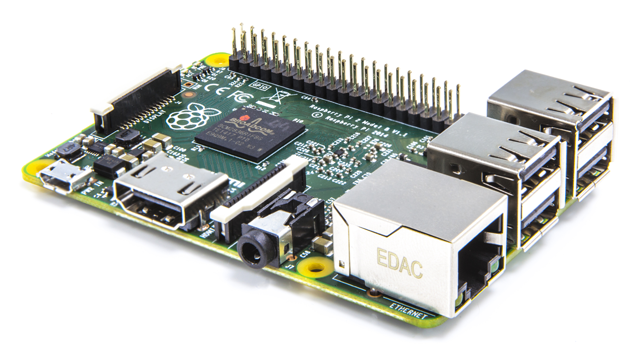
    Raspberry Pi Holdings plc (LSE:RPI) shares rallied sharply on Tuesday after Chief Executive Officer Eben Upton disclosed the purchase of additional stock in the company.

    By 11:40 GMT, the shares were up 27.6%.

    A regulatory filing published Monday showed that Upton bought 4,684 ordinary shares at an average price of £2.82327 each, representing a transaction worth roughly £13,224. Following the acquisition, his total holding rose to 2,591,136 ordinary shares.

    The trade was carried out on the London Stock Exchange’s Main Market and reported in line with rules governing dealings by Persons Discharging Managerial Responsibilities (PDMR).

    Market participants often interpret insider buying—particularly by senior executives—as a vote of confidence in a company’s outlook. Upton’s decision to expand his ownership stake appeared to fuel a strong positive reaction among investors.

    The purchase was completed on February 16, 2026, according to the company’s regulatory notice. Raspberry Pi’s ordinary shares carry a nominal value of £0.0025 each.

    Raspberry Pi manufactures low-cost computing devices widely used by hobbyists, educators and software developers around the globe.

  • Tech-Led Pullback Could Pressure Wall Street at the Open: Dow Jones, S&P, Nasdaq, Futures

    Tech-Led Pullback Could Pressure Wall Street at the Open: Dow Jones, S&P, Nasdaq, Futures

    U.S. stock futures indicate a softer start to Tuesday’s session, with equities poised to decline as trading resumes after the extended Presidents’ Day break.

    Technology shares appear set to remain under pressure, underscored by a 0.9% drop in Nasdaq 100 futures.

    Mounting concerns over the rapid expansion of artificial intelligence infrastructure have recently prompted investors to trim exposure to major tech stocks, which had previously driven the broader market to record highs.

    “Investors are increasingly questioning whether the marginal dollar spent on AI will generate the expected return,” said Daniela Hathorn, Senior Market Analyst at Capital.com. “At the same time, market uncertainty is rising as new AI models frequently disrupt established players.”

    “With competitive dynamics evolving rapidly, it is unclear who the long-term winners will be,” she added. “This uncertainty has led to underperformance across much of big tech, even as the broader market remains relatively resilient.”

    Overall activity could remain muted as traders await a series of significant economic releases later this week.

    The upcoming report on December personal income and spending is likely to draw particular focus, as it includes the Federal Reserve’s preferred inflation measures.

    Investors will also look to the minutes from the Fed’s most recent policy meeting for further signals on the future direction of interest rates.

    On Friday, stocks struggled to find direction early in the day, gained traction in the afternoon, and then slipped back before the close. The major indices ultimately finished little changed and mixed.

    The Nasdaq shed 50.48 points, or 0.2%, closing at 22,546.67, extending Thursday’s sharp decline. The S&P 500 added 3.41 points, or 0.1%, to end at 6,836.17, while the Dow Jones Industrial Average rose 48.95 points, or 0.1%, to 49,500.93.

    For the week, the Nasdaq fell 2.1%, while the S&P 500 and Dow posted losses of 1.4% and 1.2%, respectively.

    The uneven trading came despite the release of January’s closely watched consumer inflation report from the Labor Department.

    The data indicated that consumer prices rose slightly less than anticipated on a monthly basis, and annual inflation slowed more than expected.

    The consumer price index increased 0.2% in January following a 0.3% rise in December. Economists had projected another 0.3% gain.

    Year-over-year inflation eased to 2.4% from 2.7%, coming in below expectations of 2.5%.

    Core prices, which exclude food and energy, climbed 0.3% in January after a 0.2% increase the prior month, in line with forecasts.

    On an annual basis, core inflation slipped to 2.5% from 2.6%, matching estimates.

    The softer headline inflation reading revived hopes that the Federal Reserve may continue easing policy, contributing to further declines in Treasury yields.

    “This print strengthens the case that the Federal Reserve can maintain a gradual easing bias without fearing renewed inflation pressure,” said Daniela Hathorn, Senior Market Analyst at Capital.com.

    She added, “Importantly, while the labor market remains resilient, today’s CPI reduces the risk that strong employment data forces the Fed into a hawkish rethink.”

    Even so, anxiety about the potential fallout from the rapid AI buildout continued to dampen sentiment and limit buying enthusiasm.

    “Some are concerned about excessive levels of spending and others fear AI will disrupt multiple industries,” said Russ Mould, investment director at AJ Bell. “It all adds up to a cocktail of worries and that’s bad for market sentiment more broadly.”

    Despite the broader market’s subdued tone, gold-related shares rallied sharply alongside gains in the underlying metal, lifting the NYSE Arca Gold Bugs Index by 5.6%.

    Computer hardware stocks also posted solid advances, with the NYSE Arca Computer Hardware Index climbing 2.7%.

    Strength was further seen in networking, utilities, natural gas, and transportation shares, while steel stocks declined following reports that President Donald Trump may roll back tariffs on steel and aluminum.


  • European shares steady as geopolitics and U.S. data take center stage: DAX, CAC, FTSE100

    European shares steady as geopolitics and U.S. data take center stage: DAX, CAC, FTSE100

    European equity markets traded largely unchanged to marginally higher on Tuesday, as investors monitored geopolitical developments and prepared for a series of key economic releases from the United States.

    Defense-related stocks mostly declined, reflecting a perceived easing of tensions surrounding Iran and Russia.

    Sterling weakened against both the euro and the dollar after softer U.K. labor market figures reinforced expectations that the Bank of England could move to cut interest rates as early as March.

    Official statistics showed the U.K. unemployment rate climbed to 5.2% in the fourth quarter, up from 5.1% in the previous period.

    Average earnings growth, including bonuses, came in at 4.2% year-on-year, below forecasts of 4.6%. In January, the number of payroll employees fell by 11,000 month-on-month to 30.3 million.

    In Germany, data from Destatis confirmed that consumer price inflation accelerated to 2.1% in January from 1.8% in December, driven by higher food and services costs.

    The EU-harmonized inflation rate also rose to 2.1% from 2.0% the previous month, in line with the preliminary estimate released on January 30.

    By mid-session, London’s FTSE 100 was up 0.3%, while Germany’s DAX edged 0.1% higher. France’s CAC 40 hovered around flat territory.

    In corporate news, GSK (LSE:GSK) gained ground in London after announcing a £2 billion share repurchase program.

    Mining group BHP (LSE:BHP) also moved higher after reporting earnings at the top end of analysts’ projections.

    In contrast, copper producer Antofagasta (LSE:ANTO) fell despite posting record annual profits.

    Swiss biopharmaceutical firm Basilea Pharmaceutica (TG:PK5) also declined after reporting lower full-year earnings.

  • Oil drifts lower as U.S.–Iran talks approach and dollar firms

    Oil drifts lower as U.S.–Iran talks approach and dollar firms

    Crude prices edged down on Tuesday in quiet, holiday-affected trading, with investors closely watching upcoming diplomatic discussions between the United States and Iran.

    A stronger U.S. dollar ahead of a packed week of economic releases and Federal Reserve signals also added pressure to oil markets.

    Brent crude for April delivery slipped 0.3% to $68.45 per barrel, while West Texas Intermediate futures rose 1.1% to $63.45 per barrel at 21:00 ET (02:00 GMT). The sharper move in WTI reflected distortions from Monday’s U.S. market holiday.

    Overall activity remained subdued due to Lunar New Year closures across several Asian financial centers, including China, Hong Kong, Taiwan, South Korea and Singapore.

    Spotlight on U.S.–Iran meeting amid geopolitical strain

    Media reports indicated that U.S. and Iranian officials are scheduled to convene in Geneva, Switzerland, to revisit Tehran’s nuclear enrichment program.

    On Monday, President Donald Trump told reporters he would be “indirectly involved” in the negotiations, though he offered few details on what that involvement would entail.

    The talks follow earlier rounds of dialogue this month that failed to deliver meaningful breakthroughs.

    Reports also suggested Washington has reinforced its military footprint in the Middle East, including deploying a second aircraft carrier, while preparing for the possibility of extended operations if diplomacy falters.

    As a result, oil prices continue to reflect an elevated geopolitical risk premium, given the potential for supply disruptions in the region.

    Dollar strength weighs ahead of key U.S. data

    Crude also faced headwinds from renewed dollar strength, as the greenback advanced in thin trading ahead of major U.S. economic reports.

    The dollar gained 0.2% against a basket of major currencies on Tuesday.

    Market participants are bracing for a series of data releases this week, including industrial production figures, trade statistics and, most notably, the Personal Consumption Expenditures (PCE) price index. The PCE reading — the Federal Reserve’s preferred inflation measure — is expected to play a significant role in shaping expectations for future interest rate moves.

    Minutes from the Fed’s January policy meeting are also due and could provide additional clarity on the central bank’s outlook for monetary policy.

  • Gold falls beneath $4,900/oz as U.S.–Iran talks and key U.S. data approach

    Gold falls beneath $4,900/oz as U.S.–Iran talks and key U.S. data approach

    Gold and silver prices moved lower again on Tuesday, extending the previous session’s retreat as traders remained cautious ahead of a busy week of U.S. economic releases.

    Market sentiment was also shaped by expectations surrounding scheduled discussions between the United States and Iran over Tehran’s nuclear program. At the same time, reduced participation due to public holidays in both the U.S. and China led to lighter trading volumes, while a firmer dollar added downside pressure to precious metals.

    Spot gold declined 1.9% to $4,898.51 per ounce, while April gold futures fell 2% to $4,916.66 per ounce as of 01:22 ET (06:22 GMT).

    Silver prices followed suit, with spot silver dropping nearly 3% to $74.4875 per ounce. Platinum eased 0.7% to $2,007.43 per ounce.

    Nuclear negotiations set for Geneva

    Representatives from Washington and Tehran are scheduled to meet in Geneva to address their longstanding dispute over Iran’s nuclear enrichment activities.

    The talks come amid heightened geopolitical strain in the Middle East. The United States has bolstered its military presence in the region, and President Donald Trump has repeatedly signaled that military options remain on the table should Iran refuse to reach an agreement.

    Speaking to reporters on Monday, Trump said he would be indirectly involved in the discussions and suggested that Iran is interested in striking a deal.

    In recent weeks, the U.S. has deployed two aircraft carriers along with additional naval forces to the region. Iran has responded by launching military drills in the Strait of Hormuz, a critical chokepoint for global oil shipments.

    Despite these developments, safe-haven flows into precious metals have been limited. Investors remain wary after a sharp pullback from late-January highs, when speculative enthusiasm drove gold and other metals to record levels.

    Focus shifts to U.S. indicators and Fed minutes

    Attention now turns to a slate of U.S. economic reports and the minutes from the Federal Reserve’s January policy meeting, scheduled for release on Wednesday.

    Industrial production figures are due midweek, while Friday will bring the Personal Consumption Expenditures (PCE) price index — the Fed’s preferred measure of inflation.

    The PCE reading is expected to provide further clarity on inflation trends and the potential direction of interest rates.

    Gold has faced headwinds in recent weeks amid uncertainty over U.S. monetary policy, particularly after President Donald Trump nominated Kevin Warsh as the next Federal Reserve Chair.

    Warsh is generally seen as less dovish, and his nomination contributed to notable selling in the metals market. The downturn was compounded by profit-taking following January’s rapid rally.

    Recent U.S. economic data have sent mixed signals, with inflation easing modestly while labor market conditions showed resilience.

    A stronger dollar during holiday-thinned trading on Monday further pressured commodity prices, adding to gold’s recent weakness.

  • U.S.–Iran diplomacy in focus; Palo Alto Networks earnings due – market drivers today: Dow Jones, S&P, Nasdaq, Wall Street Futures

    U.S.–Iran diplomacy in focus; Palo Alto Networks earnings due – market drivers today: Dow Jones, S&P, Nasdaq, Wall Street Futures

    U.S. equity futures traded cautiously on Tuesday as investors prepared for a fresh batch of economic data and corporate earnings in a shortened trading week. The ongoing shift away from high-growth technology names toward defensive sectors remains a central theme, amid renewed debate over whether heavy artificial intelligence spending will translate into sustainable returns. Meanwhile, Brent crude slipped ahead of scheduled U.S.–Iran talks in Switzerland, and gold prices pulled back. Cybersecurity company Palo Alto Networks (NASDAQ:PANW) is set to report after the closing bell.

    Futures trade near flatline

    As of 03:04 ET, Dow futures were down 26 points, or 0.1%. S&P 500 futures declined 11 points, or 0.2%, while Nasdaq 100 futures fell 99 points, or 0.4%. U.S. markets were closed Monday for a public holiday, shortening the trading week.

    Wall Street finished last Friday mixed. Investors weighed concerns about the competitive impact of newly launched AI models across multiple industries, alongside questions about whether continued large-scale AI infrastructure investments will deliver meaningful payoffs for mega-cap technology firms.

    At the same time, traders assessed data showing U.S. headline inflation eased more than expected in January. The softer reading reinforced expectations that the Federal Reserve could move sooner rather than later on its next rate cut, following last month’s pause in its easing cycle.

    Against this backdrop, the Nasdaq Composite edged down 0.2%, while the S&P 500 and Dow Jones Industrial Average posted modest gains.

    Crude eases before diplomatic talks

    Oil markets softened with attention fixed on upcoming negotiations between U.S. and Iranian officials in Geneva.

    A firmer dollar ahead of key macroeconomic releases and signals from Federal Reserve policymakers this week also weighed on crude.

    Brent futures for April delivery slipped 0.7% to $68.13 per barrel. West Texas Intermediate futures rose 0.6% to $63.11 per barrel at 03:06 ET, with price action influenced by the prior U.S. holiday.

    According to media reports, U.S. and Iranian representatives are scheduled to meet in Switzerland to address Tehran’s nuclear enrichment program. The discussions come amid elevated geopolitical tensions in the Middle East, as Washington increases its military presence in the region. President Donald Trump has repeatedly warned that military action remains an option if Iran declines to accept U.S. terms.

    Trading activity was also muted due to Lunar New Year holidays across several Asian markets, including China, Hong Kong, Taiwan, South Korea and Singapore.

    Precious metals pull back

    Gold and silver retreated as investors looked ahead to a slate of U.S. economic releases.

    At 03:09 ET, spot gold fell 1.4% to $4,919.72 per ounce, while April gold futures dropped 2.2% to $4,941.74 per ounce.

    Spot silver declined 2.0% to $75.0925 per ounce, while platinum gained 0.2% to $2,024.79 per ounce.

    Precious metals have experienced sharp volatility in recent weeks, with gold and silver still trading below their late-January highs.

    Attention now turns to U.S. industrial production data due Wednesday and the PCE price index — one of the Fed’s preferred inflation gauges — scheduled for Friday. Markets are also awaiting minutes from the Fed’s January meeting, when policymakers kept rates steady at a range of 3.5% to 3.75%.

    Palo Alto Networks results ahead

    Investors will closely monitor Palo Alto Networks’ earnings for further clarity on how technology firms are navigating intensified competition from newly released AI models.

    The California-based cybersecurity company raised its full-year revenue and profit outlook in November, citing rising demand for digital security solutions as cyber threats escalate.

    It also announced a $3.35 billion acquisition of cloud monitoring firm Chronosphere, which will be integrated into its Cortex AgentiX platform. The integration is expected to allow Palo Alto’s AI-driven systems to leverage Chronosphere’s data to detect performance bottlenecks and identify root causes.

    Together with a separate acquisition of identity security specialist CyberArk Software, the Chronosphere deal is projected to close in the second half of Palo Alto’s fiscal 2026.

    Nikkei extends decline on weak GDP

    Japan’s Nikkei index fell again, extending losses after data revealed that fourth-quarter economic growth undershot expectations.

    Official figures showed Japan’s GDP expanded at an annualized rate of 0.2% in the October–December quarter, far below forecasts of 1.6%. However, the result marked a rebound from the previous quarter’s 2.6% contraction.

    The data highlight the economic challenges facing Prime Minister Sanae Takaichi’s administration following its recent electoral victory. Although the government has signaled plans for stimulus measures to support growth, persistent cost-of-living pressures continue to dampen domestic demand.

    Meanwhile, the Bank of Japan remains focused on managing sticky inflation and currency weakness. Policymakers have indicated they intend to continue gradually tightening policy after years of ultra-loose monetary conditions.

  • European shares mixed; miners’ results, nuclear discussions and UK jobs data in focus: DAX, CAC, FTSE100

    European shares mixed; miners’ results, nuclear discussions and UK jobs data in focus: DAX, CAC, FTSE100

    European equity markets were uneven on Tuesday as investors digested another wave of corporate earnings, fresh UK labour figures and developments surrounding U.S.-Iran nuclear negotiations.

    At 08:05 GMT, Germany’s DAX was down 0.1%. France’s CAC 40 added 0.2%, while London’s FTSE 100 advanced 0.3%.

    Mining earnings take centre stage

    The reporting season remains front and centre, with major mining groups drawing particular attention.

    BHP Group (LSE:BHP) posted better-than-expected first-half underlying profit, helped by robust copper earnings. For the first time, copper overtook iron ore as the company’s largest profit contributor, as prices for the metal climbed amid demand linked to artificial intelligence.

    Antofagasta (LSE:ANTO) also delivered record 2025 earnings, supported by firmer copper and by-product prices that lifted both profitability and operating cash flow. Annual revenue climbed 30%, reflecting stronger realised copper pricing and improved by-product contributions.

    Results are due this week from Europe’s largest diversified miners — Rio Tinto (LSE:RIO), Glencore (LSE:GLEN) and Anglo American (LSE:AAL) — alongside Antofagasta, at a time when several key metals are trading near recent highs.

    Outside the mining space, InterContinental Hotels (LSE:IHG) reported a 16% increase in adjusted earnings for 2025. However, revenue per available room in its Americas division fell 2% in the fourth quarter, marking the sharpest quarterly decline of the year as U.S. government and inbound international travel softened.

    Spanish gas grid operator Enagas (BIT:1ENG) returned to profitability in 2025, exceeding its financial objectives. Asset disposals, a higher arbitration award linked to its Peruvian investment and disciplined cost management supported performance.

    UK labour market shows signs of cooling

    Data released Tuesday indicated further easing in UK labour conditions, potentially strengthening the case for additional monetary easing from the Bank of England.

    The unemployment rate rose to 5.2% in the three months to December, up from 5.1% previously and the highest level since early 2021.

    Meanwhile, annual growth in regular pay excluding bonuses slowed to 4.2% in the final three months of 2025 compared with a year earlier, down from 4.4% in the period to November.

    “The lack of green shoots of recovery in the labor market and further fall in wage growth supports the idea that the Bank of England has at least a couple more interest rate cuts in its locker, with the chances of the next cut happening in March rather than April edging higher,” analysts at Capital Economics said in a note.

    Later in the day, Germany’s ZEW economic sentiment survey is expected to show improving confidence in Europe’s largest economy.

    Oil slips ahead of U.S.-Iran discussions

    Crude prices edged lower as markets evaluated potential supply risks from Iran ahead of indirect talks with the United States in Geneva aimed at addressing their long-standing nuclear dispute.

    Brent futures fell 0.7% to $68.15 per barrel, while U.S. West Texas Intermediate rose 0.6% to $63.12 per barrel. Monday’s U.S. public holiday meant there was no official settlement price.

    While diplomatic efforts are under way, reports suggest the U.S. military is preparing contingency plans for possible extended operations involving Iran. Tehran has also begun military exercises in the Strait of Hormuz, a key global shipping lane for oil exports from Gulf producers.