Author: Fiona Craig

  • Oil Prices Dip Slightly as Markets Eye U.S. Government Reopening

    Oil Prices Dip Slightly as Markets Eye U.S. Government Reopening

    Oil prices slipped modestly in early Asian trading on Wednesday, as investors weighed optimism over the potential end of the record-long U.S. government shutdown against ongoing concerns about oversupply in global crude markets. A stronger U.S. dollar also added pressure, limiting any short-term rebound in prices.

    By 20:21 ET (01:21 GMT), Brent crude futures for January delivery were down 0.2% at $65.04 per barrel, while West Texas Intermediate (WTI) crude slipped 0.2% to $60.85 per barrel.

    U.S. Government Reopening Vote in Focus

    The U.S. Senate passed a funding bill on Tuesday to reopen the government, and the Republican-led House of Representatives is expected to vote on the measure Wednesday. If passed and signed by President Donald Trump, the legislation would end a 42-day shutdown — the longest in U.S. history.

    Expectations of a government reopening provided modest support to oil prices, as the prolonged shutdown had disrupted travel and reduced demand for fuel. Shortages of air traffic controllers and safety personnel led to widespread flight cancellations across major airports, compounding the drag on consumption.

    Supply Glut Concerns and Sanctions Risks Persist

    Crude prices gained some traction on Tuesday after reports that Russia’s Lukoil declared force majeure at one of its Iraqi oilfields, underscoring the reach of new U.S. sanctions imposed on Russia’s major energy companies last month. These measures are expected to tighten global supply in the near term, partially offsetting concerns of a growing surplus.

    However, sentiment in the oil market remains cautious. Despite occasional rebounds, prices have trended lower throughout 2025 amid fears of a significant oversupply developing into 2026. Analysts point to the OPEC+ alliance’s steady production increases and sluggish demand from key importers — particularly China — as major factors behind the bearish outlook.

    With global inventories continuing to rise and demand growth showing little momentum, traders remain skeptical that the recent geopolitical and policy developments will be enough to shift the market’s downward trajectory in the near term.

  • Dow Jones, S&P, Nasdaq, Wall Street Futures, Markets Lifted as U.S. House Prepares to Vote on Shutdown Deal; Cisco and Chevron Earnings in Focus

    Dow Jones, S&P, Nasdaq, Wall Street Futures, Markets Lifted as U.S. House Prepares to Vote on Shutdown Deal; Cisco and Chevron Earnings in Focus

    U.S. equity futures edged higher early Wednesday, buoyed by optimism that the House of Representatives will soon approve a funding bill to reopen the federal government after more than 40 days of closure. Republican leaders expressed confidence the measure will pass following its earlier approval by the Senate, marking what could be the end of the longest shutdown in U.S. history.

    If the bill is enacted, it will unlock a wave of delayed economic data critical for Federal Reserve policymakers, who remain divided on future rate decisions. Investors are also turning their attention to key corporate updates from Cisco Systems (NASDAQ: CSCO) and Chevron (NYSE:CVX), both of which could influence market sentiment later in the week.

    U.S. Futures Tick Higher

    At 02:39 ET, Dow futures rose 78 points (+0.2%), S&P 500 futures climbed 25 points (+0.4%), and Nasdaq 100 futures advanced 170 points (+0.7%).

    Wall Street finished Tuesday on a mixed note as cautious sentiment lingered. A revenue guidance cut from CoreWeave weighed on AI-related stocks, while ADP’s employment data hinted at a slowdown in labor market momentum.

    Nevertheless, optimism remains. Analysts at Vital Knowledge observed that investors continue to “stay invested” in anticipation of a potential year-end rally.

    Congress Nears Vote to Reopen Government

    The House is expected to vote later today on a bipartisan agreement that would fund most U.S. federal agencies through January 30. Confidence in a resolution grew earlier this week after the Senate passed the legislation with backing from eight Democrats, ending a prolonged stalemate with President Donald Trump’s Republican Party.

    If approved, Trump is expected to sign the measure swiftly. Reopening the government would allow the release of key macroeconomic indicators — including the monthly jobs report — that have been postponed during the shutdown. Such data will play a crucial role in shaping expectations for future monetary policy.

    Fed Debate Over December Rate Decision

    The Wall Street Journal reported that Federal Reserve officials remain split ahead of the December policy meeting on whether to lower interest rates again, following two consecutive 25-basis-point cuts in September and October.

    At the heart of the debate are concerns over employment and inflation. Some Fed members argue that deeper cuts could help revive job creation and investment, while others caution that easing too aggressively risks reigniting inflationary pressures. With a lack of recent data due to the shutdown, consensus within the central bank remains elusive, the WSJ noted.

    Cisco Earnings in Spotlight

    Cisco Systems will report earnings after the closing bell, offering investors an update on how AI-related investments are shaping its growth. CEO Chuck Robbins said in August that AI infrastructure orders “had surpassed $800 million in Cisco’s fiscal fourth quarter,” lifting full-year totals “to more than $2 billion.”

    He also highlighted that the “sovereign AI opportunity” will accelerate in the second half of fiscal 2026, positioning Cisco as a “core system provider for these significant AI training and inference cluster build outs […] integral to their development and eventual hyperscaling.”

    Consensus estimates from Bloomberg call for adjusted earnings of $0.98 per share on revenue of $14.77 billion.

    Chevron Investor Day Set to Outline Post-Hess Strategy

    Oil giant Chevron (NYSE:CVX) is also under the spotlight as it holds its Investor Day in New York, where CEO Mike Wirth is expected to outline the company’s next growth phase following its $55 billion acquisition of Hess earlier this year — one of the largest industry deals in recent memory.

    The transaction includes Hess’s 30% stake in the ExxonMobil-CNOOC consortium operating the prolific Stabroek offshore block in Guyana, which has yielded discoveries exceeding 11 billion barrels of oil. Analysts estimate total recoverable resources at roughly 20 billion barrels, reinforcing the strategic importance of the acquisition.

    “We continue to believe Chevron paid a full price for Hess,” analysts at Wolfe Research wrote. They added that “addressing this and a relatively mature shale portfolio in acquired assets will be key issues at the upcoming Investor Day.”

    Analysts also expect questions about Chevron’s Kazakhstan operations, which could contribute around 18% of the company’s free cash flow in 2025 and approximately 20% between 2026 and 2030.

  • Pound Weakens on Soft U.K. Labour Data and Rising Political Uncertainty

    Pound Weakens on Soft U.K. Labour Data and Rising Political Uncertainty

    The British pound slipped against the euro on Wednesday, with EUR/GBP climbing above 0.88 after the release of weaker-than-expected UK unemployment figures for September.

    According to analysts at ING, the currency has struggled to regain ground despite ongoing concerns about the accuracy of the Labour Force Survey data, which was temporarily suspended in 2023 for quality reassessment.

    Political risks are also weighing on sentiment, with reports suggesting that Prime Minister Keir Starmer could face a leadership challenge following the upcoming budget later this month.

    Although Starmer’s approval ratings remain weak, ING noted that any potential leadership change “could create uncertainty regarding Chancellor Rachel Reeves’ position and potentially add risk to UK asset markets.”

    The pound is already under strain from a policy mix of tighter fiscal conditions and a more accommodative monetary stance. ING added that heightened political uncertainty “could push the EUR/GBP exchange rate to new yearly highs in the 0.8870/0.8900 range.”

  • Avon Technologies Delivers Strong FY2025 Results, Surpassing Market Expectations

    Avon Technologies Delivers Strong FY2025 Results, Surpassing Market Expectations

    Avon Technologies (LSE:AVON) announced its preliminary results for fiscal year 2025 on Wednesday, reporting performance that exceeded market forecasts. Pretax earnings and earnings per share both came in 5% above estimates, underscoring another year of solid execution.

    The company generated sales of $314 million, representing a 13.8% year-on-year increase at constant exchange rates. EBITA rose 30.8% to $40.3 million, with margins improving by 130 basis points to 12.8%. Orders for the period totaled $352 million, down 3.6% from last year, while the closing backlog climbed 16.2% to $263 million. Adjusted basic earnings per share advanced 35.1% to 91.2 cents, supported by the rise in EBITA.

    Net debt grew 15.2% to $50.1 million, mainly due to increased receivables related to Team Wendy shipments for the U.S. Department of Defense, which were subsequently reabsorbed. The leverage ratio improved to 0.86x from 0.91x in fiscal 2024, reflecting a stronger financial position.

    By division, Team Wendy delivered sales of $145.1 million, up 12.1% year-on-year, with Department of Defense revenue rising 15.4% on higher deliveries of ACH Gen II and EXFIL helmets. The division’s order backlog ended the year at $146 million, down 4.8%, as shipments outpaced new orders. Avon Protection sales increased 15.9% to $168.8 million, with backlog surging 62.5% to $117 million, including $10.3 million in new rebreather orders.

    Looking ahead, management expects “above-market” growth in fiscal 2026, noting that the closure of the Irvine facility will lead to a “significant” improvement in margins for Team Wendy.

    For the upcoming year, the company projects high single-digit sales growth, EBITA margins between 14% and 16%, free cash conversion above 80%, and a reduction in transformation costs of over 60% to approximately $6 million. Avon has already met several medium-term goals two years ahead of schedule and maintains a robust balance sheet to support ongoing expansion and potential strategic acquisitions.

  • Vodacom Partners with Starlink to Expand Satellite Connectivity Across Africa

    Vodacom Partners with Starlink to Expand Satellite Connectivity Across Africa

    Vodacom Group Ltd (LSE:VOD) announced on Wednesday that it has entered into a strategic partnership with Starlink to strengthen connectivity solutions across the African continent.

    Under the terms of the agreement, Vodacom will be authorized to distribute Starlink’s satellite internet equipment and services to enterprise and small business customers throughout Africa. The collaboration combines Vodacom’s extensive telecommunications infrastructure with Starlink’s advanced satellite network, aiming to bridge connectivity gaps in underserved and remote regions.

    The partnership is designed to enhance internet accessibility for organizations operating in areas where conventional broadband infrastructure remains limited. By integrating Starlink’s satellite technology into its service offering, Vodacom will be able to deliver high-speed, reliable connectivity solutions across all its African markets.

  • DAX, CAC, FTSE100, European Stocks Gain as Optimism Grows Over Imminent U.S. Government Reopening

    DAX, CAC, FTSE100, European Stocks Gain as Optimism Grows Over Imminent U.S. Government Reopening

    European equities advanced on Wednesday, extending recent gains as investor sentiment was lifted by expectations that the U.S. government shutdown could soon come to an end.

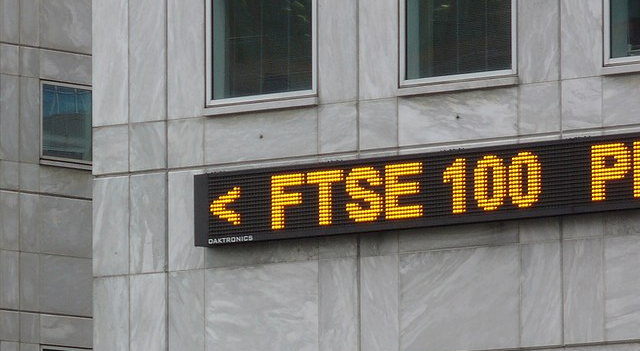
    By 08:10 GMT, Germany’s DAX index was up 0.8%, France’s CAC 40 rose 0.5%, and the UK’s FTSE 100 edged 0.2% higher.

    Sentiment lifted by progress in Washington

    Confidence across European markets improved after signs emerged that U.S. lawmakers were nearing a deal to reopen the federal government, which has been partially shut down since October 1. The closure has disrupted several key industries, particularly air travel.

    “Sentiment improved after the U.S. Senate passed a bill to end the longest U.S. government shutdown on record,” analysts from Westpac wrote in a research note. “The House is expected to approve the bill in the coming days.”

    White House economic adviser Kevin Hassett said on Tuesday that the U.S. economy should return to a growth rate of 3% to 4% by the first quarter of 2026. Hassett noted that economists estimate the shutdown shaved about 1% to 1.5% off growth, which had been close to 4% over the past year.

    The bill approved by the Senate now moves to the House of Representatives for a vote expected later this week, before being sent to President Donald Trump to be signed into law.

    German inflation slows

    In Europe, data from Germany’s federal statistics office confirmed that inflation slowed slightly in October to 2.3%. Harmonised consumer prices—adjusted for EU comparison—stood at 2.4% year-on-year in September.

    The European Central Bank, which has kept interest rates steady since June, reiterated that its policy stance remains in a “good place.” Easing inflation in Europe’s largest economy could reinforce expectations that monetary policy will remain unchanged in the near term.

    Corporate updates: Bayer, E.ON, ABN Amro, Infineon

    In corporate news, Bayer (TG:BAYN) reported that quarterly profits more than doubled, driven by stronger margins in its Crop Science division and solid growth in its pharmaceutical portfolio. However, the company cautioned that it expects higher one-off costs in 2025 related to litigation provisions and executive buyouts as part of its ongoing restructuring program.

    E.ON (TG:A30VMX) said its nine-month net income declined due to a non-cash loss of roughly €400 million from the deconsolidation of NEW AG and its subsidiaries. Still, Europe’s largest energy network operator reaffirmed its 2025 outlook.

    ABN Amro (EU:ABN) announced the acquisition of Dutch commercial lender NIBC Bank from private equity group Blackstone, bolstering its domestic market presence.

    Meanwhile, Infineon Technologies (TG:IFX) raised its 2026 sales target for its AI power supply business, citing strong demand. The German chipmaker forecast moderate overall revenue growth despite currency headwinds.

    Oil prices ease after recent rally

    Crude oil prices edged lower on Wednesday, paring gains from the previous session. Expectations that the resolution of the U.S. government shutdown could boost energy demand had fueled Tuesday’s rally.

    Brent crude futures slipped 0.5% to $64.86 a barrel, while U.S. West Texas Intermediate (WTI) futures fell 0.5% to $60.75. Both benchmarks had climbed more than 1.5% on Tuesday as traders bet that reopening the U.S. government would support a rebound in travel and fuel consumption ahead of the holiday season.

  • LVMH Watch Division Takes Minority Stake in Swiss Manufacturer La Joux-Perret

    LVMH Watch Division Takes Minority Stake in Swiss Manufacturer La Joux-Perret

    LVMH’s (EU:MC) watch division has acquired a minority stake in Swiss watchmaker La Joux-Perret, the two companies announced on Wednesday.

    The luxury group’s watchmaking arm—home to prestigious brands including Hublot, TAG Heuer, and Zenith—made the investment as part of its broader long-term strategy to deepen partnerships and reinforce its position within the high-end watchmaking ecosystem.

    The parties did not disclose the financial terms or the size of the stake. The deal further expands LVMH’s footprint in Swiss horology, where the group already operates 16 production sites.

    According to the joint statement, La Joux-Perret will continue to operate independently despite the new investment. The Citizen Group, which owns La Joux-Perret and oversees other watch brands, will also maintain full autonomy across its portfolio.

    LVMH commended its new partner, stating: “Their technical mastery, industrial excellence and deep roots in the Swiss watchmaking landscape make them an ideal partner for our watchmaking Maisons.”

  • Edenred Shares Slide as Brazil’s New Meal Voucher Rules Threaten Profitability

    Edenred Shares Slide as Brazil’s New Meal Voucher Rules Threaten Profitability

    Edenred SA (EU:EDEN) shares fell 9% on Wednesday after Brazil approved sweeping new regulations for its meal voucher industry, a move expected to reduce the company’s 2026 earnings by as much as €200 million.

    The decree, signed late Tuesday by the Brazilian government, introduces the country’s first comprehensive regulatory framework for the Workers’ Food Program (PAT), which oversees the nation’s BRL150 billion meal and food voucher market.

    Under the new rules, the total merchant discount rate is capped at 3.6%, including a 2% ceiling on interchange fees. Voucher payments must now be settled with restaurants and retailers within 15 days, compared with roughly 30 days previously. The regulation also mandates full interoperability between voucher networks within 360 days, ensuring that any certified card can be accepted across all authorized payment terminals.

    Additionally, the decree bans exclusivity agreements, rebates, and indirect incentives between employers and issuers, while restricting closed-loop systems—those operating on proprietary networks—to companies serving fewer than 500,000 workers. The government said the goal is to bring transparency and uniformity to what had been a fragmented market.

    Kepler Cheuvreux warned that the changes could significantly impact Brazil’s main voucher issuers, including Edenred, Pluxee, and Alelo. “According to the decree, Brazilian issuers (Edenred, Pluxee, Alelo) barrier to entry (proprietary, closed acceptance networks) will erode as interoperability becomes mandatory and new entrants gain access to existing merchant infrastructure,” the brokerage said.

    It added that the 3.6% fee cap and shorter settlement cycle “will compress margins,” while the faster transfer period “reduces the financial float that historically generated additional income.”

    Edenred, the Paris-based employee benefits and payments firm, said that if the decree is implemented as currently written, it expects a 10% to 16% negative impact on 2026 EBITDA growth, equivalent to €150 million to €200 million. As a result, the company cut its 2026 organic EBITDA guidance to between negative 8% and negative 12%, down from its prior estimate of positive 2% to 4%.

    Brazil’s meal voucher operations account for roughly 9% of Edenred’s total revenue. The company’s market capitalization stood at €5.1 billion, with shares closing at €21.19 on November 11—down 33.3% year-to-date. Kepler Cheuvreux maintained its “buy” rating on the stock, with a target price of €40.

    For rival Pluxee, the brokerage estimated the earnings impact at €120 million to €150 million, or about 20% to 25% of group EBITDA. The firm generated €372 million in revenue in Brazil over the past 12 months, representing 29% of its total.

    Kepler Cheuvreux concluded that the new regulations convert “a previously fragmented, closed ecosystem into a regulated, semi-open network designed to lower merchant costs, foster competition, and ensure that voucher benefits are used strictly for food purchases.”

  • Volex Delivers Strong Half-Year Results with Double-Digit Growth and Strategic Progress

    Volex Delivers Strong Half-Year Results with Double-Digit Growth and Strategic Progress

    Volex plc (LSE:VLX) reported robust half-year results for the six months ended 30 September 2025, achieving a 12.7% increase in revenue to $583.9 million and a 20.2% rise in underlying operating profit. Operating margins remained at the upper end of the company’s target range, reflecting strong productivity gains and ongoing operational efficiencies. The Data Centres segment was a standout performer, posting an impressive 80% surge in sales. Backed by long-term investments and expanded production capacity, Volex continues to make steady progress toward the goals set out in its five-year strategic plan.

    The recent appointment of Dave Webster as Non-Executive Chairman further strengthens the company’s leadership and governance structure. Management reaffirmed confidence in meeting full-year market expectations, underlining its commitment to delivering sustainable growth and long-term shareholder value.

    Volex’s outlook remains positive, supported by solid financial performance, strong strategic execution, and encouraging earnings call commentary. While technical analysis suggests mild short-term bearish momentum, the longer-term trajectory remains favorable, with a reasonable valuation offering balanced potential for investors.

    More about Volex plc

    Volex plc is a global provider of integrated manufacturing solutions for mission-critical power and data connectivity applications. The company serves major international blue-chip clients across five core sectors: Electric Vehicles, Consumer Electricals, Medical, Complex Industrial Technology, and Off-Highway. Headquartered in the UK, Volex operates 25 state-of-the-art manufacturing facilities worldwide and employs more than 13,000 people across 25 countries.

  • Experian Posts Strong First-Half Results as Strategic Execution Fuels Growth

    Experian Posts Strong First-Half Results as Strategic Execution Fuels Growth

    Experian plc (LSE:EXPN) delivered a robust performance for the first half of FY26, reporting a 12% increase in total revenue and 8% organic growth. The company’s strong results were driven by continued investment in AI-powered automation, product innovation, and personalized digital experiences that strengthened consumer relationships and enhanced operational efficiency. Growth was broad-based across all regions, with standout contributions from North America and EMEA. The B2B division posted 8% organic revenue growth, supported by solid demand in data, analytics, and mortgage services, while the Consumer Services segment rose 9%. Experian expects to achieve total revenue growth of around 11% for the full fiscal year, reflecting sustained momentum across its key markets.

    The company’s financial performance remains the main driver of its positive outlook, underpinned by strong profitability and global scale. However, technical indicators signal short-term bearish momentum, and the stock’s elevated P/E ratio suggests a potentially stretched valuation. Despite these factors, Experian’s diversified portfolio and execution of strategic initiatives continue to support a constructive long-term view.

    More about Experian

    Experian plc is a global leader in data and technology solutions, helping clients make informed decisions across sectors including financial services, healthcare, automotive, agrifinance, and insurance. The company’s products enhance lending, prevent fraud, streamline healthcare operations, and optimize digital marketing performance. Headquartered in Dublin, Ireland, Experian is a FTSE 100 company employing more than 25,000 people across 32 countries.