Blog

  • European Markets Edge Higher Amid Geopolitical and Economic Caution: DAX, CAC, FTSE100

    European Markets Edge Higher Amid Geopolitical and Economic Caution: DAX, CAC, FTSE100

    European equities traded modestly higher on Wednesday as investors monitored developments in the Middle East, awaited upcoming earnings from Nvidia, and assessed fresh inflation readings from across the region.

    Bond markets remained under pressure as traders continued pricing in the possibility of additional interest rate increases from both the European Central Bank and the Federal Reserve before year-end.

    Oil prices moved lower after U.S. President Donald Trump stated that the conflict with Iran would end “very quickly.”

    Trade and Economic Developments in Focus

    On the trade front, the European Union reached a provisional arrangement to eliminate import tariffs on U.S. products, helping the bloc stay on course to meet Trump’s July 4 deadline and avoid steeper duties on European exports.

    Economic data released Wednesday showed German producer prices rose 1.7% year over year in April, according to Destatis. The figure reversed a 0.2% decline recorded in March and marked the strongest increase since May 2023, as well as the first annual gain since February 2025.

    In the U.K., consumer price inflation eased to 2.8% in April from 3.3% the previous month. The Office for National Statistics attributed the slowdown largely to lower energy bills and softer package holiday prices.

    Major European Indexes Advance

    The U.K.’s FTSE 100 Index gained 0.2%, while Germany’s DAX Index climbed 0.6%. France’s CAC 40 Index outperformed with a 0.7% increase.

    Corporate Movers Across Europe

    Stellantis (BIT:STLAM) traded higher after the automaker announced plans to establish a Europe-based joint venture with Dongfeng Motor Group Co., Ltd focused on new energy vehicle production.

    Shares of Severn Trent (LSE:SVT) surged after the utility company raised its adjusted earnings outlook for 2026 following strong second-half financial performance.

    Retailer Marks & Spencer (LSE:MKS) also posted strong gains after reporting improved second-half profitability.

    On the downside, Norway’s Webstep (LSE:0TCZ) dropped sharply after announcing weaker first-quarter profit results due to lower revenue.

    Experian (LSE:EXPN) declined in London despite delivering record annual results and unveiling a new $1 billion share repurchase program.

    Coats Group (LSE:COA) also moved lower after the industrial thread manufacturer reported a slight decline in revenue on a constant currency basis.

  • Oil markets retreat as optimism grows around U.S.-Iran negotiations

    Oil markets retreat as optimism grows around U.S.-Iran negotiations

    Oil prices moved lower on Wednesday as traders reacted to signs of progress in diplomatic talks between Washington and Tehran, while improving tanker movements through the Strait of Hormuz also eased supply concerns.

    By 04:44 ET (08:44 GMT), Brent crude futures for July delivery had fallen 2.5% to $109.25 per barrel, while U.S. West Texas Intermediate crude futures declined 1.9% to $102.35 per barrel. Both benchmarks had already posted losses of roughly 1% in the previous session.

    Hormuz tanker activity boosts confidence on supply flows

    According to Reuters, citing LSEG and Kpler shipping data, two Chinese-flagged oil supertankers successfully exited the Strait of Hormuz on Wednesday, encouraging hopes that energy shipments through the key maritime route could begin returning to more normal levels.

    The South Korean-flagged tanker Universal Winner was also departing the narrow channel near Iran’s southern coastline, which has effectively remained closed to tanker traffic since the outbreak of the U.S.-Israeli conflict with Iran in late February.

    U.S. President Donald Trump told lawmakers on Tuesday evening that the Iran war could end “very quickly.” Trump had earlier indicated that he delayed a planned strike against Iran because negotiations with Tehran appeared to be advancing.

    Vice President JD Vance also expressed optimism, saying Iran seemed interested in reaching an agreement.

    Iran’s latest peace proposal reportedly called for a halt to military operations across all fronts, the withdrawal of U.S. troops from the region and compensation for wartime damages, according to Iranian state media. Washington has so far rejected earlier proposals, maintaining that ending Iran’s nuclear programme remains a critical requirement for any deal.

    Traders focus on upcoming U.S. inventory figures

    Attention is now shifting toward official U.S. oil inventory data for additional insight into supply conditions amid ongoing global disruptions.

    Figures released by the American Petroleum Institute showed a larger-than-expected draw of 9.1 million barrels last week, compared with market expectations for a decline of 3.4 million barrels. API figures are often viewed as a leading indicator for the official U.S. government inventory report due later on Wednesday.

    U.S. stockpiles are believed to have declined significantly in recent weeks as exports increased to help offset supply disruptions in overseas markets. Trump has also authorised the release of 172 million barrels from the Strategic Petroleum Reserve to reduce the impact of supply shocks linked to the Iran conflict.

  • Gold steadies as markets assess inflation risks and prospects for Iran negotiations

    Gold steadies as markets assess inflation risks and prospects for Iran negotiations

    Gold prices remained broadly stable on Wednesday as investors balanced concerns over rising bond yields and a stronger dollar against optimism that diplomatic progress could eventually ease the conflict between the United States and Iran.

    At 05:15 ET (09:15 GMT), spot gold traded little changed at $4,480.57 an ounce, while gold futures fell 1.6% to $4,482.80 an ounce.

    Higher Treasury yields weigh on gold sentiment

    Analysts at Phillip Capital warned that an increase in oil prices linked to the Iran conflict could spark renewed global inflationary pressure and potentially push central banks toward further interest-rate hikes.

    Government bond yields have risen sharply in recent days as investors reassessed inflation risks. The yield on the 30-year U.S. Treasury bond — widely regarded as a benchmark for long-term economic expectations — climbed to levels last seen during the global financial crisis nearly twenty years ago. Bond prices generally move inversely to yields.

    Rising interest rates tend to reduce demand for non-yielding assets such as gold. Meanwhile, the U.S. dollar remained close to a six-week high, increasing the cost of bullion for foreign buyers.

    Investors are also looking ahead to the release of minutes from the Federal Reserve’s April meeting later on Wednesday for additional guidance on the future path of U.S. monetary policy.

    Diplomatic hopes continue to support markets

    Despite ongoing geopolitical tensions, markets remain hopeful that Washington and Tehran may eventually negotiate an end to the conflict that has persisted for more than two months.

    U.S. President Donald Trump told lawmakers on Tuesday evening that the Iran war could end “very quickly.” Trump also said earlier this week that he had delayed additional military strikes against Iran following requests from three Gulf nations.

    Vice President JD Vance also struck a positive tone, saying Iran appeared interested in reaching an agreement.

    Reuters separately reported that two Chinese oil supertankers exited the Strait of Hormuz on Wednesday, citing vessel-tracking data from LSEG and Kpler. The South Korean tanker Universal Winner was also leaving the strategically important passage near Iran’s southern coast, which has been largely closed to tanker traffic since the conflict between the United States, Israel and Iran escalated in late February.

    Oil prices declined as traders grew increasingly optimistic that energy shipments through the Strait of Hormuz may gradually recover. Even so, Brent crude prices remain significantly higher than levels recorded before the conflict began.

    “The prospects for U.S.-Iran negotiations remained uncertain, with Iran insisting on its core demands and Trump signaling a possible renewed strike on Iran,” said Neil Welsh, Head of Metals at Britannia Global Markets, in a note.

  • U.S. futures hold steady as markets watch Iran developments and await Nvidia earnings: Dow Jones, S&P, Nasdaq, Wall Street

    U.S. futures hold steady as markets watch Iran developments and await Nvidia earnings: Dow Jones, S&P, Nasdaq, Wall Street

    U.S. equity futures traded little changed on Wednesday as investors balanced mounting inflation concerns tied to the Iran conflict with anticipation surrounding quarterly results from NVIDIA Corporation (NASDAQ:NVDA), which are expected to offer fresh signals on the health of the artificial intelligence sector.

    At 03:32 ET, Dow Jones futures were up 27 points, or 0.1%, while S&P 500 futures climbed 0.2% and Nasdaq 100 futures advanced 0.4%. Wall Street’s major indices had closed lower on Tuesday as a sharp rise in government bond yields fuelled concerns that the Iran war could reignite inflation globally and pressure central banks into further rate increases. The 30-year U.S. Treasury yield climbed to its highest level since the global financial crisis nearly twenty years ago.

    Trump says Iran conflict may end “very quickly”

    Despite ongoing geopolitical tensions, investors continue to hope that diplomatic negotiations between Washington and Tehran could eventually bring the conflict to an end after more than two months of fighting.

    U.S. President Donald Trump told lawmakers on Tuesday that the Iran war could end “very quickly.” Earlier this week, Trump said he had delayed additional planned strikes against Iran following requests from three Gulf nations.

    Vice President JD Vance also expressed optimism, saying Tehran appeared willing to pursue a deal.

    Meanwhile, shipping data cited by Reuters showed that two Chinese-flagged oil supertankers, along with the South Korean tanker Universal Winner, exited the Strait of Hormuz on Wednesday, raising hopes that traffic through the strategically important waterway may gradually resume more normally. Oil prices moved lower on expectations that supply disruptions could ease, although Brent crude remains significantly above levels seen before the outbreak of the conflict.

    Nvidia earnings expected to test AI market optimism

    Away from geopolitical developments, market attention remains firmly fixed on Nvidia’s quarterly earnings release scheduled after the close of Wall Street trading.

    Nvidia has become one of the most closely watched companies in global markets due to its central role in powering artificial intelligence infrastructure. Major technology firms continue committing billions of dollars toward AI-related data centre expansion, leaving expectations for Nvidia’s performance exceptionally high.

    Analysts at Vital Knowledge said:

    “[S]entiment is bullish around Nvidia given continued strength in overall data center capex spending, the dominance of its core data center GPU franchise, the company’s growing networking footprint, and recent product launches (Groq and Vera) aimed at fending off competition,”.

    Still, some concerns remain around increasing competition from chips developed by Google LLC and Amazon.com, Inc., as well as questions over how sustainable the current pace of AI spending will prove to be amid rising memory chip costs.

    Markets monitor possible SpaceX IPO filing

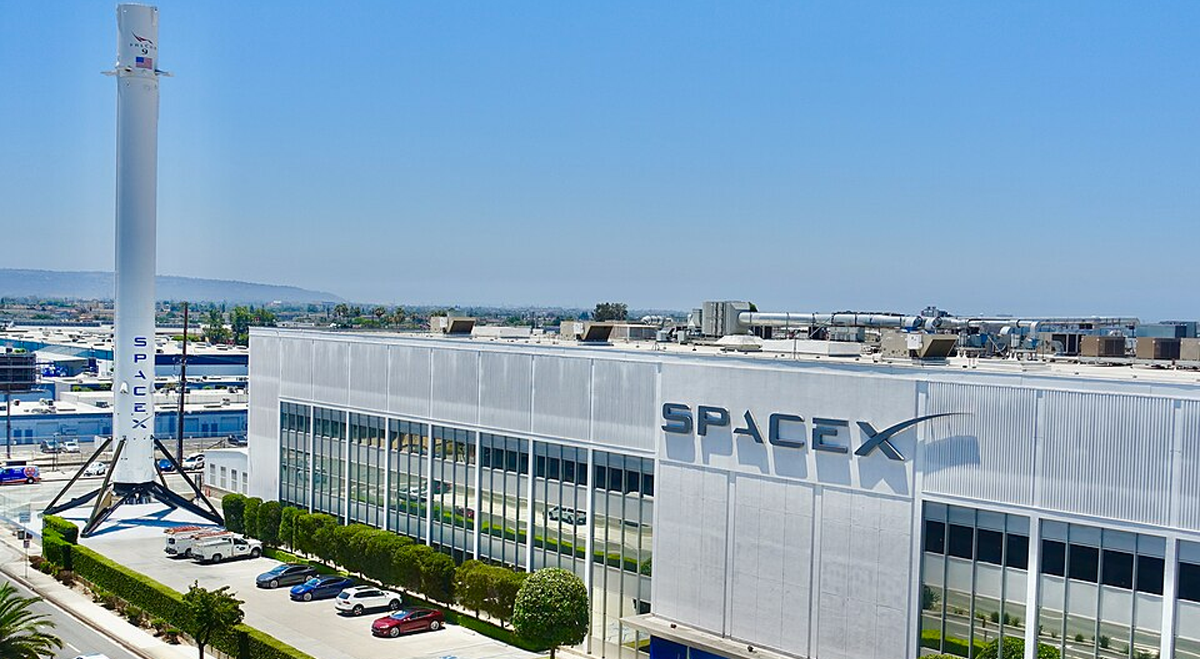
    Investor attention is also turning toward a potentially historic stock market listing for SpaceX, the aerospace group founded by Elon Musk.

    According to reports, SpaceX is considering a June 12 market debut in what could become the largest IPO ever completed. Analysts at Vital Knowledge suggested the company’s prospectus could be released as soon as Wednesday, potentially giving investors deeper insight into SpaceX’s operations and ownership structure.

    Federal Reserve minutes due later today

    Later in the session, investors will also analyse minutes from the Federal Reserve’s April meeting, which may provide further clues about the policy challenges facing incoming Fed Chair nominee Kevin Warsh.

    At that meeting, Federal Reserve officials left interest rates unchanged but expressed concern over the inflationary consequences of the Iran conflict. Policymakers were also divided over whether to continue signalling possible future rate cuts.

    Current Fed Chair Jerome Powell stated last month that he intends to remain on the Federal Reserve Board through early 2028, citing “my concern […] about the series of legal attacks on the Fed, which threaten our ability to conduct monetary policy without considering political factors.”

  • Market Open: M&S Cyber Attack, British Land Profits

    Market Open: M&S Cyber Attack, British Land Profits

    FTSE 100 edges lower as M&S profits fall after cyber disruption while British Land gains on AI-driven office demand.

    Market Overview

    European markets traded mixed on Tuesday morning, with the FTSE 100 edging lower while Germany’s DAX outperformed following softer UK inflation data and continued expectations for central bank easing later this year. The FTSE 100 slipped 0.06 per cent, while the CAC40 was marginally weaker. In contrast, the DAX gained ground alongside positive momentum from Wall Street, where the Nasdaq and S&P 500 both advanced. Investors continued to assess weakening UK labour market conditions and rising unemployment alongside easing inflation pressures.

    Commodity markets reflected a more cautious tone as Brent crude prices eased despite reports of petrol prices reaching fresh highs in the UK. Gold traded slightly lower while copper gained modestly, supported by ongoing expectations of industrial demand linked to infrastructure and AI investment themes. Sterling was mixed against major currencies, slipping against the US dollar and Japanese yen while strengthening modestly against the euro and Swiss franc. Bitcoin also moved higher against sterling.


    Market Numbers

    FTSE 100: Down (-0.06%), 10,284.78
    CAC40: Down (-0.07%), 7,981.760
    DAX: Up (0.38%), 24,400.65
    NASDAQ: Up (0.40%), 28,931.6
    S&P 500: Up (0.19%), 7,366.4


    In the Headlines

    Cyber Attack Impact – Marks & Spencer (LSE:MKS)

    Marks & Spencer reported a sharp decline in annual profits after disruption linked to a cyber attack affected operations and increased costs. The retailer said it was making operational progress despite the setback, with investors closely watching recovery efforts and consumer demand trends.

    Office Demand Boost – British Land (LSE:BLND)

    British Land posted stronger profits as demand for premium office space improved, driven partly by continued investment linked to artificial intelligence and technology firms. The update reinforced confidence in high-quality commercial property assets despite broader economic uncertainty.


    Currencies (vs GBP)

    USD: Down (-0.06%), $1.3389
    CHF: Up (0.16%), Fr.1.05846
    EUR: Up (0.04%), €1.1545
    JPY: Down (-0.07%), ¥212.943
    AUD: Down (-0.01%), $1.883830
    Bitcoin (BTC/GBP): Up (0.73%), £57,738.2


    Commodities

    Copper: Up (0.17%), 6.2562
    Gold: Down (-0.02%), 4,500.22
    Brent Crude: Down (-0.90%), 106.765
    Natural Gas: Down (-0.61%), 3.2565

  • European equities edge lower ahead of Nvidia earnings and renewed inflation concerns: DAX, CAC, FTSE100

    European equities edge lower ahead of Nvidia earnings and renewed inflation concerns: DAX, CAC, FTSE100

    European stock markets opened slightly weaker on Wednesday as investors awaited quarterly earnings from NVIDIA Corporation (NASDAQ:NVDA), with the results expected to provide further insight into the strength of the global artificial intelligence boom.

    At 07:00 GMT, the STOXX Europe 600 was down 0.1%, while Germany’s DAX fell 0.4%. France’s CAC 40 declined 0.3% and the UK’s FTSE 100 slipped 0.4%.

    Nvidia results in focus amid AI spending boom

    Nvidia, regarded as a leading supplier of advanced AI semiconductors and one of the world’s most valuable technology companies, is scheduled to release quarterly earnings after the close of trading on Wall Street later in the day.

    The company’s rapid growth in recent years has been fuelled by substantial investment from major technology firms seeking to expand infrastructure supporting artificial intelligence models.

    As a result, Nvidia’s earnings have become a closely watched indicator for investors assessing the outlook for the rapidly expanding AI sector.

    The upcoming figures also arrive at a time when AI-related capital spending has helped sustain economic activity while global markets continue to deal with the economic consequences of the conflict involving Iran.

    Inflation fears tied to Middle East tensions

    Analysts have warned that the military campaign launched more than two months ago by the United States and Israel against Iran could trigger another wave of inflationary pressure capable of slowing global economic growth.

    A major factor remains the ongoing closure of the Strait of Hormuz, the strategically important shipping route off Iran’s southern coast through which around 20% of global oil supplies normally pass.

    Markets were also awaiting the release of the final April consumer price index data for the eurozone, while inflation figures published in the UK showed easing price pressures.

    Bond yields weigh on sentiment

    With concerns mounting over a possible resurgence in inflation, investors are increasingly betting that the European Central Bank and other major central banks may need to raise interest rates further.

    Recent increases in government bond yields have added pressure on equity markets and weakened broader investor sentiment.

    At the same time, hopes remain that negotiations between the United States and Iran — currently stalled despite an extended ceasefire — could eventually lead to a diplomatic resolution that reopens the Strait of Hormuz.

    Shipping data on Wednesday indicated that two Chinese oil tankers had successfully exited the waterway.

  • EssilorLuxottica shares retreat as Google and Samsung step up competition in AI glasses market

    EssilorLuxottica shares retreat as Google and Samsung step up competition in AI glasses market

    EssilorLuxottica SA (EU:EL) shares moved lower on Wednesday after Google LLC (NASDAQ:GOOG) and Samsung Electronics Co., Ltd. (USOTC:SSNHZ) introduced rival artificial intelligence glasses during Google’s annual I/O conference in Mountain View, California, increasing pressure in a fast-growing market currently dominated by Meta Platforms, Inc. (NASDAQ:META) and its partnership with EssilorLuxottica.

    Samsung unveils new AI glasses concepts

    Samsung revealed two AI-powered smart glasses concepts developed alongside Google. One design was created in collaboration with fashion label Gentle Monster, while the second was developed with Warby Parker Inc..

    The presentation marked the first public unveiling of finished product designs after only prototype demonstrations were shown at last year’s conference.

    The devices run on Google’s Gemini AI platform and Android XR operating system. They feature cameras positioned on both sides of the frame, together with integrated microphones and speakers designed to support functions including navigation, live translation and restaurant recommendations without requiring connection to a smartphone.

    Samsung said the products are expected to launch following its Galaxy Unpacked event scheduled in London in July.

    Citi sees Meta and EssilorLuxottica retaining an advantage

    Analysts at Citigroup Inc. said:

    “EL shares have significantly underperformed due to concerns about competitive threats in the smart glasses segment; overall, we believe the information disclosed overnight reinforces our view that EL/META should remain an important player in this area, given their first-mover advantage, positioning in fashion and recognized brands, and distribution network compared to WRBY/GentleMonster.”

    Citi also argued that Google’s glasses currently lack sufficient “fashion appeal” and noted that no display-integrated product is expected in the near term because of challenges linked to incorporating prescription lenses.

    Smart glasses market expands rapidly

    The Ray-Ban Meta smart glasses range, produced through the partnership between Meta and EssilorLuxottica, currently leads the AI glasses segment.

    According to research firm Omdia, global smart glasses shipments surged 435% last year and are expected to rise a further 322% this year to approximately 8.7 million units.

    Chinese manufacturers, including Xiaomi Corporation, currently hold only small single-digit shares of the market.

    Samsung has positioned its latest AI glasses initiative as part of a wider strategy aimed at increasing its installed base of AI-enabled devices from 400 million units last year to 800 million units during 2026.

    Meta also introduced two new products in South Korea one day before Google’s I/O announcement.

  • FTSE 100 slips as rising bond yields and Iran tensions pressure markets

    FTSE 100 slips as rising bond yields and Iran tensions pressure markets

    European equities opened lower on Wednesday as investors reacted to surging global bond yields and continued geopolitical uncertainty surrounding tensions between the United States and Iran, overshadowing softer-than-expected UK inflation data.

    The FTSE 100 declined 0.50% in early trading, while Germany’s DAX fell 0.28% and France’s CAC 40 slipped 0.10%. Sterling weakened 0.05% against the U.S. dollar to 1.3388 as of 07:15 GMT.

    Bond market pressure dominates sentiment

    Global bond markets remained the primary driver of investor sentiment. The yield on the 30-year U.S. Treasury eased slightly to 5.17% but stayed close to its highest level since 2007 after a sharp rise over recent weeks. Meanwhile, the benchmark 10-year Treasury yield traded near 4.66%, marking a 16-month high.

    UK inflation cools more than expected

    UK inflation data offered some relief for markets after the Office for National Statistics reported that consumer price inflation slowed to 2.8% year-on-year in April, below economist expectations of 3% and down from 3.3% in March.

    Core inflation eased to 2.5% from 3.1%, while services inflation — closely monitored by the Bank of England — dropped sharply to 3.2% from 4.5%.

    Following the release, investors reduced expectations for further Bank of England rate increases, with interest-rate futures implying around 52 basis points of tightening by December, down from approximately 60 basis points the previous day.

    However, analysts warned that underlying inflationary pressures remain elevated. Producer price inflation accelerated to 4% in April, significantly above expectations of 2.8% and up from 3% in March, driven by a 7.7% increase in input costs linked to supply disruptions arising from Middle East tensions.

    “The drop in CPI inflation… feels like the lull before the storm,” Capital Economics Ltd said, forecasting inflation could climb toward 4% by early 2027.

    Iran tensions remain in focus

    Geopolitical concerns continued to weigh on markets after U.S. President Donald Trump said he had been close to authorising additional strikes on Iran before delaying action following requests from Gulf allies to allow further negotiations.

    Trump stated that a “full, large scale assault” could still be launched “on a moment’s notice.”

    Iran’s deputy foreign minister reiterated Tehran’s demands for sanctions relief, the release of frozen assets and an end to the U.S. naval blockade as conditions for any agreement, while Iranian officials warned any renewed military action would trigger a stronger response.

    Andrew Bailey, governor of the Bank of England, was due to appear before the Treasury Committee later on Wednesday to discuss last month’s interest-rate cut and the potential economic impact of the Iran conflict.

    UK corporate and political developments

    Marks and Spencer Group plc (LSE:MKS) reported a 24% decline in annual profit, citing the impact of a seven-week suspension of online clothing orders following last year’s cyberattack.

    Meanwhile, UK Chancellor Rachel Reeves unveiled reforms designed to accelerate approval processes for major energy and infrastructure projects by allowing parliament to fast-track decisions and reduce delays caused by judicial reviews.

  • Energean cuts 2026 production guidance and reduces dividend following Israel shutdown disruption (ENOG)

    Energean cuts 2026 production guidance and reduces dividend following Israel shutdown disruption (ENOG)

    Energean plc (LSE:ENOG) reported a 29% decline in first-quarter 2026 revenue to $288 million from $407 million a year earlier after Israeli authorities ordered a 41-day shutdown of production at the Karish gas field amid heightened regional tensions.

    The company also reduced its quarterly dividend by two-thirds to 10 U.S. cents per share from 30 cents, with shares moving lower following the announcement.

    Production and financial performance

    Average working-interest production for the three months ended 31 March 2026 fell to 114 thousand barrels of oil equivalent per day (kboed), compared with 145 kboed in the same period last year.

    Israel contributed 78 kboed during the quarter, while the rest of the portfolio delivered 37 kboed, including 27 kboed from Egypt.

    Cash flow from operating activities declined 16% year-on-year to $200 million, while adjusted EBITDAX totalled $184 million. Net profit for the quarter came in at $32 million.

    Cash production costs, including royalties, reached $116 million, or $80 million excluding royalties. Development and production expenditure fell 32% year-on-year to $90 million.

    Net debt stood at $3.33 billion at 31 March 2026, with leverage measured at 3.2 times last-twelve-month rolling adjusted EBITDAX. The company said net debt later declined to $3.275 billion by 30 April 2026.

    Guidance revised lower

    Energean lowered its full-year 2026 production guidance to 130-140 kboed from the previous range of 140-150 kboed.

    The downgrade reflected reduced expectations for Israel, where production guidance was cut to 98-104 kboed from 108-114 kboed previously. Guidance for the remainder of the portfolio was unchanged at 32-36 kboed.

    Analysts at Stifel Financial Corp. had forecast production of 126 kboed, below the midpoint of the revised guidance range at 135 kboed.

    The company also increased full-year development and production capital expenditure guidance to $800-860 million from $740-800 million previously.

    Consolidated net debt guidance was revised higher to $3.250-3.350 billion from an earlier range of $3.200-3.300 billion. Decommissioning expenditure guidance was reduced to $50-60 million, while exploration spending guidance was maintained at $10-15 million.

    Operations resume and project progress

    Following the restart of the Energean Power FPSO on 9 April, group production has averaged 152 kboed, including 116 kboed from Israel.

    The company expects a second oil train to be commissioned by the end of May, which it said should increase liquids production from the current year-to-date average of 13 thousand barrels per day to more than 20 thousand barrels per day.

    In Egypt, net receivables declined to $85 million by 30 April from $209 million at the end of 2025 after a $125 million payment from Egyptian General Petroleum Corporation in April. Energean said this represented the lowest receivables balance since acquiring the Edison E&P portfolio in 2020.

    The Katlan development and Nitzana export pipeline projects remain on schedule, with first gas expected during the first half of 2027.

    More about Energean

    Energean plc is an independent oil and gas producer focused on the Mediterranean region, with operations spanning Israel, Egypt and other international markets. The company specialises in natural gas development and offshore production infrastructure, with key assets including the Karish field and Energean Power FPSO.

  • RS Group shares surge after FY26 earnings beat expectations and company launches £100m buyback (RS1)

    RS Group shares surge after FY26 earnings beat expectations and company launches £100m buyback (RS1)

    RS Group plc (LSE:RS1) shares rose more than 8% after the industrial and electronics distributor reported full-year results for the period ended 31 March that came in slightly ahead of analyst expectations and announced a new £100 million share buyback programme.

    Revenue for the year reached £2.88 billion, narrowly surpassing company-compiled analyst forecasts of £2.87 billion. Adjusted operating profit totalled £265 million, also ahead of consensus expectations, while adjusted basic earnings per share came in at 38.7 pence.

    The board proposed a final dividend of 14.2 pence per share, taking the full-year payout to 22.9 pence, representing a 2% increase on the prior year. The newly announced share repurchase programme will be executed over the next 12 months.

    Operational improvements and cash generation

    Chief executive Simon Pryce said the company continued to make progress against its long-term transformation strategy.

    “2025/26 was another year of strong execution of our multi-year plan to improve the business and deliver on the significant value creation opportunity at RS,” Pryce said.

    “Better execution, cost discipline and cash focus also supported operating profit and cash conversion ahead of expectations.”

    Net debt declined to £329 million from £364 million a year earlier, with net debt to adjusted EBITDA standing at 1x. Adjusted operating cash flow conversion reached 109%, comfortably above the company’s target level of 80%.

    Gross margin improved by 0.6 percentage points to 43.4%, while adjusted operating margin slipped slightly to 9.2% from 9.4% the previous year. Adjusted profit before tax was £246 million compared with £248 million in 2024/25.

    Regional performance and strategic progress

    Across regions, EMEA generated revenue of £1.80 billion with an adjusted operating margin of 10.9%, down from 11.3% a year earlier, while like-for-like revenue declined 1%.

    The Americas division delivered revenue of £855 million and maintained a 9% adjusted operating margin, with like-for-like sales down 2%.

    Asia Pacific reported revenue of £223 million, with like-for-like growth of 5% and adjusted operating margin improving to 3% from 2.8%.

    RS PRO, the group’s own-brand product range, recorded 5% like-for-like growth to £415 million. Revenue from services and solutions increased to £787 million from £742 million, while digital revenue totalled £1.73 billion, down 1% on a like-for-like basis.

    The integration of Distrelec Group AG generated more than £40 million in cost savings, ahead of internal targets.

    RS Group also completed the acquisition of BPX Group in March 2026 for an enterprise value of £27 million on a cash-free, debt-free basis, with a further earn-out of up to £3 million possible. Return on capital employed improved to 15.4% from 15.2%.

    Analyst reaction and outlook

    Analysts at Stifel Financial Corp. said:

    “We are Buyers, and view the current valuation (FY27E P/E of 14.6x) as relatively undemanding, and believe progress on internal initiatives should ensure the group is well-placed to drive operating leverage as volumes improve.”

    Looking ahead, Pryce said the company is seeing stronger momentum entering the new financial year.

    “We see improving momentum into 2026/27 and most of our major markets are now back into low single digit growth,” he said.

    More about RS Group

    RS Group plc is a global distributor of industrial, electronic and maintenance products and solutions, serving customers across manufacturing, automation, infrastructure and technology sectors. The company operates through a combination of product distribution, digital commerce and value-added services, with a broad international footprint spanning EMEA, the Americas and Asia Pacific.