Blog

  • Touchstone Exploration Posts Q3 Loss but Advances Key Development Projects

    Touchstone Exploration Posts Q3 Loss but Advances Key Development Projects

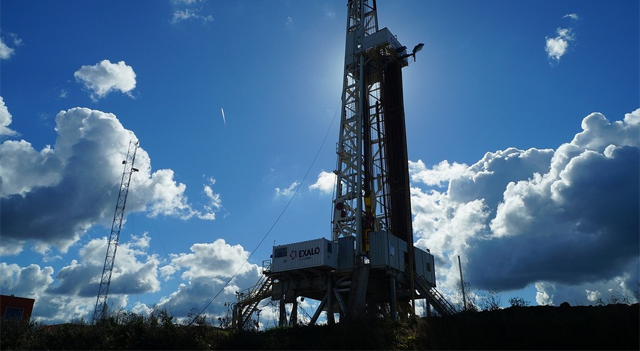
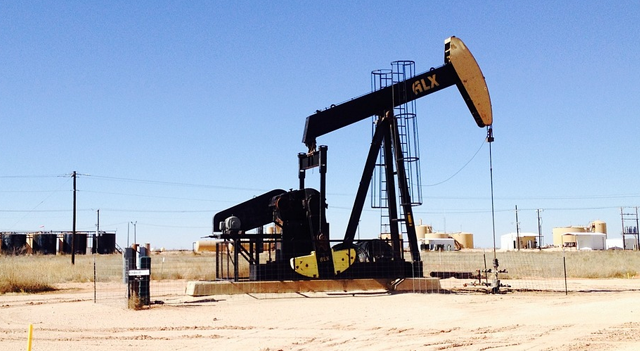
    Touchstone Exploration Inc. (LSE:TXP) reported weaker financial results for the third quarter of 2025, recording a net loss of $2.06 million versus a profit in the same period last year. Quarterly production averaged 5,141 boe/d, supported by a meaningful uplift in natural gas volumes. Although revenue from petroleum and natural gas declined, the company continues to advance its Cascadura development programme and recently secured convertible debt financing to help fund ongoing project work. Management is also progressing asset dispositions and drilling initiatives aimed at improving production efficiency while working with the National Gas Company of Trinidad and Tobago to address current pricing constraints.

    More about Touchstone Exploration

    Touchstone Exploration Inc. is an oil and gas exploration and production company with core operations in Trinidad and Tobago. The business is focused on developing its natural gas portfolio and enhancing long-term output through targeted investment in strategic assets.

  • Endeavour Mining Delivers Strong Q3 Results and Advances Key Growth Projects

    Endeavour Mining Delivers Strong Q3 Results and Advances Key Growth Projects

    Endeavour Mining (LSE:EDV) delivered a strong operational and financial performance in the third quarter of 2025, bringing year-to-date gold production to 911,000 ounces and reinforcing its solid balance sheet. The company generated meaningful free cash flow during the period, enabling further reductions in gross debt and allowing Endeavour to increase shareholder returns through both dividends and share repurchases. Progress at the Assafou project remains on schedule, supported by the recent approval of the environmental permit and ongoing work toward the Definitive Feasibility Study. Continued exploration activity and a focus on organic growth underpin Endeavour’s strategy to maintain industry leadership and deliver sustained value.

    More about Endeavour Mining

    Endeavour Mining plc is a leading gold producer with core operations across West Africa. The company is focused on disciplined growth through exploration, project development, and operational excellence, with a strong commitment to generating long-term returns for its shareholders.

  • Spirax Group Delivers Solid Organic Growth Despite Tough Industrial Backdrop

    Spirax Group Delivers Solid Organic Growth Despite Tough Industrial Backdrop

    Spirax Group PLC (LSE:SPX) has reported steady organic revenue growth and margin improvement for the ten months to October 2025, even as global industrial production conditions remained difficult. The company achieved strong momentum in both its Electric Thermal Solutions and Watson-Marlow divisions, supported by operational efficiencies and rising demand across biopharmaceutical, semiconductor, and other high-growth sectors. Spirax also remains on schedule to realise the full annualised benefits of its restructuring programme, with those savings being redirected toward strategic growth initiatives. The group’s balance sheet has strengthened as well, reflected in lower net borrowings and a stable outlook for continued gains in revenue and operating margins.

    The outlook for Spirax Sarco Engineering is underpinned by robust financial execution and positive signals from management, though tempered slightly by short-term technical indicators and a premium valuation. Strategic investments and restructuring efforts continue to be major advantages, helping the company navigate regional headwinds and currency pressures while positioning it for further expansion.

    More about Spirax Sarco Engineering

    Spirax Group is a UK-headquartered provider of thermal energy and fluid technology solutions designed to boost efficiency, performance, and safety in industrial operations. Its portfolio includes decarbonisation technologies that support the electrification of boilers and other heat-intensive processes. The company operates through three core divisions: Steam Thermal Solutions, Electric Thermal Solutions, and Watson-Marlow Fluid Technology Solutions. Serving markets such as food production, healthcare, aviation, and semiconductor manufacturing, Spirax runs more than 30 manufacturing sites globally and employs around 10,000 people across almost 70 countries.

  • Plexus Holdings Wins New Two-Year Agreement for North Sea Wellhead Services

    Plexus Holdings Wins New Two-Year Agreement for North Sea Wellhead Services

    Plexus Holdings PLC (LSE:POS) has secured a two-year framework agreement to deliver rental wellhead equipment and related services to a North Sea operator, marking a welcome uptick in activity after a quieter period in the basin. The contract covers the deployment of the company’s Exact EX™ surface wellhead system and is scheduled to begin in the first quarter of 2026. The initial call-off will support a jack-up rig well within a decommissioning programme, and additional call-offs for comparable projects are anticipated. The deal underscores growing momentum for Plexus as it deepens engagement with both domestic and international customers.

    The company is demonstrating signs of financial improvement and benefiting from supportive corporate developments, contributing to a more constructive growth outlook. Nonetheless, a negative P/E ratio and the lack of dividend payments weigh on valuation considerations. While technical indicators lean positive, fluctuations in revenue and cash generation remain important watchpoints.

    More about Plexus Holdings

    Plexus Holdings PLC is an intellectual-property-driven engineering business specialising in advanced wellhead systems and related solutions for offshore operations. Based in Aberdeen, the company concentrates on wellheads for jack-up rig activities ranging from exploration and appraisal drilling to plug-and-abandonment work. Plexus is also expanding into new sectors such as carbon capture and storage, hydrogen, and geothermal. Its proprietary POS-GRIP® technology and HG® metal-to-metal seal designs are widely recognised, and the company continues to collaborate with major energy industry partners to support ESG and Net Zero objectives.

  • Ariana Resources Sees Encouraging Drill Outcomes at Tavsan Mine

    Ariana Resources Sees Encouraging Drill Outcomes at Tavsan Mine

    Ariana Resources (LSE:AAU) has reported a strong set of drilling results from the Tavsan Mine in western Türkiye, where the company maintains a 23.5% stake. Assays from 71 drill holes completed in the Tavsan North Zone reveal that mineralisation extends beyond the boundaries of the current JORC Resource, suggesting room for a larger resource base and a potentially longer mine life. The findings support Ariana’s strategy to grow its portfolio, with an updated JORC Resource estimate expected by the third quarter of 2026.

    More about Ariana Resources

    Ariana Resources PLC is engaged in the exploration, development, and production of mineral assets, with a primary focus on gold projects across Africa and Europe. The company is dedicated to advancing high-grade discoveries and expanding its footprint in key mining jurisdictions.

  • Kier Group Begins FY26 on a Strong Footing with Solid Order Pipeline

    Kier Group Begins FY26 on a Strong Footing with Solid Order Pipeline

    Kier Group plc (LSE:KIE) has kicked off the 2026 financial year with momentum, delivering performance that tracks the Board’s expectations and maintaining a healthy order book of roughly £11.6 billion. The company has won a series of notable contracts across infrastructure services and construction, closely aligned with the UK Government’s investment agenda. Kier’s recent refinancing of its Revolving Credit Facility also signals confidence in its long-term outlook and its capacity to continue generating strong operating cash flow.

    The company’s technical strength and upbeat tone during its latest earnings call remain key contributors to its positive assessment. While overall financial results are encouraging, the business still carries elevated leverage. Valuation appears reasonable, supported by a solid P/E ratio and an appealing dividend profile.

    More about Kier Group plc

    Kier Group plc is a major UK provider of infrastructure services, construction solutions, and property development. The company offers specialist design-and-build expertise and combines the skills, experience, and intellectual capital of its workforce to manage and integrate every element of complex projects.

  • DAX, CAC, FTSE100, European Stocks Reach Record High as U.S. Shutdown Nears Resolution

    DAX, CAC, FTSE100, European Stocks Reach Record High as U.S. Shutdown Nears Resolution

    European equities climbed to fresh all-time highs on Wednesday, buoyed by optimism that the longest U.S. government shutdown in history could soon end, as lawmakers prepared for a decisive vote in the House of Representatives.

    Investor sentiment was further supported by softer inflation data out of Germany, easing concerns about price pressures in Europe’s largest economy.

    According to final figures from Destatis, German consumer prices rose 2.3% year-on-year in October, down slightly from 2.4% in September and fully in line with preliminary estimates.

    “The continued above-average rise in service prices was a driving force behind inflation,” said Destatis President Ruth Brand.

    Meanwhile, EU-harmonized inflation also slowed to 2.3% from 2.4% in the prior month, matching expectations.

    In regional markets, both the French CAC 40 and German DAX gained 1.3%, reaching record levels, while the UK’s FTSE 100 was little changed.

    Among individual movers, LEG Immobilien (TG:LEG) rose 1.6% after reporting solid nine-month results and reaffirming that it remains on track to meet its full-year guidance.

    RWE (TG:RWE) jumped 3.3% after the German energy producer posted better-than-expected nine-month earnings, while Infineon (TG:IFX) gained 1% after raising its 2026 sales target for the AI power supply division.

    In the healthcare and agribusiness sector, Bayer (TG:BAYN) advanced 2.4% after its third-quarter adjusted profit exceeded market forecasts.

    Elsewhere, Swiss Life (TG:SLW) slipped 2.3% following mixed nine-month results, while ABN AMRO (EU:ABN) climbed 2.4% after announcing an agreement to acquire NIBC Bank from private equity firm Blackstone.

    In London, BAE Systems (LSE:BA.) rose around 1% after the defense contractor reaffirmed its annual outlook, while Taylor Wimpey (LSE:TW.) fell 3.2% as the average weekly number of private sales per site dropped 11% during the key autumn period.

    Meanwhile, Edenred (EU:EDEN) plunged 8.2% after the French voucher company warned of a reduction in its 2026 profit guidance, dampening sentiment in the financial services sector.

  • Dow Jones, S&P, Nasdaq, Wall Street Futures Rise as Tech Stocks and Shutdown Hopes Boost Sentiment

    Dow Jones, S&P, Nasdaq, Wall Street Futures Rise as Tech Stocks and Shutdown Hopes Boost Sentiment

    U.S. stock futures were higher early Wednesday, suggesting a stronger open on Wall Street as investors looked past recent volatility and focused on renewed optimism in the technology sector and signs that the U.S. government shutdown could soon end.

    Nasdaq 100 futures gained 0.6%, pointing to tech-led strength at the open.

    Advanced Micro Devices (NASDAQ:AMD) jumped 6.5% in premarket trading after CEO Lisa Su forecast average annual revenue growth of more than 35% over the next three to five years. Su also said AMD aims to capture a “double-digit” share of the data center AI chip market, currently dominated by Nvidia (NASDAQ:NVDA).

    Nvidia’s stock also rebounded in premarket trading after a sharp drop on Tuesday dragged down the broader tech index.

    Investors were further encouraged by political developments in Washington, where the House of Representatives is expected to vote later today on legislation to end the longest government shutdown in U.S. history. The Senate passed the bill on Monday, extending funding for most federal agencies until January 30, and President Trump is expected to sign it once approved.

    Tuesday’s session saw a split performance across the major U.S. indexes. The Dow Jones Industrial Average climbed 559 points, or 1.2%, to 47,927.96, while the S&P 500 added 14 points, or 0.2%, to 6,846.61. Meanwhile, the Nasdaq Composite fell 59 points, or 0.3%, to 23,468.30, weighed down by weakness in high-growth tech names.

    The mixed results reflected investor caution following a volatile stretch for equities, with some traders warning of potential overvaluation in the technology sector after weeks of sharp gains.

    Earlier this week, stocks had rallied on optimism surrounding a resolution to the record-long shutdown, as markets regained momentum following last week’s sell-off. Still, valuation concerns and uncertainty about the economic fallout from the shutdown remain in focus.

    Among individual movers, Nike (NYSE:NKE), Merck (NYSE:MRK), and Amgen (NASDAQ:AMGN) helped propel the Dow higher, while Nvidia slipped 3% on Tuesday after SoftBank sold its entire $5 billion stake in the chipmaker.

    With tech shares bouncing back and a potential end to the shutdown in sight, traders are cautiously positioning for another day of modest gains on Wall Street.

  • Global Wine Production Stays Below Average for Third Year as Climate Volatility Persists, OIV Reports

    Global Wine Production Stays Below Average for Third Year as Climate Volatility Persists, OIV Reports

    Global wine production increased modestly in 2025, but volumes remained below the long-term average for a third straight year as vineyards around the world grappled with increasingly erratic weather patterns, according to the International Organization of Vine and Wine (OIV).

    In its preliminary estimates, the OIV placed global wine output at 232 million hectolitres (mhl), marking a 3% increase from 2024, yet still 7% lower than the five-year average.

    “If you look at the causes for the lower production of the last three years, the major part is really the climatic variations that we’ve seen across both hemispheres,” OIV Director General John Barker told Reuters. “Some regions have had heat and drought, and then they’ve had torrential rains or unexpected frosts. And the fact that it’s really the third year in a row where we’re seeing these sorts of effects is quite striking.”

    Europe Hit Hard, Italy Returns to the Top

    In Europe, France posted its smallest grape harvest since 1957, while Spain’s output dropped to a 30-year low due to adverse weather. Italy, however, reclaimed its title as the world’s largest wine producer, with an 8% year-on-year increase in output, supported by more favourable growing conditions.

    The United States, ranked fourth globally, is projected to produce 21.7 mhl of wine — up 3% from the previous year but still 9% below the five-year average and well below historical highs.

    Southern Hemisphere Sees Partial Recovery

    Production in the Southern Hemisphere rebounded 7% after three consecutive annual declines, driven by gains in South Africa, Australia, New Zealand, and Brazil, which helped counterbalance weaker harvests in Chile. Despite the rebound, total output across the region remained 5% below average, the OIV said.

    Market Balance Amid Weak Demand

    The OIV noted that modest global growth could help stabilize inventories amid tepid demand in mature markets, reduced consumption in China, and ongoing uncertainty in global trade flows.

    “Low output can be very difficult for individual producers and regions … but from a macroeconomic perspective, it’s a positive, because it really makes sure that production and consumption are more or less aligned,” Barker added.

    The organization plans to revise its estimates later this year.
    (One hectolitre equals approximately 133 standard bottles of wine.)

  • IEA Warns Oil and Gas Demand May Keep Rising Until 2050, Undermining Climate Targets

    IEA Warns Oil and Gas Demand May Keep Rising Until 2050, Undermining Climate Targets

    Global demand for oil and gas could continue to rise until 2050, the International Energy Agency (IEA) said on Wednesday, signaling a major shift from its previous outlook that envisioned a rapid transition toward cleaner energy sources. The agency now believes the world is unlikely to meet its long-term climate goals under current policies.

    The IEA — often viewed as the energy policy adviser to developed economies — has faced growing political pressure over the years. Under President Donald Trump, the U.S. pushed the agency to emphasize fossil fuel security and expansion, urging American producers to increase output. Conversely, during the Joe Biden administration, the IEA forecasted that “global oil demand would peak this decade” and warned that “no more investment in oil and gas was needed if the world wanted to achieve its climate target.”

    Trump’s Energy Secretary Chris Wright criticized those projections, calling them “nonsensical.” The IEA, which receives funding from its member countries — with the U.S. as the largest contributor — plays a central role in shaping global energy policy through its research and data.

    Existing Policies Drive Long-Term Growth Outlook

    In its World Energy Outlook 2025 released Wednesday, the IEA said that under its “current policies scenario,” global oil demand is projected to reach 113 million barrels per day by 2050, roughly 13% higher than 2024 levels. The agency also expects total energy demand to increase by 90 exajoules by 2035, representing a 15% rise from today’s consumption.

    The “current policies” scenario focuses solely on existing regulations and excludes aspirational climate targets. The IEA had previously stopped using this model in 2019, opting instead for projections aligned with a clean energy transition and net-zero commitments. However, this year’s report abandoned the “pledges scenario,” citing insufficient data from countries on new climate goals for 2031–2035.

    In the stated policies scenario, which includes announced but not fully implemented measures, the IEA estimates that oil demand will peak around 2030 before stabilizing. The agency stressed that its scenarios are not forecasts but rather frameworks for exploring “a range of possible outcomes under different assumptions.”

    LNG Expansion Accelerates Amid Surging Energy Needs

    The IEA report highlighted a sharp increase in final investment decisions for liquefied natural gas (LNG) projects in 2025. Roughly 300 billion cubic meters of new LNG export capacity is expected to begin operations by 2030, marking a 50% rise in available supply.

    Under the current policies scenario, global LNG demand could climb from 560 bcm in 2024 to 880 bcm in 2035 and reach 1,020 bcm by 2050, driven by growing electricity needs — particularly from data centers and AI technologies.

    The report also noted that global investment in data centers could reach $580 billion in 2025, surpassing the $540 billion spent annually on oil supply, underscoring the tech sector’s rising energy appetite.

    Climate Goals at Risk as Global Temperatures Surge

    The IEA included a “net zero” pathway showing how emissions could theoretically fall to net zero by 2050, but warned that this remains increasingly unlikely without large-scale carbon capture and removal technologies.

    Over 190 nations committed during the 2015 Paris Climate Agreement to limit global temperature increases to no more than 1.5°C (2.7°F) above pre-industrial levels. However, the IEA report indicates that in all scenarios, the world exceeds 1.5°C of warming, with temperatures only declining under the net zero model if carbon removal technologies are successfully deployed.

    The findings suggest that despite political pledges and renewable energy progress, fossil fuels will remain a dominant force in the global energy mix for decades — posing a major challenge to achieving international climate ambitions.